Back to visual guides
How to Choose the Right CNC Router – UK Buyer’s Guide for Industrial Machines



Choosing the Right CNC Router: Where to Start
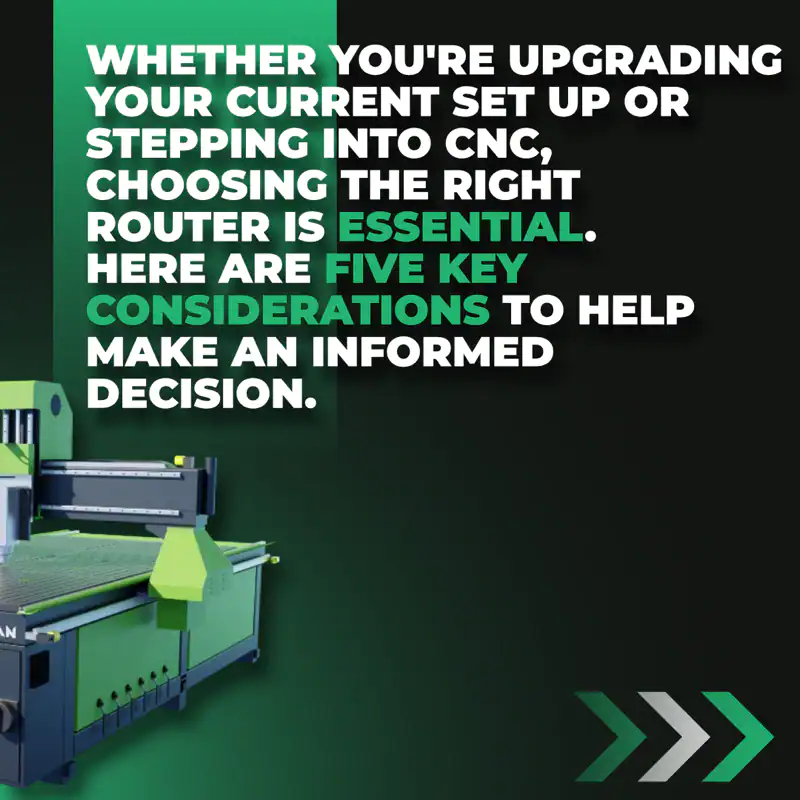
Whether you are upgrading your current setup or investing in your first machine, choosing the right CNC router is a critical decision that directly impacts productivity, accuracy and long-term performance.
With a wide range of machine types, bed sizes and configurations available, it’s important to understand what factors matter most for your specific application. From material type and workload to precision requirements and future scalability, each decision plays a role in selecting the right solution.
In this guide, we outline five key considerations to help you choose the right CNC router and make an informed investment for your business.
Choosing the right CNC router is essential to ensure long-term performance, reliability and return on investment.
With a wide range of machine types, bed sizes and configurations available, it’s important to understand what factors matter most for your specific application. From material type and workload to precision requirements and future scalability, each decision plays a role in selecting the right solution.
In this guide, we outline five key considerations to help you choose the right CNC router and make an informed investment for your business.
Choosing the right CNC router is essential to ensure long-term performance, reliability and return on investment.
Material & Application Requirements
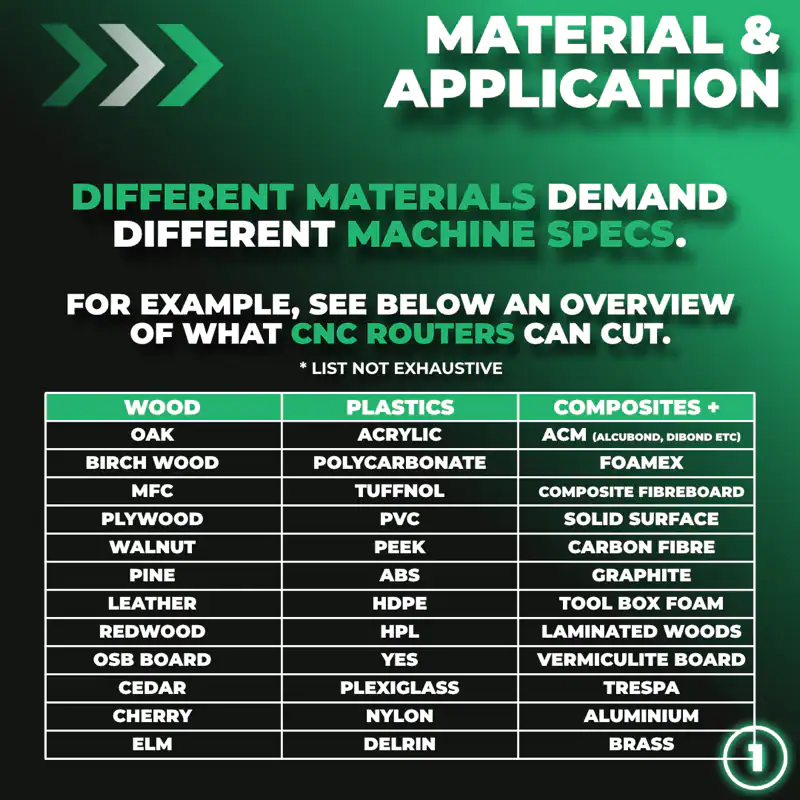
The type of material you plan to cut is one of the most important factors when choosing a CNC router, as different materials often require different levels of machine rigidity and spindle capability, which is why selecting the right industrial CNC router is critical.
For example, softer materials such as wood, MDF and plastics can typically be processed on a wide range of CNC routers, whereas denser materials like aluminium, composites or solid surfaces require a more rigid machine, higher spindle performance and greater stability.
It’s also important to consider your primary application. Are you cutting sheet materials for signage or cabinetry, machining plastics, or working with aluminium and composite panels? Each use case places different demands on the machine in terms of speed, accuracy and durability.
For example, softer materials such as wood, MDF and plastics can typically be processed on a wide range of CNC routers, whereas denser materials like aluminium, composites or solid surfaces require a more rigid machine, higher spindle performance and greater stability.
It’s also important to consider your primary application. Are you cutting sheet materials for signage or cabinetry, machining plastics, or working with aluminium and composite panels? Each use case places different demands on the machine in terms of speed, accuracy and durability.
Bed Size & Work Area
Selecting the correct bed size is essential when choosing a CNC router, as it directly affects the type and size of materials you can process efficiently.
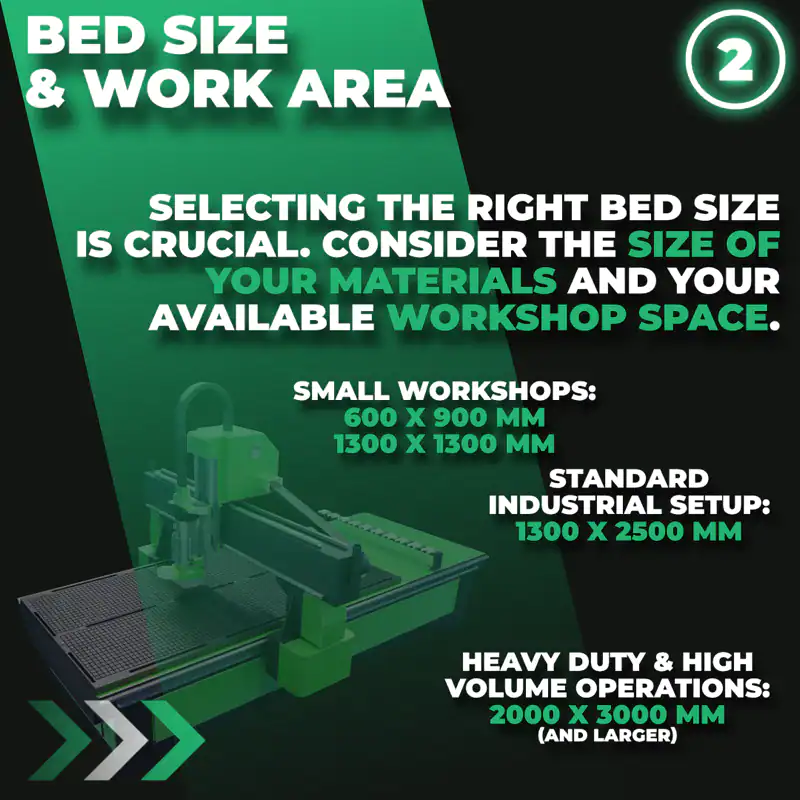
For most businesses, this decision comes down to the size of sheet materials you regularly work with. Standard full sheets (such as 8×4) typically require a 1300 x 2500 mm machine, while smaller workshops or specialist applications may operate effectively with more compact bed sizes.
It’s also important to consider your available workshop space, including room for loading and unloading materials, as well as safe machine operation. Oversizing a machine can create unnecessary space constraints, while undersizing can limit productivity and require additional handling.
Choosing the right balance between material size, workflow and available space will ensure your CNC router integrates efficiently into your production environment. For most businesses working with full sheets, investing in an 8×4 CNC router provides the ideal balance of capacity and efficiency.
For most businesses, this decision comes down to the size of sheet materials you regularly work with. Standard full sheets (such as 8×4) typically require a 1300 x 2500 mm machine, while smaller workshops or specialist applications may operate effectively with more compact bed sizes.
It’s also important to consider your available workshop space, including room for loading and unloading materials, as well as safe machine operation. Oversizing a machine can create unnecessary space constraints, while undersizing can limit productivity and require additional handling.
Choosing the right balance between material size, workflow and available space will ensure your CNC router integrates efficiently into your production environment. For most businesses working with full sheets, investing in an 8×4 CNC router provides the ideal balance of capacity and efficiency.
Spindle Power & Speed
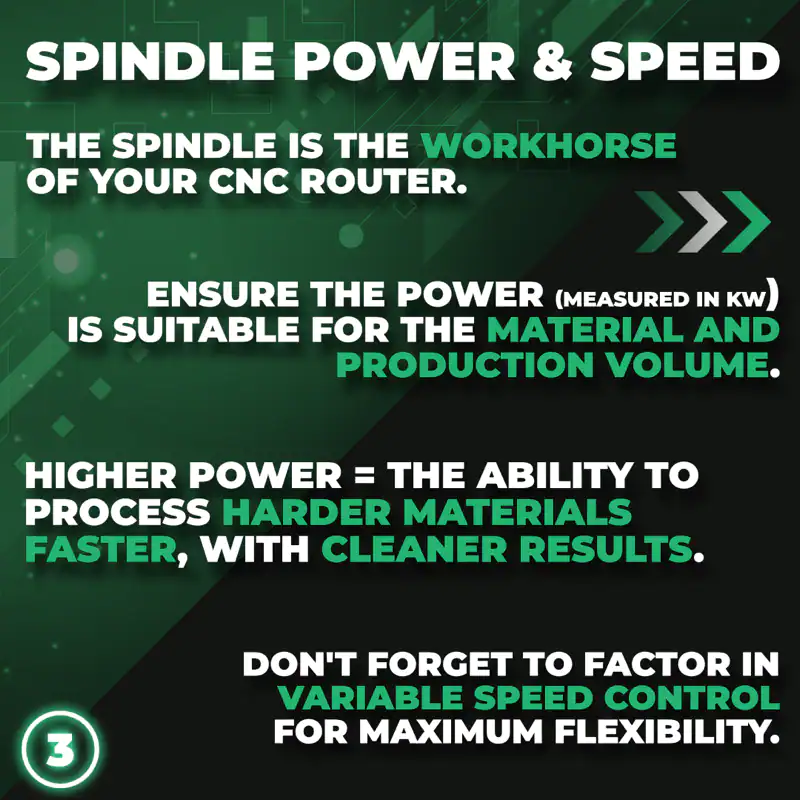
The spindle is the core component of any CNC router, directly influencing cutting capability, speed and overall performance. Choosing the correct spindle power is essential to ensure the machine can handle your materials and production demands.
Lower powered spindles may be suitable for lighter materials and occasional use, but for industrial applications or harder materials such as aluminium and composites, a higher power spindle is required to maintain cutting quality and efficiency.
Spindle speed control is equally important. Variable speed capability allows you to optimise cutting parameters for different materials, reducing tool wear and improving surface finish. This flexibility is particularly valuable when working across a range of materials or applications.
Selecting the right balance of spindle power and speed ensures your CNC router delivers consistent results, improved productivity and long-term reliability. A well-specified CNC router machine with the correct spindle power will improve cutting performance and consistency across materials.
Lower powered spindles may be suitable for lighter materials and occasional use, but for industrial applications or harder materials such as aluminium and composites, a higher power spindle is required to maintain cutting quality and efficiency.
Spindle speed control is equally important. Variable speed capability allows you to optimise cutting parameters for different materials, reducing tool wear and improving surface finish. This flexibility is particularly valuable when working across a range of materials or applications.
Selecting the right balance of spindle power and speed ensures your CNC router delivers consistent results, improved productivity and long-term reliability. A well-specified CNC router machine with the correct spindle power will improve cutting performance and consistency across materials.
Software Compatibility & Ease of Use
Software compatibility is a key consideration when choosing a CNC router, as it directly affects how easily you can design, programme and operate the machine.
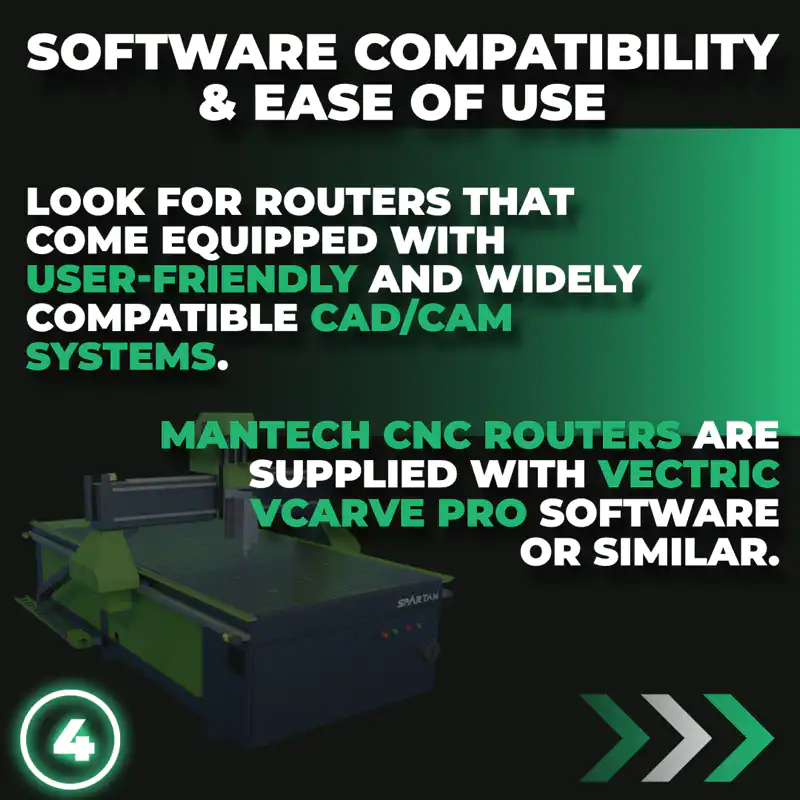
Look for CNC routers that support widely used CAD/CAM software, ensuring seamless integration with your existing workflow or making it easier to train new operators. User-friendly software can significantly reduce setup time, minimise errors and improve overall productivity.
For many businesses, especially those new to CNC, intuitive software such as Vectric VCarve Pro provides a strong balance between capability and ease of use. However, it’s equally important that your machine remains flexible enough to work with a range of industry-standard software solutions.
Choosing a CNC router with reliable, compatible and easy-to-use software will help streamline your operations and maximise efficiency from day one.
Look for CNC routers that support widely used CAD/CAM software, ensuring seamless integration with your existing workflow or making it easier to train new operators. User-friendly software can significantly reduce setup time, minimise errors and improve overall productivity.
For many businesses, especially those new to CNC, intuitive software such as Vectric VCarve Pro provides a strong balance between capability and ease of use. However, it’s equally important that your machine remains flexible enough to work with a range of industry-standard software solutions.
Choosing a CNC router with reliable, compatible and easy-to-use software will help streamline your operations and maximise efficiency from day one.
Total Cost of Ownership
When choosing a CNC router, it’s important to look beyond the initial purchase price and consider the total cost of ownership over the life of the machine.
Factors such as tooling costs, material efficiency, maintenance requirements and labour productivity all have a significant impact on long-term profitability. A lower-cost machine may seem attractive initially, but can lead to higher running costs, reduced output and increased downtime.
Understanding your cost per part is key. A well-specified CNC router that delivers faster cycle times, improved accuracy and reduced waste will often provide a far better return on investment over time.
Taking a long-term view ensures you invest in a machine that not only meets your current needs, but supports future growth and efficiency.
If you’re evaluating options, explore our range of CNC routers designed for industrial performance, reliability and long-term value.
Factors such as tooling costs, material efficiency, maintenance requirements and labour productivity all have a significant impact on long-term profitability. A lower-cost machine may seem attractive initially, but can lead to higher running costs, reduced output and increased downtime.
Understanding your cost per part is key. A well-specified CNC router that delivers faster cycle times, improved accuracy and reduced waste will often provide a far better return on investment over time.
Taking a long-term view ensures you invest in a machine that not only meets your current needs, but supports future growth and efficiency.
If you’re evaluating options, explore our range of CNC routers designed for industrial performance, reliability and long-term value.