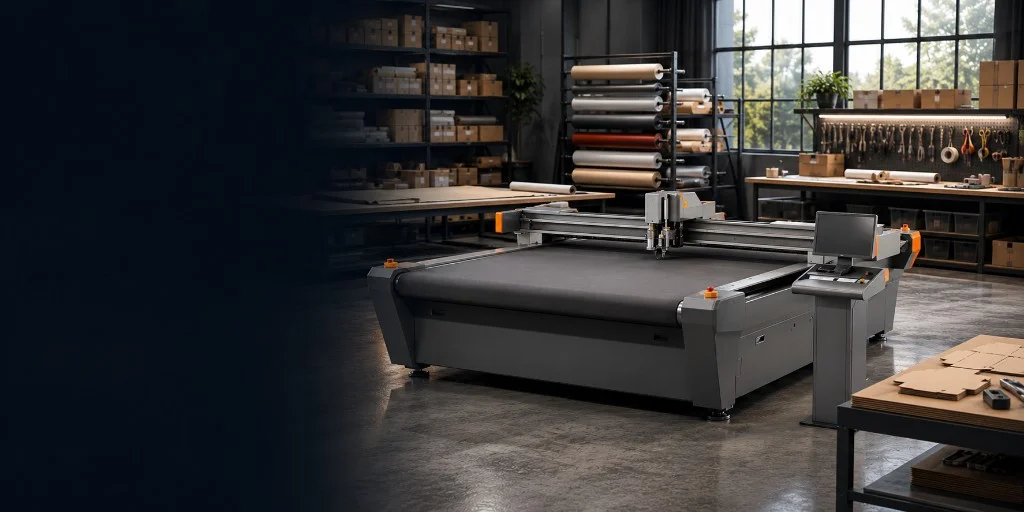
Digital Cutting Tables – High-Speed CNC Knife & Creasing Cutters
SC Range digital cutting tables for packaging, signage, POS and display work — knife, crease and router tooling with full UK delivery, installation and support from Mantech.
Buyers also search for CNC knife cutters, digital flatbed cutters, oscillating knife cutting machines and digital cutting machines — different industries use different labels for the same class of CNC flatbed cutting equipment.
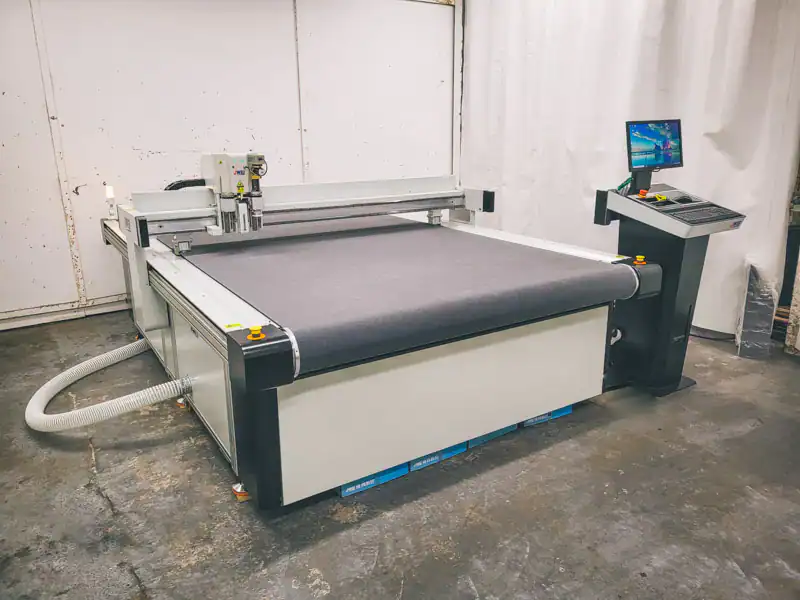
A Digital Cutting Table (DCT) is an advanced, high-speed cutting machine designed to process a wide variety of materials with exceptional precision and efficiency. These machines can cut foam, rubber, plastic, paper, fabrics, cardboard, reboard, carbon fibre fabric, and more, making them a versatile solution for industries such as packaging, signage, textiles, and composites. DCT High-Speed Digital Cutting Machines are engineered for pinpoint accuracy and rapid operation, reaching speeds of up to 1,200 mm/s with a precision of 0.01 mm.
Packaging · signage · POS · display board
SC Standard · SC PRO with 350W router option
Knife · crease · kiss-cut · router · optical reg
UK delivery · installation & training included
Up to 1800 mm/s · ±0.05 mm · ±0.01 mm servo · oscillating knife · crease · router
Why choose a digital cutting table?
Replace fixed dies and outsourced plotting with a CNC platform built for short runs, packaging prototypes and repeatable production on board, foam and flexible materials.
Maximise Efficiency with High-Speed Digital Cutting Technology
Eliminate tooling costs, enable rapid prototyping and one-off samples, and improve finished quality without committing to wood form tooling.
Unmatched Precision & Speed
SC Range digital cutting tables reach up to 1800 mm/s with repeat precision of ±0.05 mm — clean, detailed cuts with reduced waste.
What is a Digital Cutting Table and how does it work?
Processes foam, rubber, plastic, paper, fabrics, cardboard, reboard, carbon fibre fabric and more — complementary to fibre lasers on metals and CNC routers on timber.
Why Choose a Digital Cutting Table?
Versatile solution for packaging, signage, textiles and composites — from contract converters to in-house display and sample rooms.
DCT Model Range
SC Standard fixed-bed platforms from 1300 × 1100 mm to 2000 × 3000 mm. SC PRO matches those bed sizes with factory configuration for the 350W router tool attachment — the only tier difference on the same platform.
Supplied with Full UK Delivery, Installation & Support
Mantech supplies digital cutting tables across the UK with delivery, installation, operator training and dedicated after-sales support.
What is a CNC Knife Cutter?
A CNC knife cutter — also called an oscillating knife cutter or digital cutting machine — is a flatbed system that follows programmed toolpaths with interchangeable blades and wheels rather than a spindle or laser beam.
The operator prepares a CAD/CAM file, sends it to the table control, and a servo-driven head executes knife, crease, kiss-cut or marking operations across the vacuum bed. SC platforms reach up to 1800 mm/s with ±0.05 mm repeat precision, subject to material and tooling.
Unlike a CNC router, the primary process is cold cutting with a blade — not high-speed milling. That suits foam, cardboard, packaging board, vinyl, fabrics and rubber where a rotating tool would tear, melt or leave a wider kerf.
Unlike a laser cutter, there is no heat-affected edge. Materials that scorch, seal, release fumes or lose dimensional stability under laser energy — including many foams, elastomers and printed packaging boards — are often better on a digital cutting table.
Cold cutting keeps edges clean, reduces secondary finishing and supports accurate nesting for productive short-run and sample work. For timber, thick acrylic profiling or sheet metal, a router or laser remains the correct process.
How it works
CAD design → machine control → servo head with selected tool → automated cut, crease or mark on a vacuum bed.
Vs CNC routers
Knife and crease tooling for flexible and board materials; routers use a spindle for timber, plastics and rigid composites.
Vs laser cutters
No thermal edge — preferred when heat would burn, melt or distort foam, rubber, textiles or printed board.
Accuracy & productivity
Repeatable path control and rapid tool changes for samples, short runs and dieless packaging without forme tooling.
How a digital cutting table works
From CAD file to finished component — servo-driven cutting heads execute knife, crease and router operations at production speed.
Design Creation
The operator designs a cut file using CAD/CAM software.
Data Transmission
The digital file is sent to the cutting table’s control system.
Precision Cutting
A high-speed servo motor moves the cutting head equipped with an oscillating knife, creasing wheel or router.
Automated Execution
The machine executes the cut with unrivalled speed and accuracy, ensuring clean, precise edges every time.
SC digital cutting systems
Nine SC Range configurations — five Standard fixed-bed sizes plus four PRO variants on matching bed formats. PRO adds factory support for the 350W router tool attachment.
Not sure which SC model fits? Our specialists compare Standard and PRO bed sizes against your sheet formats, materials and whether routing is part of your workflow.
SC platform: Up to 1800 mm/s · ±0.05 mm repeat · UK delivery, installation & 12-month warranty.
Design the cut file in CAD/CAM software
Send the file to the DCT control system
Servo head cuts, creases or routes with the selected tool
Finished components with clean edges and minimal waste
SC Standard — fixed-bed digital cutting
Fixed-bed SC platforms for sign shops, display producers and packaging sample rooms — five bed sizes from compact 1300 × 1100 mm to 2000 × 3000 mm industrial format.
1800 mm/s production speed
High-speed servo cutting for signage, display and packaging throughput — material dependent.
Enhanced vacuum hold-down
3D air-guiding duct design with honeycomb aluminium bed — stronger material stability across the full cut area.
Precision motion control
Next-generation motion architecture — faster diagonal cuts and improved edge quality on complex paths.
Sheet · roll · irregular jobs
Handles sheet stock, roll-fed work and irregular outlines for POS, banners and vehicle graphics.
SC PRO — 350W router tooling option
SC PRO uses the same platform and bed sizes as Standard — the tier difference is factory configuration for the optional 350W router tool attachment when you need routing alongside knife and crease work.
350W router tool attachment
SC PRO is factory-configured for the optional 350W router spindle — the only tier difference from SC Standard on the same bed size.
Same platform engineering
Identical servo motion, vacuum bed, oscillating knife, drag knife and plotting tools as Standard — routing added when your materials need it.
Matching Standard bed sizes
PRO variants mirror Standard cutting areas from 1300 × 2500 mm through 2000 × 3000 mm industrial sheet.
SC1311 Digital Cutting Table
1300 × 1100 mm
Standard
SC1325 Digital Cutting Table
1300 × 2500 mm
Standard
SC1618 Digital Cutting Table
1600 × 1800 mm
Standard
SC1625 Digital Cutting Table
1600 × 2500 mm
Standard
SC2030 Digital Cutting Table
2000 × 3000 mm
Standard
SC1325 PRO Digital Cutting Table
1300 × 2500 mm
PRO
350W router tool attachment
SC1618 PRO Digital Cutting Table
1600 × 1800 mm
PRO
350W router tool attachment
SC1625 PRO Digital Cutting Table
1600 × 2500 mm
PRO
350W router tool attachment
SC2030 PRO Digital Cutting Table
2000 × 3000 mm
PRO
350W router tool attachment
SC platform at a glance
Shared engineering across every SC Standard and SC PRO configuration — high-speed servo cutting, dual tool positions and a rigid honeycomb vacuum bed built for daily production.
Up to 1800 mm/s
±0.05 mm
±0.01 mm
50 mm
Dual quick-change tool head — cut, crease, draw and route in one setup
Electric oscillating tool · drag knife · plotting tool
Infrared light-grid safety sensor
Vacuum hold-down · zone suction
Honeycomb aluminium plate with felt surface
Independent touch-screen console with emergency stop and PC bay
Approximately 64 dB
Ethernet port
Advanced servo · linear guide · synchronous belt · ball screw
380V ±10%
Sheet · roll · irregular outlines
Cutting speed
Up to 1800 mm/s
Material dependent
Repeat precision
±0.05 mm
Production repeatability
Servo resolution
±0.01 mm
Fine path control
Max thickness
50 mm
Material dependent
Tool head
Dual quick-change
Cut · crease · draw · route
Vacuum bed
Zone suction
Honeycomb aluminium surface
Honeycomb aluminium vacuum bed
Aerospace-grade honeycomb plate with felt surface — rigid, flat under load and optimised for even airflow across the cut area.
Touch-screen control console
Standalone operator console with touch HMI, emergency stop and integrated space for your PC — quick parameter setup without crowding the bed.
Ultra-quiet operation
Approximately 64 dB under normal cutting — practical for busy print finishers, sample rooms and customer-facing production areas.
Tooling & safety
Multi-functional tool head
Dual quick-change tool head — cut, crease, draw and route in one setup
Standard tools
Electric oscillating tool · drag knife · plotting tool
Safety device
Infrared light-grid safety sensor
Performance
Max. cutting speed
1800 mm/s *
Max. cutting thickness
50 mm *
Repeat precision
±0.05 mm
Servo resolution
±0.01 mm
Bed & control
Material fixation
Vacuum hold-down · zone suction
Cut bed
Honeycomb aluminium plate with felt surface
Control console
Independent touch-screen console with emergency stop and PC bay
Operating noise
Approximately 64 dB
Cutting modes
Sheet · roll · irregular outlines
Drive & connectivity
Transmission
Ethernet port
Drive system
Advanced servo · linear guide · synchronous belt · ball screw
Rated voltage
380V ±10%
Electric oscillating tool · drag knife · plotting tool
Dual quick-change tool head
Infrared light-grid safety sensor
Honeycomb aluminium vacuum bed with zone suction
Independent touch-screen control console
Ethernet data connection
* Maximum speed and thickness depend on material, tool and job settings.
SC tooling options
Configure each SC platform with the cutting, creasing and marking heads your materials demand. Choose tools by job — not by brochure feature list. SC PRO adds factory support for the 350W router attachment — the only tier difference from Standard on matching bed sizes.
Oscillating knife
Electric oscillating tool — high-frequency oscillating cut for corrugated board, honeycomb, KT board, PVC foam and thicker substrates.
Drag knife
Universal drag knife — fast through-cutting on materials up to 5 mm thick where oscillating speed is not required.
Kiss-cut tool
Kiss-cut tool — surface-layer cutting for labels, vinyl films and printed adhesive materials with camera alignment.
Creasing wheel
Creasing & perf wheels — packaging crease lines, anti-crack scoring on corrugated and controlled tear perforations.
V-cut tool
V-cut tools — greyboard, honeycomb and cardboard grooving at adjustable angles for folds and structural POS.
Router spindle
Router / milling head — cut and mill acrylic, ACM, MDF, PVC foam and wood up to 20 mm depending on material. The 350W router attachment is the factory option on SC PRO.
Camera registration system
Camera positioning — registration mark scanning for contour cutting on pre-printed displays, packaging and signage.
Plotting pen
Plotting tool — sketching and marking designs onto materials with high accuracy; included with standard SC tool sets alongside oscillating and drag knives.
CNC Router vs Digital Cutting Table
Both are CNC platforms, but they solve different everyday jobs. Use this guide when buyers ask whether foam, packaging board, vinyl or acrylic should go on a knife table or a spindle router.
Foam
Preferred — clean cold cuts for inserts, cushioning and packaging foam
Only for denser foams needing 3D profiling; risk of tear-out on soft stock
Cardboard & corrugated
Preferred — cut, crease and V-cut for cartons and POS without dies
Rarely ideal — spindle kerf and dust are poor fits for carton work
Packaging prototypes
Preferred — dieless samples and short runs with crease tooling
Not the primary process for foldable packaging board
Vinyl & films
Preferred — drag or kiss-cut with camera registration for print-and-cut
Unsuitable for thin film and liner workflows
Fabrics & textiles
Preferred — knife or rotary tooling for banner and soft materials
Not suited to woven or soft textiles
Rubber & gaskets
Preferred when thickness and tooling match — cold edge without burn
Possible on some stocks, but knife tables are the usual gasket route
Composites
Dry fabric and soft lay-up materials only
Preferred for cured / rigid composites, timber-core panels and thick sheet
Acrylic
Limited — thin sheet only; edge quality often needs router or laser
Preferred for clean milled edges and thicker acrylic parts
Aluminium composite panel
Possible on light ACM with router attachment or specialist tooling
Preferred for reliable ACM/Dibond profiling and edge finish
Choose a digital cutting table when the job is knife, crease or kiss-cut work on foam, board, packaging, vinyl, fabric or rubber. Choose a CNC router when you need spindle milling on timber, thick plastics, cured composites or aluminium composite panel. Mixed shops often run both — Mantech can advise from material samples and daily volume.
Customer case study
Unicon
Unicon Ltd needed a more agile way to handle smaller volume orders and one-off packaging samples. Relying on traditional wood form tooling was costly and inflexible — the switch to digital eliminated tooling costs, enabled rapid prototyping and improved finished quality.
The machine has given us faster turnaround for smaller volume orders and allowed us to provide one-off samples without committing to tooling costs during early design stages. We also now have more control over the quality of the finished product.
Materials & applications
SC digital cutting tables excel on non-metallic flexible and semi-rigid materials — signage, lightboxes, POS displays, flags, banners, vehicle graphics and packaging board. A digital knife cutter suits short runs and dieless production where cold cutting protects the material face.
Board & packaging
Corrugated board
Honeycomb board
Greyboard & reboard
Cardboard & POS
Sign & display
Foamex & KT panels
ACM / Dibond
Acrylic & PVC
Printed UV substrates
Textiles & composites
Fabrics & banner materials
Carbon fibre fabric
Rubber & gaskets
Magnetic sheets
Flexible materials
Foam & rubber
Vinyl & reflective vinyl
Leather
Thin plastics (HIPS, PP)
Sign making
A digital flatbed cutter processes Foamex, KT board, vinyl and printed sheets for letters, panels and contour-cut graphics without heat distortion from a laser.
Display graphics
Oscillating knife and V-cut tooling build lightbox panels, exhibition walls and layered graphics from board and foam-core stock.
Packaging & POS
Dieless cutting and creasing produce cartons, trays and point-of-sale structures as samples or short runs without wood forme tooling.
Foam conversion
A foam cutting machine workflow on a digital table cuts protective inserts, cushioning and custom foam packs cleanly at production speed.
Gasket manufacture
CNC blade and oscillating knife paths cut rubber and soft gasket materials where laser heat would seal, burn or distort the edge.
Textiles & leather
Rotary or knife tooling handles banner fabric, soft textiles and leather patterns for apparel, soft furnishings and interior trim.
Automotive interiors
Knife cutting suits foam, fabric and soft trim blanks for vehicle interiors where cold cutting preserves surface finish.
Composite materials
Dry carbon fibre fabric and related soft composites can be knife-cut before lay-up — cured rigid composites usually need CNC routing instead.
Cardboard & corrugated
A corrugated board cutter with crease and V-cut tools produces packaging prototypes and short-run cartons from CAD files in one setup.
Rubber processing
Flat rubber sheet and similar elastomers cut cleanly on a digital cutting machine when thickness and tooling match the job.
Choosing the Right Digital Cutting Table
Specify from materials and throughput first — then bed format, vacuum, tooling and software. The SC Range supplied by Mantech is a fixed-bed platform; conveyor systems are a different production class for continuous roll or high-volume sheet flow.
Static bed vs conveyor
Fixed beds suit samples, sheet work and most UK packaging and sign shops. Conveyor cutting systems feed continuous material for higher automatic throughput — confirm whether your volume justifies that class before comparing platforms.
Cutting area
Match bed size to your largest regular sheet. SC Standard spans 1300 × 1100 mm to 2000 × 3000 mm; SC PRO covers the larger matching formats with factory router support.
Vacuum system
Zone vacuum hold-down keeps light board, foam and film flat during high-speed knife paths — essential for accuracy on flexible stock.
Tooling options
List the tools your mix needs: oscillating knife, drag knife, kiss-cut, crease, V-cut, camera registration, plotting pen and, where required, router spindle.
Camera systems
Specify optical registration if you contour-cut UV-printed packaging, signage or display graphics.
Production volume
Sample rooms and short runs favour agile fixed-bed tables; continuous high-volume converting may need conveyor automation and dedicated nesting discipline.
Software workflow
Confirm CAD/CAM file handling, tool assignment and operator training so the table joins your existing design-to-production path without rework.
Frequently Asked Questions
What is a digital cutting table?
A digital cutting table is a CNC flatbed that cuts, creases, scores or marks sheet and roll materials with interchangeable knife and wheel tooling under vacuum hold-down. Mantech supplies SC Standard and SC PRO platforms for packaging, signage, display and flexible-material production across the UK.
Is a digital cutting table the same as a CNC knife cutter?
Yes — digital cutting table, CNC knife cutter, oscillating knife cutting machine and digital flatbed cutter are common industry names for the same equipment class. Exact capability still depends on bed size, tooling and software configuration.
What materials can an oscillating knife cutter process?
Oscillating knife tooling typically handles corrugated and honeycomb board, cardboard, foam, selected plastics, textiles, vinyl, rubber and gasket materials within the machine’s thickness and tool limits. Confirm each substrate with Mantech against your SC tooling set.
What is the difference between a CNC router and a digital cutting table?
A digital cutting table uses knife, crease and kiss-cut tools for flexible and board materials. A CNC router uses a high-speed spindle to mill timber, plastics and rigid composites. Some digital platforms offer a router attachment for limited semi-rigid work, but everyday jobs remain different.
Can a digital cutter crease cardboard?
Yes — creasing wheels score fold lines in cardboard, corrugated board and display board so packaging and POS structures fold cleanly. V-cut tooling adds angled grooves for thicker structural board.
What industries use digital cutting tables?
Common users include sign making, display graphics, packaging and POS, foam conversion, gasket manufacture, textiles, leather, automotive interiors and converters working cardboard or corrugated board. The shared need is accurate dieless cutting on non-metallic stock.
What is a flatbed cutter?
A flatbed cutter — or digital flatbed cutter — holds material on a flat vacuum bed while a gantry-mounted tool head follows CNC paths. It is the usual layout for digital cutting tables used in packaging, signage and display production.
What is a cutting plotter?
Cutting plotter is an older or broader term for machines that cut from vector files. In industrial buying, a production digital cutting table is a heavier flatbed CNC knife system with vacuum hold-down, multi-tool heads and packaging or signage workflows — not a lightweight desktop vinyl plotter.
A Digital Cutting Table (DCT) is an advanced, high-speed cutting machine designed to process a wide variety of materials with exceptional precision and efficiency. These machines can cut foam, rubber, plastic, paper, fabrics, cardboard, reboard, carbon fibre fabric, and more, making them a versatile solution for industries such as packaging, signage, textiles, and composites.
DCT High-Speed Digital Cutting Machines are engineered for pinpoint accuracy and rapid operation, reaching speeds of up to 1,200 mm/s with a precision of 0.01 mm. This ensures clean, detailed cuts while reducing material waste and improving productivity.
These cutting machines operate using a digital control system, which seamlessly integrates with CAD/CAM software. The process includes:
Our DCT systems can be configured with a variety of cutting tools, including:
Available in Standard and Electric models, the Oscillating Cutting Tool is ideal for processing a wide range of materials with precision and efficiency. It is commonly used for cutting corrugated board, honeycomb board, fluted core (Correx), flexo plates, KT panels, Foamex, carpets, corrugated plastics, thin plastics (HIPS, PP sheets), gaskets, leather, and flexo glass, making it a versatile solution for diverse industries.
Our advanced Optical Recognition System ensures precise cutting of pre-printed substrates, such as UV-printed cardboard displays, signage, and packaging materials. The integrated camera scans registration marks and aligns them with the designated cut path in your file, guaranteeing high-accuracy contour cutting for perfectly finished projects.
Ideal for cutting honeycomb board, greyboard, and reboard, the Multi-Angled V-Cut Tool features an adjustable blade that allows for precise folding and bevel cutting. With cutting angles of 0°, 15°, 22.5°, 30°, and 45°, this tool enhances structural design capabilities, making it perfect for packaging, displays, and architectural modelling.
Upgrade your Digital Cutting Table with a router tool, allowing you to process a broader range of materials with precision. This versatile addition enables cutting and engraving on acrylic, Dibond/ACM board, MDF, epoxy panels, PVC board, PAL board, and wood, with cutting depths of up to 15mm, depending on the material. Perfect for signage, displays, and industrial applications.
Our Rotary tool is the perfect companion to process fabrics, carbon fibre/glass fibre, fur, grid cloth, textiles, banner/flag materials. This tool can process up to 8mm in thickness.
The plotting pen attachment is perfect for sketching/marking out designs onto materials with high accuracy and speed.
Perfect for processing thin multi-layered materials such as printed vinyl, vinyl, reflective vinyl and magnetic sheets (can also be pr-printed).
The Perforation Tool is perfect for creating tear-away sections on various materials. Ideal for applications such as tissue boxes, food packaging, and promotional displays, this tool enables easy-to-remove sections while maintaining material integrity, ensuring clean, controlled perforations for efficient packaging solutions.
Not sure which DCT model is right for you? Our team can help.
There was an error trying to submit your form. Please try again.
A CNC specialist will review your requirements and recommend the most suitable Apollo 4 Axis model. No obligation, no hard sell.
There was an error trying to submit your form. Please try again.
Every CNC router includes Vectric VCarve Pro as standard, with upgrade options to Aspire or Alphacam for advanced users. VCarve Pro is a professional CAD/CAM package built specifically for CNC routing — covering design, toolpath creation and production workflows in a single environment. It enables 2D design creation with profile, pocket, drill, and inlay toolpaths, along with v-carving textures. Import and machine unlimited Vectric 3D clipart or individual model files effortlessly. The Pro version also offers unlimited job sizes, true shape nesting, and detailed job setup sheets, making it ideal for production settings. Training on VCarve Pro is included with every CNC router purchase to ensure seamless integration into your operations.
Digital Cutting Tables – High-Speed CNC Knife & Creasing Cutters
Supplied with Full UK Delivery, Installation & Support
What is a Digital Cutting Table and how does it work?
Unmatched Precision & Speed
How Does a Digital Cutting Table Work?
Key Features of our Digital Cutting Table (DCT) systems
Maximise Efficiency with High-Speed Digital Cutting Technology
Why Choose a Digital Cutting Table?
Customer Case Study
Unicon
Versatile DCT Tooling Options Available
DCT Technical Data Sheets
What happens next?
Communication preferences
Design Creation – The operator designs a cut file using CAD/CAM software.
Data Transmission – The digital file is sent to the cutting table’s control system.
Precision Cutting – A high-speed servo motor moves the cutting head, which is equipped with a high-precision cutting tool (such as an oscillating knife, creasing wheel, or router).
Automated Execution – The machine executes the cut with unrivalled speed and accuracy, ensuring clean, precise edges every time.
Oscillating knife tools for clean and precise cuts
Creasing wheels for packaging and cardboard applications
Optical recognition systems for enhanced accuracy
Multi-angled V-cut tools for intricate designs
Plotting pens & router engraving heads for added functionality