Back to visual guides
Essential CNC Vacuum Bed Tips for Better Hold Down & Cutting Performance
Easy to Follow Vacuum Bed Tips – a Visual Guide.
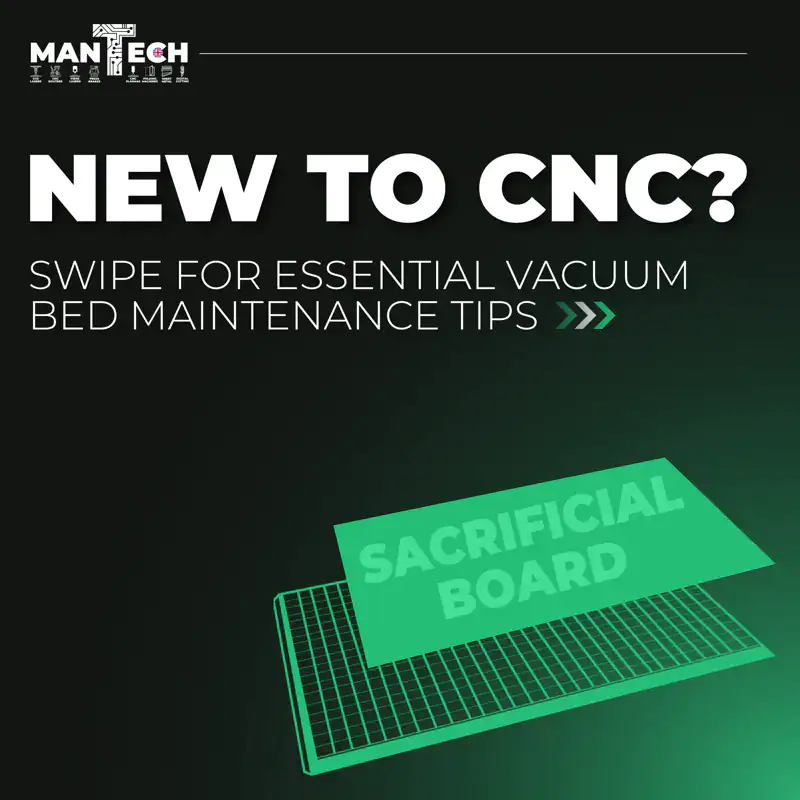

What Does a CNC Vacuum Bed Do?
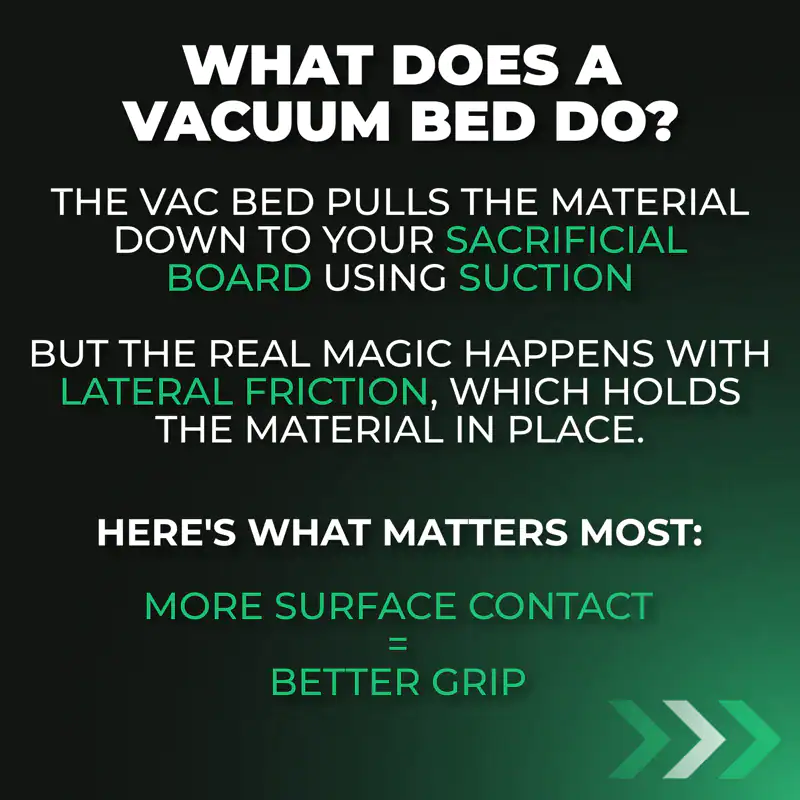
A CNC vacuum bed uses suction to pull material tightly down onto the sacrificial board, helping to keep it flat and stable during cutting. This is essential for achieving accurate cuts, clean edges and consistent results across full sheets.
However, suction alone is not what holds the material in place. The real holding force comes from lateral friction between the material and the bed. The greater the surface contact, the stronger the grip and the more reliable your cutting performance will be.
Understanding this principle is key to improving CNC vacuum hold down and avoiding common issues such as material movement or poor cut quality.
If you’re looking to improve cutting performance, choosing the right CNC router machine with an efficient vacuum system is essential.
However, suction alone is not what holds the material in place. The real holding force comes from lateral friction between the material and the bed. The greater the surface contact, the stronger the grip and the more reliable your cutting performance will be.
Understanding this principle is key to improving CNC vacuum hold down and avoiding common issues such as material movement or poor cut quality.
If you’re looking to improve cutting performance, choosing the right CNC router machine with an efficient vacuum system is essential.
Choose the Right Material for Vacuum Hold Down
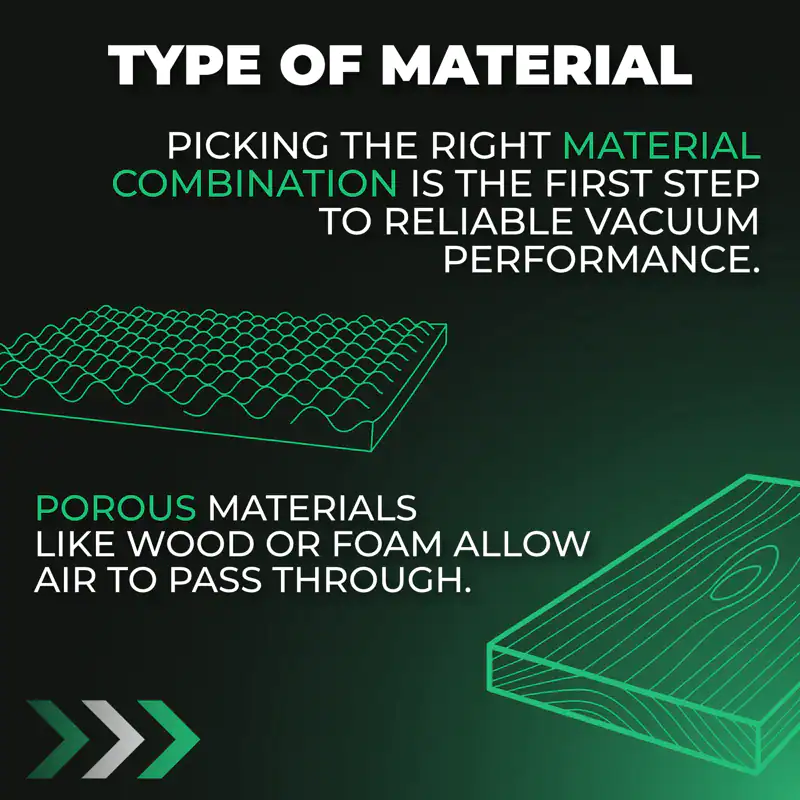
The type of material you are cutting has a major impact on CNC vacuum bed performance. Porous materials such as MDF, wood and some foams allow air to pass through, which can reduce overall suction and holding strength. When working with porous materials, having a more powerful industrial CNC router can help maintain consistent vacuum hold down performance.
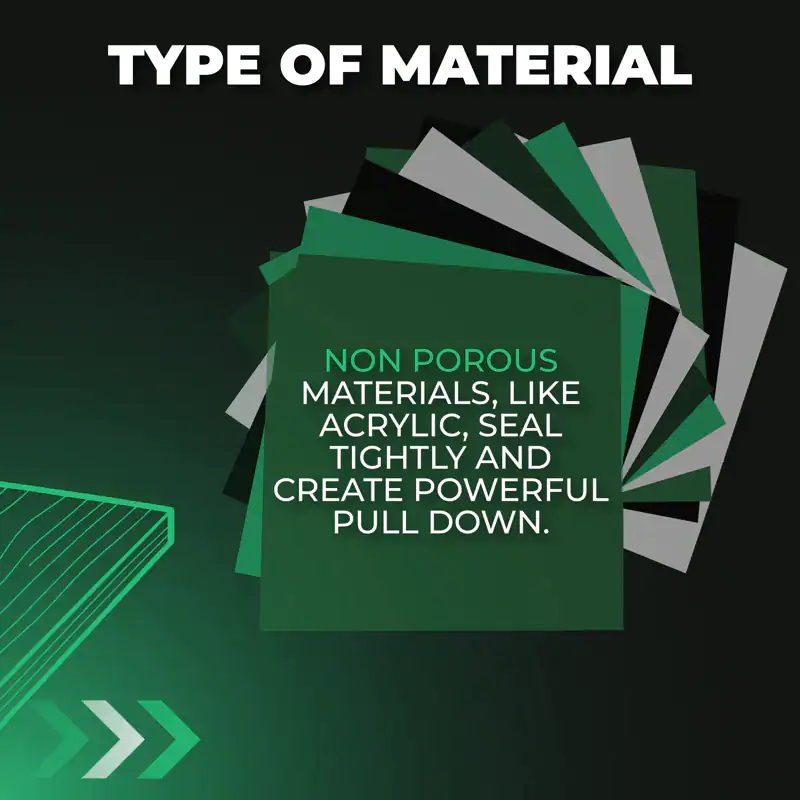
Denser, non-porous materials generally achieve better vacuum hold-down because they create a stronger seal against the bed surface. However, when working with porous sheets, it becomes even more important to maximise surface contact and minimise air leaks.
Choosing the right material, or adjusting your setup accordingly, is the first step towards achieving reliable and consistent CNC cutting results-
Denser, non-porous materials generally achieve better vacuum hold-down because they create a stronger seal against the bed surface. However, when working with porous sheets, it becomes even more important to maximise surface contact and minimise air leaks.
Choosing the right material, or adjusting your setup accordingly, is the first step towards achieving reliable and consistent CNC cutting results-
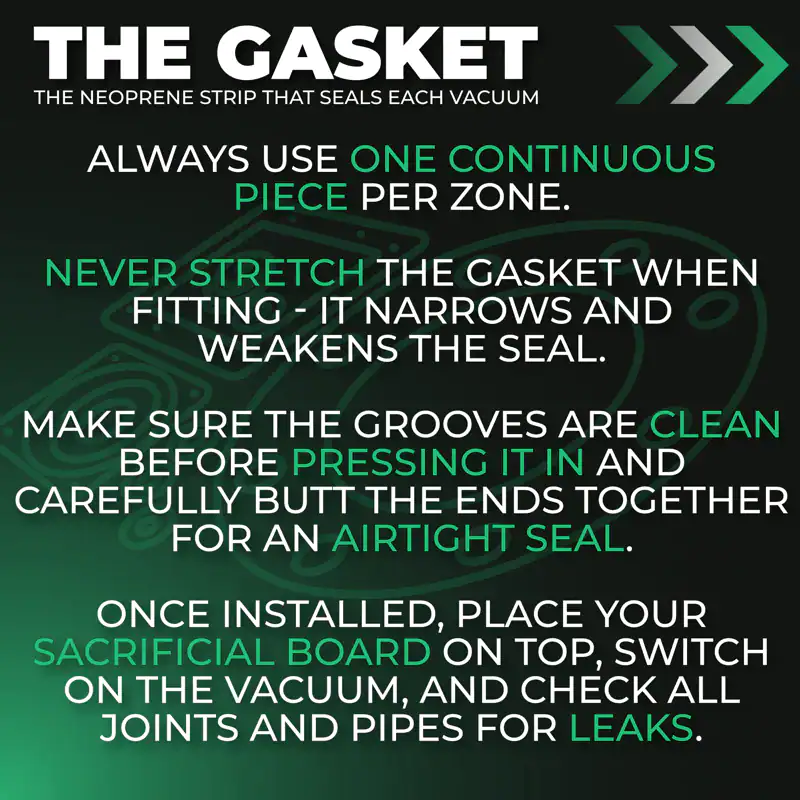
Install and Maintain Your Vacuum Gasket Properly
The type of material you are cutting has a major impact on CNC vacuum bed performance. Porous materials such as MDF, wood and some foams allow air to pass through, which can reduce overall suction and holding strength.
Denser, non-porous materials generally achieve better vacuum hold-down because they create a stronger seal against the bed surface. However, when working with porous sheets, it becomes even more important to maximise surface contact and minimise air leaks.
Choosing the right material, or adjusting your setup accordingly, is the first step towards achieving reliable and consistent CNC cutting results-
Denser, non-porous materials generally achieve better vacuum hold-down because they create a stronger seal against the bed surface. However, when working with porous sheets, it becomes even more important to maximise surface contact and minimise air leaks.
Choosing the right material, or adjusting your setup accordingly, is the first step towards achieving reliable and consistent CNC cutting results-
Prepare Your Sacrificial Board Correctly
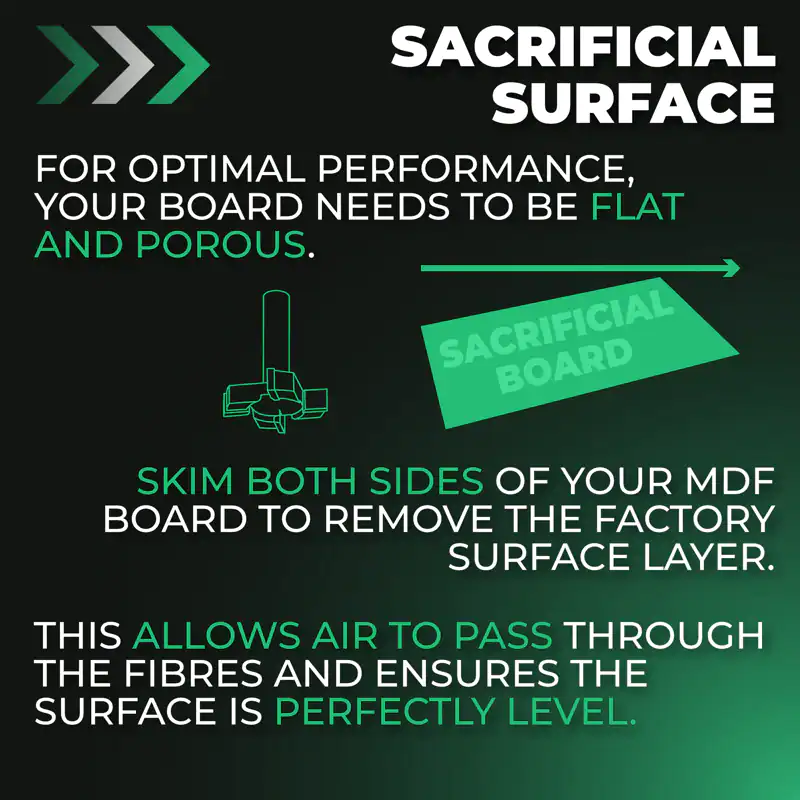
Your sacrificial board (typically MDF) is a key part of your CNC vacuum bed system and must be properly prepared to achieve optimal hold down performance. For best results, the board should be both flat and porous to allow air to pass evenly through the surface.
Skimming both sides of the board removes the factory finish and opens up the material fibres, improving airflow and suction across the entire sheet. This also ensures the surface is perfectly level, which is essential for accurate and consistent cutting.
An uneven or sealed sacrificial board can significantly reduce vacuum efficiency, leading to poor hold-down and potential material movement during machining. A properly configured CNC router combined with a well-prepared sacrificial board will significantly improve cutting accuracy and reliability.
Skimming both sides of the board removes the factory finish and opens up the material fibres, improving airflow and suction across the entire sheet. This also ensures the surface is perfectly level, which is essential for accurate and consistent cutting.
An uneven or sealed sacrificial board can significantly reduce vacuum efficiency, leading to poor hold-down and potential material movement during machining. A properly configured CNC router combined with a well-prepared sacrificial board will significantly improve cutting accuracy and reliability.
The Result: Better Hold Down and Cutting Accuracy
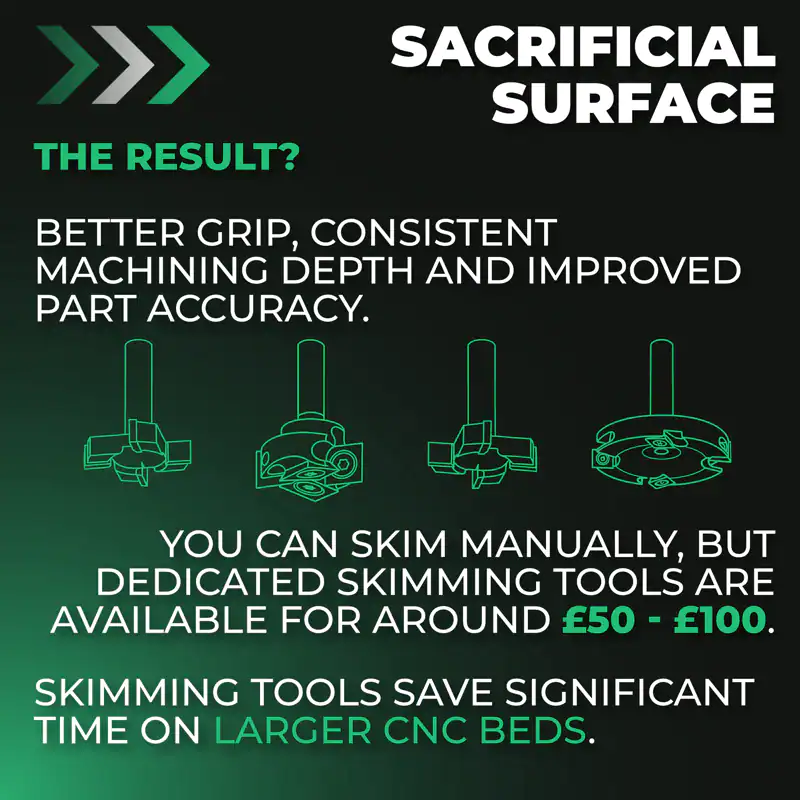
When your sacrificial board is properly prepared, the results are immediately noticeable. Improved surface contact leads to stronger grip, helping to prevent material movement during cutting.
This results in more consistent machining depth, cleaner finishes and greater overall part accuracy. These small setup improvements can make a significant difference to production quality, especially when working with full sheets or intricate components.
While skimming can be done manually, dedicated surfacing or skimming tools provide a faster and more consistent finish, particularly on larger CNC beds. Investing in the right tooling helps maintain performance and reduces setup time across repeated jobs.
This results in more consistent machining depth, cleaner finishes and greater overall part accuracy. These small setup improvements can make a significant difference to production quality, especially when working with full sheets or intricate components.
While skimming can be done manually, dedicated surfacing or skimming tools provide a faster and more consistent finish, particularly on larger CNC beds. Investing in the right tooling helps maintain performance and reduces setup time across repeated jobs.
Optimising Your CNC Vacuum Setup for Best Results
Achieving reliable CNC vacuum hold down is not dependent on a single factor, but a combination of correct setup, material selection and machine configuration. From choosing the right gasket and preparing your sacrificial board, to understanding material compatibility and using the correct tooling, each step plays an important role in overall performance.
By taking a structured approach to your CNC vacuum system, you can significantly improve hold down strength, reduce material movement and achieve more consistent machining results across a wide range of applications.
If you’re regularly experiencing hold-down issues, upgrading to a modern CNC router machine with improved vacuum design and zoning can make a significant difference.
By taking a structured approach to your CNC vacuum system, you can significantly improve hold down strength, reduce material movement and achieve more consistent machining results across a wide range of applications.
If you’re regularly experiencing hold-down issues, upgrading to a modern CNC router machine with improved vacuum design and zoning can make a significant difference.