Choosing the best CNC router for your business or workshop depends on your application, material mix, sheet size, tooling rhythm, support expectations and growth plans — not a generic ranking list. This article gives practical selection advice for UK buyers. For side-by-side Spartan, Falcon and Apollo comparison, use our structured buyers guide as the deeper resource.
“Best” on a spec sheet rarely matches best for your nest sizes, vacuum strategy and shift pattern. Our buyer's guide ranks Spartan, Falcon and Apollo for UK fabrication roles; the 5-key considerations article walks selection factors, and the CNC hub links every live range.
There is no single best CNC router for every buyer
Purpose and project scope matter first: whether you route signage, joinery components, campervan panels, plastics, templates or repeat production parts. The right machine aligns with your specific requirements and constraints — workspace, software workflow, precision needs and how the platform will be supported day to day.
Each of these factors plays a vital role in selecting the right CNC router, aligning with your specific requirements and constraints.
Start with your materials
- MDF, plywood and timber-based sheet goods — common on entry and mid-size routing platforms.
- Hardwood and joinery panels — spindle, tooling and hold-down must suit your everyday stock.
- Plastics and composites — achievable on many setups with correct cutters and extraction.
- Sign and display board — typical production routing workflows.
- Foam and prototype materials where tooling and vacuum strategy suit the job.
- Light non-ferrous work such as aluminium — only on appropriate spindle and feed settings; verify with sample parts.
Today's CNC routers can handle a wide variety of materials, from woods and plastics to soft metals and composites — but capability depends on machine specification, tooling, workholding and application, not brochure headlines alone.
Compare cutter types and tooling packs for wood, plastics, ACM and sign-making substrates before setting feeds and speeds.
Match the bed size to your work
Workspace constraints: assess the available space in your workshop or factory. The size of the CNC router should fit comfortably without hindering loading, extraction or day-to-day movement around the machine.
Match bed format to your largest everyday nest — current quoting and reasonable future growth — rather than a one-off oversized panel. Loading, unloading and vacuum strategy all follow from the sheet sizes you actually run.
Compare verified bed formats and platform roles on the CNC routers hub and in the structured CNC buyers guide — do not guess table size from a headline spec alone.
Manual tool change or automatic tool change?
Automated tool changing (ATC) allows the machine to switch between tools within a programme — useful when jobs regularly need several cutters in one nest. Manual tool-change routes suit simpler workflows, first-machine buyers and lighter daily use where the operator swaps tools between operations.
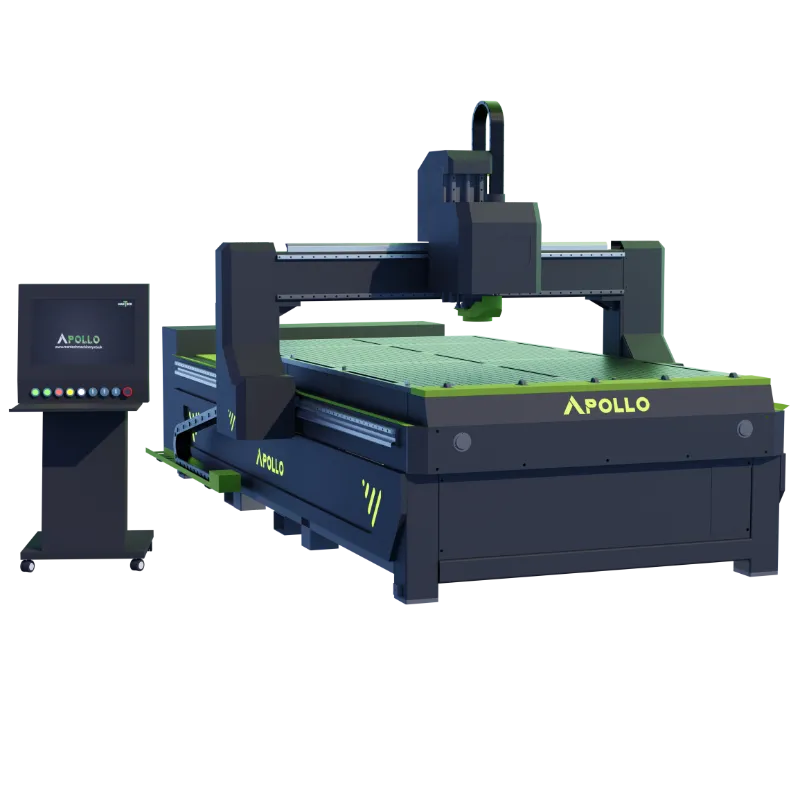
Falcon ATC uses a 10-tool linear rack (not a carousel). Apollo M offers a manual-change platform with an upgrade path to ATC when throughput grows; Apollo ATC suits heavier-duty automatic tool-change routing. The right choice follows your workload and tooling needs, not experience alone.
Compare Spartan, Falcon and Apollo routes
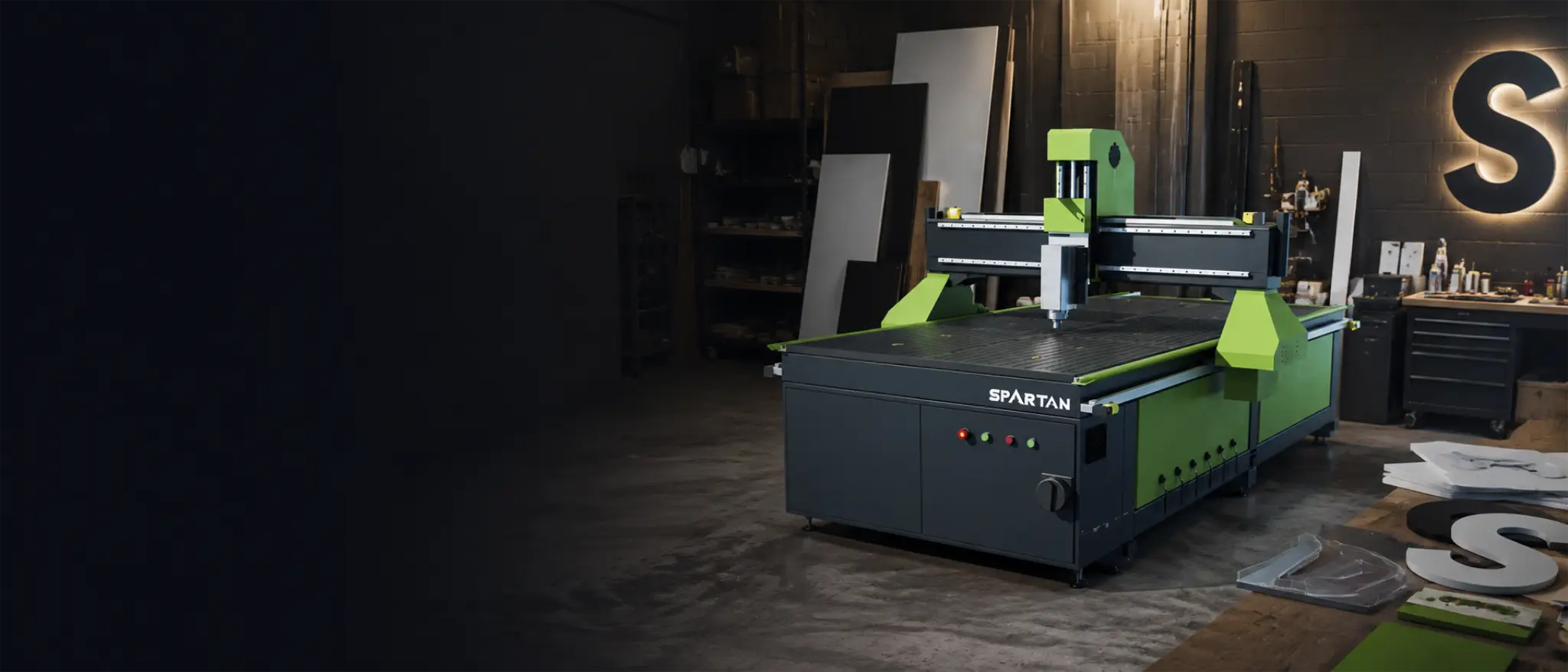
- Spartan — entry-level manual-change routing for startups, beginners and smaller workshops.
- Falcon ATC — automatic tool change with 10-tool linear rack for repeat multi-tool production.
- Apollo M — manual-change platform with upgrade path when production rhythm increases.
- Apollo ATC — heavier-duty automatic tool changer for continuous multi-tool routing.
Explore live platforms on the CNC router hub, Spartan, Falcon ATC, Apollo M and Apollo ATC product pages.
Software, budget and precision
- Software and compatibility — the control and CAM workflow must suit your design files and who programmes daily.
- Budget considerations — define scope early and balance cost against bed format, tooling, extraction and support; avoid choosing on ticket price alone.
- Precision and accuracy — align machine capability with the tolerance your customers actually quote, not theoretical brochure figures.
Consider support, training and installation
Routine maintenance — daily cleaning, lubrication and cutter inspection — keeps routing accurate shift after shift. Mantech offers UK installation, operator training, applications advice and a support system with self-help guides and service backup. Match the machine to the workload you expect to run, not the workload you hope to win someday.
Plan ongoing care with our 9 essential monthly CNC router maintenance checks, use the CNC router tooling guide to build a cutter library, and browse installations for UK workshop examples.
Read the full CNC router buyers guide
This article gives practical selection advice — the structured buyers guide is the deeper comparison resource for Spartan, Falcon and Apollo in UK fabrication roles. Use it when you are ready to shortlist bed size, tooling route and platform level side by side.
Read the CNC routers buyer's guide for structured comparison, then walk the 5-key CNC router considerations when you need a checklist before demo or quote.
Useful next reads
- CNC routers for beginners
First-machine decisions when you are new to routing.
- What is a CNC router?
Plain-English explainer before you compare platforms.
- The business case for a CNC router
Commercial framing when you are building the investment case.
- CNC router ROI calculator
Workload-dependent payback modelling — not a guarantee.
- Applications hub
Sector examples — signage, joinery, plastics and more.
- CNC routers for sign making
When display and signage work drives your quoting.
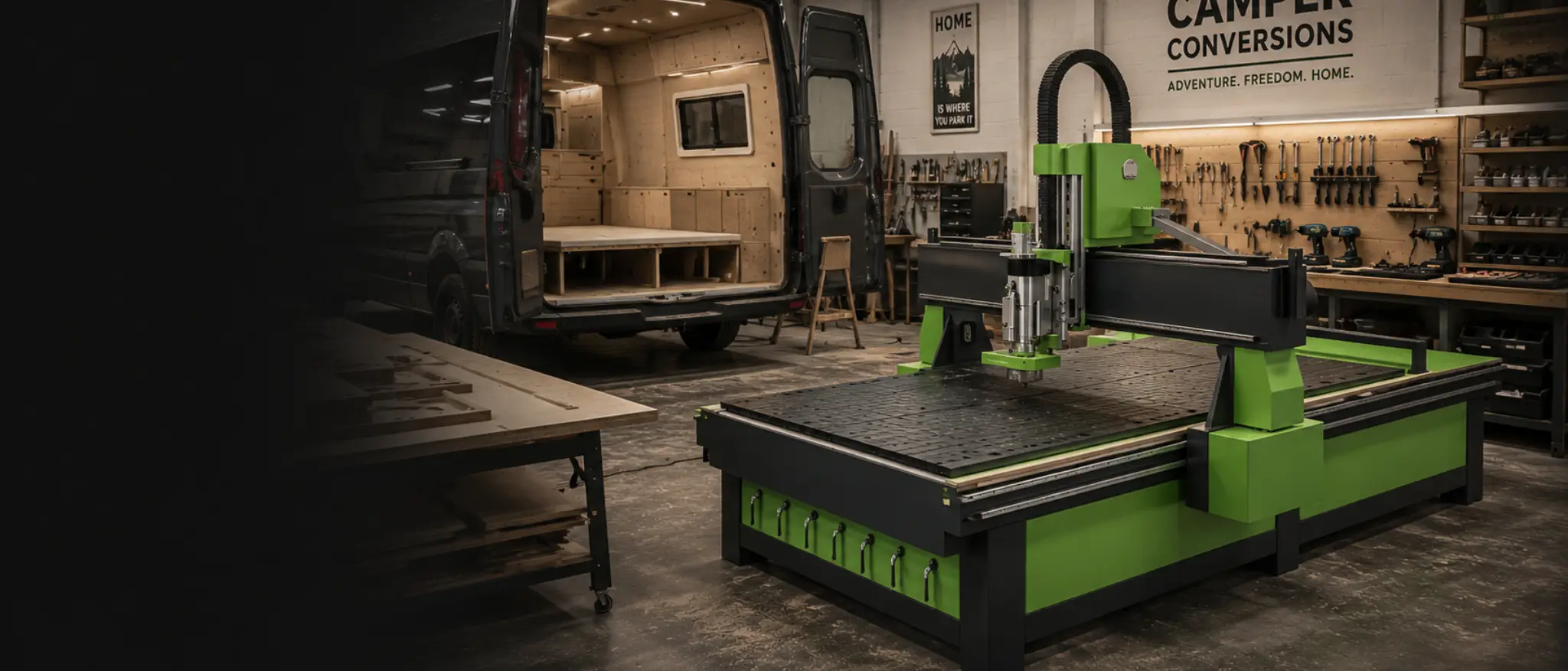
- CNC routers for campervan conversions
Panel and fit-out routing in van-build workflows.
Frequently asked questions
What is the best CNC router for a small UK business?
There is no universal winner — match material, sheet size, tooling rhythm and support to your everyday jobs. Many small businesses start on manual-change entry platforms; multi-tool production often points toward ATC. Read the structured buyers guide and compare Spartan, Falcon and Apollo on the CNC hub.
Should I choose manual tool change or ATC?
Manual change suits simpler jobs and first-machine buyers. ATC helps when nests regularly need several tools every cycle. Falcon ATC uses a 10-tool linear rack; Apollo M offers an upgrade path when throughput grows.
What size CNC router do I need?
Choose a bed that fits your largest everyday sheet or panel without excessive repositioning, and confirm workshop space for loading and extraction. Verified bed formats are listed on product pages and in the buyers guide — do not guess from headline marketing alone.
Which CNC router is best for beginners?
Beginners often suit manual-change entry platforms when training and UK support are planned. Read the beginners guide and buyers guide before you fix budget — bed size and material matter more than brand hype.
What should I check before buying a CNC router?
Material type, sheet size, bed format, tooling, extraction, manual vs ATC, software workflow, operator training, UK support and future growth. Use the 5-key considerations article and structured buyers guide for a full checklist.