In modern UK manufacturing, repeatability and production control matter — especially when panels, components and fixtures must stay consistent from batch to batch. CNC routers can help manufacturers bring suitable routing work in-house, respond faster to design changes and support flexible production, provided the machine matches your material, sheet size and daily workflow.
If you need the basics first, read our plain-English guide to what a CNC router is. For live Mantech platforms, start on the CNC routers hub. This article focuses on manufacturer benefits — not a full definition or buying comparison.
1. More control over in-house production
- Less reliance on external subcontractors for profiling, cutting and drilling.
- Faster response when customer changes land mid-job.
- More control over quality, scheduling and rework.
- Better fit for repeat panels, components, templates and fixtures you already quote regularly.
In-house routing makes most sense when you subcontract similar work often enough to justify floor space, training and support — not for one-off jobs alone.
2. Repeatable parts and consistent output
Programmed toolpaths let the same geometry run shift after shift with fewer manual layout variations. That supports repeat batches of panels, plastics, joinery parts, signage components, manufacturing fixtures and custom parts where dimensional consistency matters to your customer.
See repeat production in UK workshops on installations and sector fit on the applications hub.
3. Faster prototyping and product development
- Quicker test pieces and sample panels before full production.
- Jigs and fixtures routed in-house for assembly and finishing.
- Design changes fed through CAM without waiting on external lead times.
- Prototype components moved toward production-ready parts when the workflow is established.
4. Better flexibility across materials and applications
- MDF, plywood and timber-based sheet goods.
- Plastics and composites where tooling and extraction suit the stock.
- Sign and display board for manufacturing and fit-out supply chains.
- Manufacturing fixtures, templates and nested sheet components.
- Light non-ferrous work on appropriate setups — verify with sample parts.
Material suitability depends on machine specification, tooling and workholding — not every router handles every stock equally well.
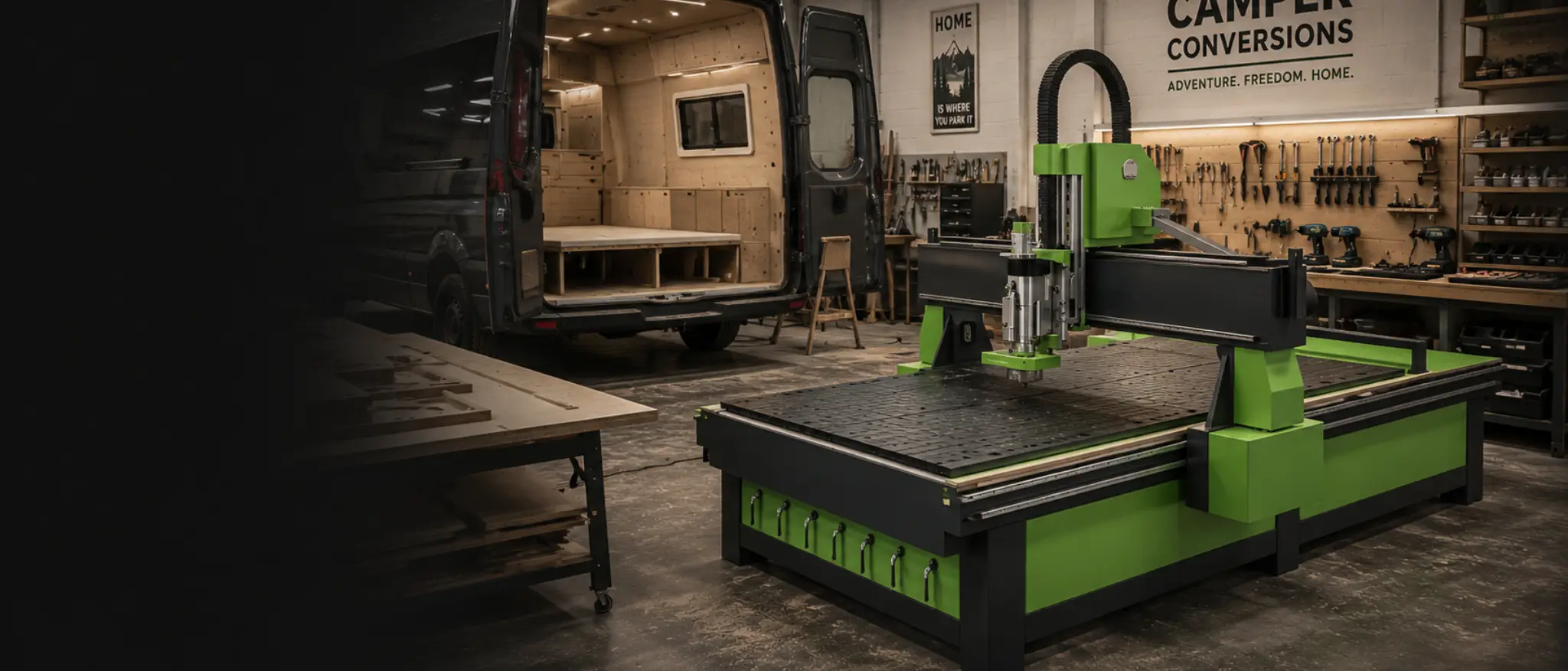
Explore CNC routers for sign making and campervan conversion routing where those sectors match your production mix.
5. Scalable machine routes as workload grows
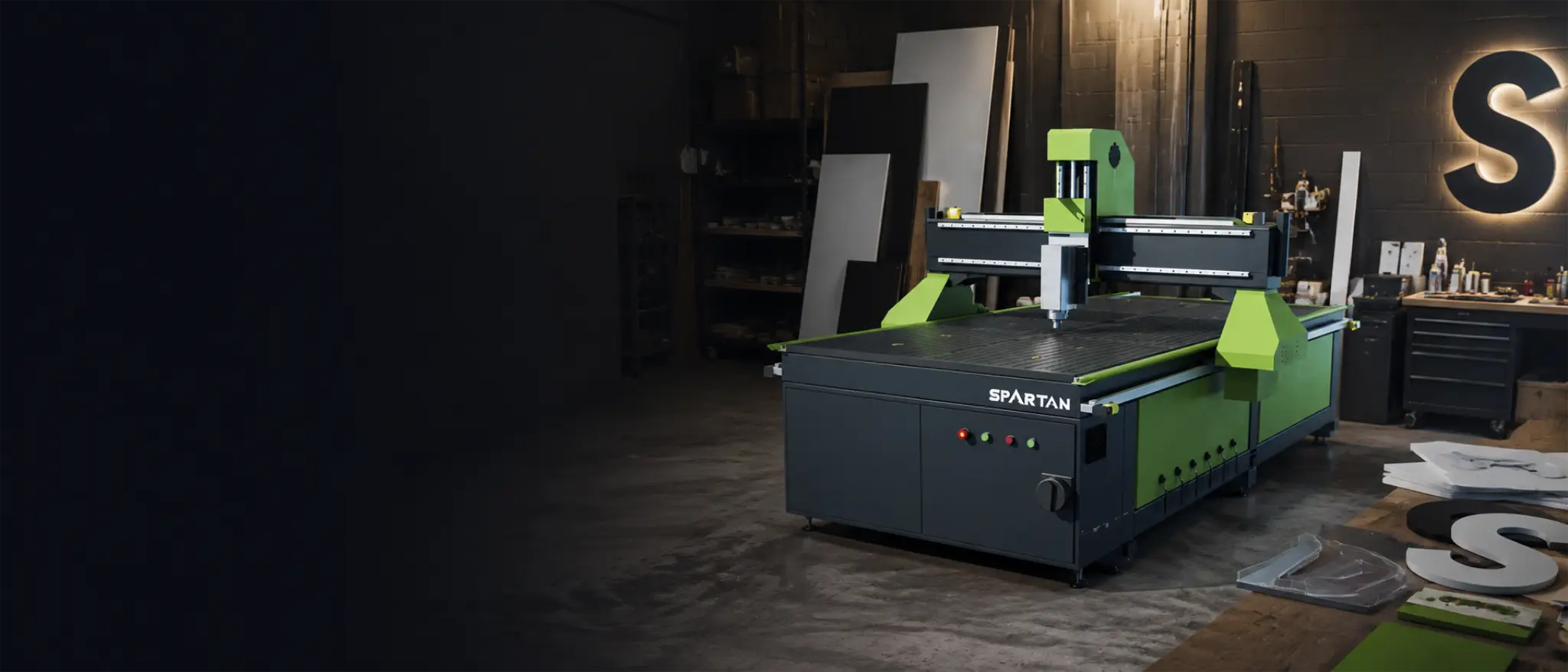
- Spartan — entry manual-change routing for smaller workshops and first production lines.
- Falcon ATC — automatic tool change with 10-tool linear rack for repeat multi-tool nests.
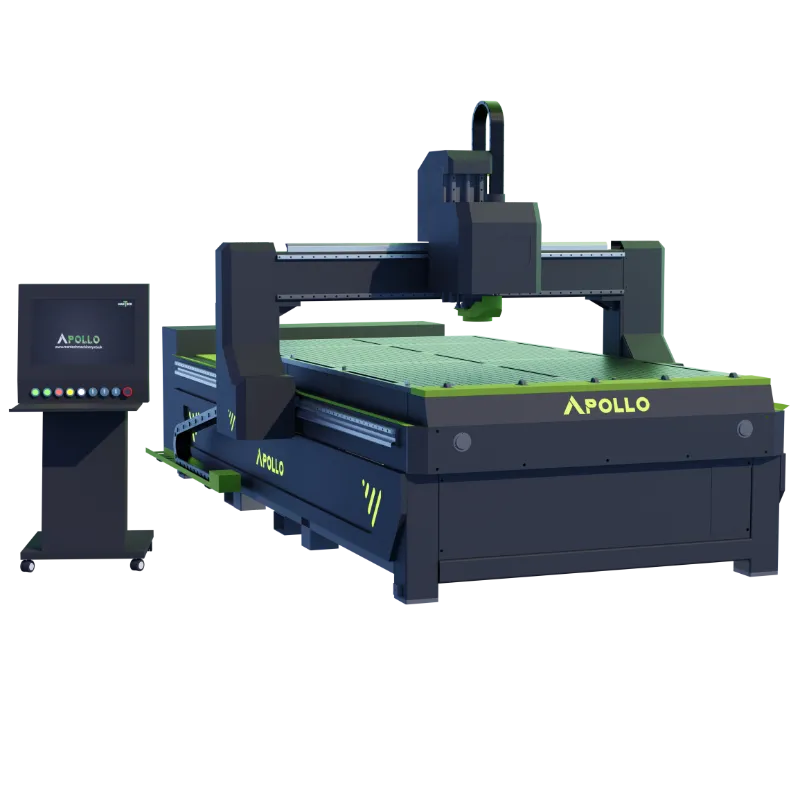
- Apollo M — manual-change platform with upgrade path to ATC when throughput increases.
- Apollo ATC — heavier-duty automatic tool changer for continuous multi-tool routing.
Compare verified platforms on Spartan, Falcon ATC, Apollo M and Apollo ATC — then read the structured buyers guide for side-by-side UK comparison.
What manufacturers should check before buying
- Materials and everyday sheet size.
- Production volume and nesting rhythm.
- Tooling, cutters and dust extraction.
- Manual tool change vs automatic tool change.
- Operator training, installation and UK support.
- Software and CAM workflow — who programmes daily.
- Future growth — will the platform still suit your quoting in two years?
Walk the checklist in 5-key CNC router considerations and frame the commercial case in the UK business case guide or CNC router ROI calculator — workload-dependent, not a guarantee.
Useful next reads
- What is a CNC router?
Main intent-owner explainer — start here if you need definitions and Mantech routes.
- CNC routers for beginners
First-machine decisions when routing is new to your team.
- How UK SMEs use CNC routers to diversify
Real SME production examples when you are expanding services.
- Top 5 reasons to buy a CNC router
Commercial reasons UK workshops invest in routing.
- Choosing the best CNC router
Practical selection advice before you shortlist platforms.
Frequently asked questions
How can CNC routers help UK manufacturers?
They can support in-house control, repeatability, faster prototyping and broader production capability when the platform matches your material and workflow. Benefits depend on how you quote and produce — read the what-is-a-CNC-router guide for context, then the buyers guide for comparison.
Are CNC routers useful for repeat production?
Yes — programmed toolpaths suit repeat panels, components, fixtures and nested batches. Multi-tool production often points toward ATC; Falcon ATC uses a 10-tool linear rack for that rhythm.
What materials can manufacturers cut on a CNC router?
Common stock includes MDF, plywood, hardwood, plastics, composites and sign board. Capability depends on machine, tooling and workholding — verify non-standard materials with sample parts.
Should manufacturers choose manual tool change or ATC?
Manual change suits simpler jobs and lighter daily use. ATC helps when nests regularly need several tools every cycle. Compare Spartan, Falcon ATC and Apollo on the CNC hub and buyers guide.
Where should I start if I am new to CNC routers?
Read what is a CNC router for plain-English basics, then the beginners guide and structured buyers guide before you request a demo or quote.