Fibre laser cutters are powerful metal-cutting machines. Safety is not an afterthought bolted on after purchase — it should shape how you choose the platform, size extraction, plan workshop layout, train operators and maintain the cell. This guide covers practical safety questions UK buyers and workshop managers should ask before committing floor space. It supports your buying journey; it is not a substitute for your machine manual, qualified site assessment or manufacturer service procedures.
Safety planning starts before the machine arrives — enclosure, interlocks, extraction and training should be scoped with your install, not added later. Compare enclosed Vector platforms on the fibre laser hub, size Kemper extraction on the Kemper fibre laser extraction hub, and pair this guide with the maintenance checklist once the cell is running.
Why fibre laser safety matters
Fibre lasers are impressive industrial tools, and more UK workshops are adding them as the technology becomes accessible. That growth also means more suppliers offering platforms with uneven attention to basic safety implementation — whether through lack of understanding or pressure to cut specification at quote stage.
- Fibre laser cutters are serious industrial laser systems — typically Class 4 in common configurations — and can cause serious injury if operated without proper guarding, procedures and training.
- Poor setup or poor procedure creates avoidable risk to eyesight, respiratory health and workshop fire safety.
- Safety affects operators, visitors, workshop layout, extraction routing, maintenance rhythm and after-sales support — not only the machine cabinet.
- Correct machine design, installation, training, maintenance and operating discipline work together. One element alone does not make a cell safe.
Basic safety risks to understand
When a high-powered fibre laser cuts metal, the beam can reflect from the sheet — especially on stainless, aluminium and other reflective materials such as brass. Stray beam paths are a real eyesight hazard without a full safety enclosure and correctly rated viewing panels.
- Eyesight — reflected or stray laser energy can damage vision. Enclosure and rated viewing windows matter.
- Respiratory health — cutting vaporises metal and creates fine particulate that must be captured, not released into the workshop.
- Long-term exposure — metal dust in the sub-micron range is easy to inhale; extraction and filtration must match the process.
- Fire risk — iron oxide and aluminium powder from cutting can contribute to fire risk if dust is not contained and extracted; routine cleaning and maintenance reduce that risk.
Look for a proper enclosed machine design
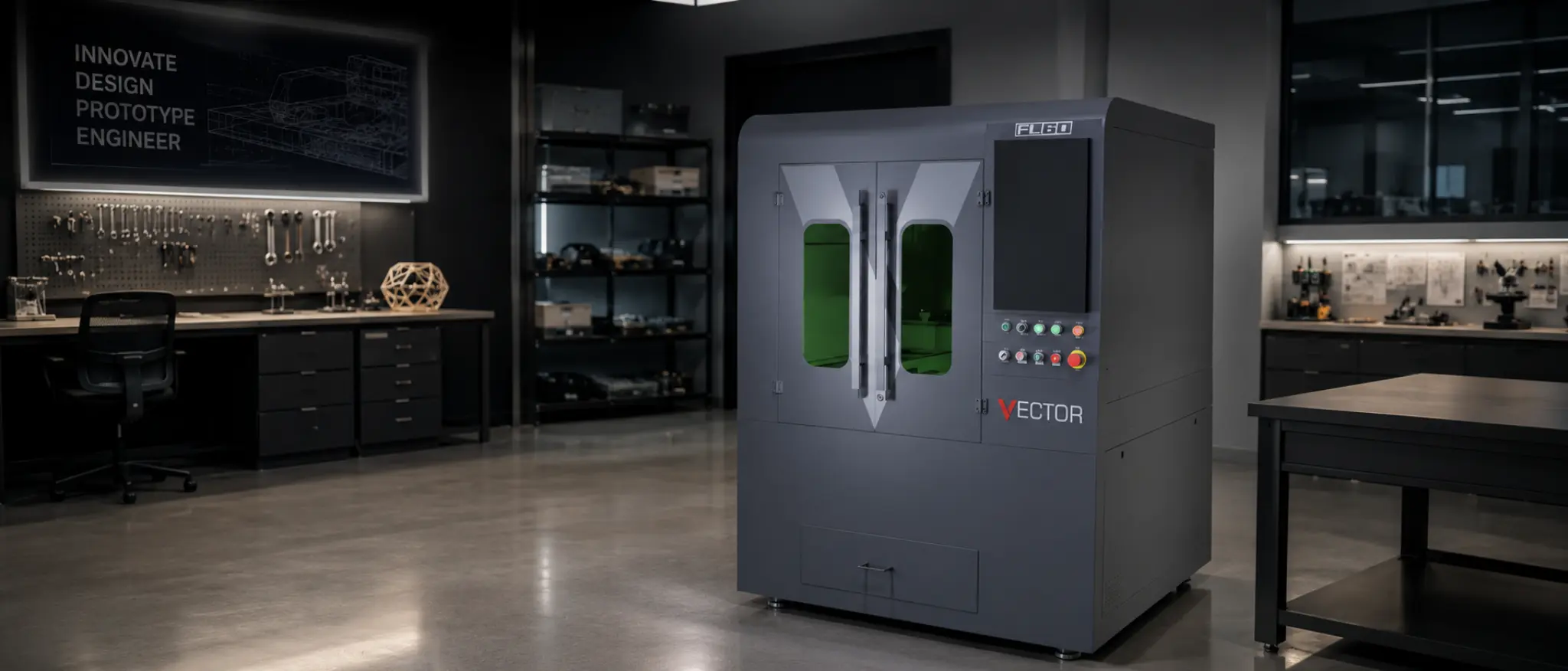
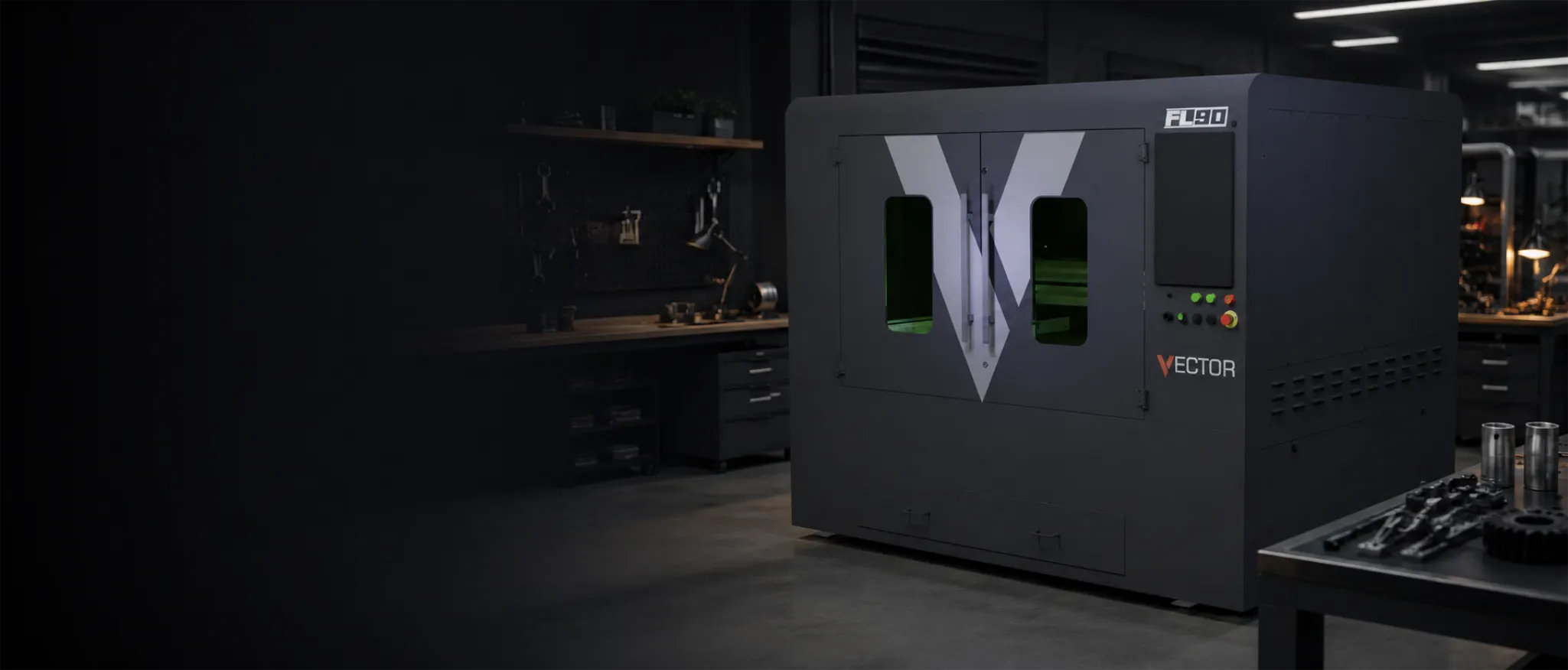
All fibre laser cutters intended for production metal cutting should be fully enclosed to limit stray beam paths and help contain process particulate. Open-topped or partially open systems may look flexible on a brochure, but they are a poor fit for responsible metal-cutting safety in most UK workshops.
- Full safety enclosure around the cutting zone — not a cosmetic cover.
- Correctly rated laser safety viewing windows on any observation panels.
- Access doors designed as part of the safety system, not as optional extras.
- Enclosure alone does not remove the need for training, extraction, maintenance and disciplined operating procedures.
Compare enclosed Vector platforms on the fibre laser hub and review Vector FL90 as a common UK mid-format example with integrated guarding.
Check interlocks and access control
Safety interlocks should prevent laser operation when enclosure doors are open or access points are not secure. That protects operators and anyone in the vicinity from stray beam exposure and process vapour during cutting.
- Door and access interlocks wired into the machine safety chain — not bypassed for convenience.
- Operators must never defeat guards, interlocks or laser safety systems.
- Damaged panels, faulty switches or repeated safety alarms should stop production and be escalated to qualified support.
- Do not attempt electrical repair, laser-source work or safety-system modification outside manufacturer training.
Understand laser class and buyer responsibility
Buyers and employers remain responsible for how a fibre laser is installed, operated and maintained in their workshop. Laser class, operator training, workshop layout and local health and safety duties should be understood before the machine arrives — not after the first production shift.
Site-specific requirements vary by building, process, materials and how many people access the area. Discuss layout, signage, training records and any formal risk assessment with qualified advisers where your operation requires it. Mantech can advise on machine matching, installation planning and handover — but legal and site compliance remain the buyer's responsibility to scope correctly.
Extraction and fume management
Cutting metal with a fibre laser vaporises material and creates fine particulate. These fumes and dust particles must be extracted away from the operator and captured by filtration matched to the machine, materials and daily run hours. Enclosure helps contain particulate so extraction can work efficiently — an open cell makes effective capture much harder.
- Industrial-grade extraction and filtration sized for your machine and material mix.
- Correct duct routing, filter service life and airflow maintained to manufacturer guidance.
- Workshop air quality and operator environment — not only cut quality — depend on extraction performance.
- Filters and extraction systems need planned maintenance; treat them as part of the production cell, not optional extras.
Size and maintain filtration on the Kemper fibre laser extraction hub. Extraction should be scoped with your machine specification and install layout — not guessed from a generic brochure airflow figure.
Operator training and handover
Untrained operation is not acceptable on a production fibre laser. Operators need structured handover covering startup and shutdown, material and sheet setup, job parameters, alarm response, safe access to the cutting area, extraction checks and when to stop and call support.
- Installation and commissioning handover from the supplier — not only a delivery drop.
- Documented procedures for your platform, materials and shift pattern.
- Clear escalation when cut quality drops, gas supply fails, extraction alarms or safety faults appear.
- Supervision and refresher training when new operators join or materials change significantly.
See how UK workshops run fibre lasers in production on installations and discuss training scope when you compare platforms on the fibre laser hub.
Routine maintenance and safety checks
Safety and uptime overlap. A dirty, poorly maintained cell is harder to run safely and predictably. Routine operator checks — within training and the machine manual — should cover optics and nozzle condition, chiller indicators, extraction performance, bed and slat condition, slag accumulation and general machine integrity.
- Cutting-head protective optics and nozzles — report contamination or damage; do not improvise cleaning outside training.
- Chiller and coolant indicators per machine guidance — escalate internal service to qualified engineers.
- Extraction running, filter status and clear duct routes.
- Bed, slats and collection trays — slag and dust build-up affect safety and cut consistency.
- Service records and planned engineer visits — not only reactive breakdown calls.
Use the 10 key fibre laser maintenance checks as a practical operator checklist alongside this safety guide.
Choosing the right fibre laser for the workspace
Safe installation depends on more than cabinet dimensions. Bed size, kW rating, extraction routing, sheet loading access, operator walkways, service access and future production growth all affect how safely the cell runs day to day. Power should follow application — everyday material, thickness and shift length — not headline brochure kW alone.
Read the fibre laser power guide, compare platforms on the fibre laser hub and model ownership context on the fibre ROI calculator and UK fibre laser cost guide before you fix layout and extraction scope.
Questions to ask before buying a fibre laser cutter
- Is the machine fully enclosed with rated viewing panels for metal cutting?
- What safety interlocks and access control are included as standard?
- What extraction and filtration is required for my materials and run hours?
- What operator training and handover is included at install?
- What routine checks does the manufacturer expect — daily, weekly and scheduled service?
- What support, service backup and parts route exists after install?
- What floor space, access and loading area does the install need?
- What materials and thickness range will we cut most days — and does kW match that honestly?
- What safety responsibilities sit with the buyer, employer and operators on site?
How Mantech supports safer fibre laser ownership
Whether you choose Mantech as your machinery partner or not, we want industrial laser cutting run responsibly in UK workshops. Mantech supplies enclosed Vector fibre laser platforms with application-led advice, installation planning, operator training at handover, Kemper extraction guidance where required, and UK engineering support from Halesowen. We do not overclaim safety — correct design, install, training, extraction, maintenance and disciplined operation all matter.
For service routes and ongoing backup, visit Mantech support and the help centre. Compare machine routes on the general fibre vs CO2 guide if material mix is still open, or the sheet-metal comparison when metal dominates your quoting.
Useful next reads
- 10 key fibre laser maintenance checks
Routine operator checks that support safe, predictable production.
- Kemper fibre laser extraction
Size and maintain fume filtration for your install and materials.
- Fibre laser power guide
Match kW and bed format to everyday work before you plan layout.
- Vector FL90 fibre laser
Review a common enclosed UK mid-format platform specification.
- Mantech support
Service backup, consumables and engineer contact when faults appear.
- Fibre vs CO2 laser guide
Material-led platform choice when safety planning starts at purchase.
Frequently asked questions
Are fibre laser cutters safe?
They can be operated safely when supplied as a properly enclosed platform with interlocks, matched extraction, trained operators and maintained procedures. They are not safe by default — safety depends on correct design, install, training, extraction, maintenance and disciplined use. Treat them as serious industrial machines.
Do fibre laser cutters need extraction?
Yes. Metal cutting produces fume and fine particulate that must be captured and filtered. Extraction should be sized for your machine, materials and run hours — see the Kemper fibre laser extraction hub and scope it with your install, not as an afterthought.
Why does enclosure matter on a fibre laser cutter?
Enclosure limits stray beam paths from reflective sheet and helps contain process particulate so extraction can work. It does not replace training, interlocks, extraction or maintenance — an enclosed machine still needs responsible operation.
What training is needed for a fibre laser cutter?
Operators need supplier handover on startup, shutdown, setup, parameters, alarms, safe access and when to stop. Untrained operation is not acceptable. Refresher training matters when new staff join or materials change significantly.
What safety checks should operators carry out?
Follow your machine manual — typically checks on guarding, interlocks, extraction, optics and nozzle condition, gas supply, chiller indicators and bed cleanliness before production. Escalate faults and anything outside routine checks to qualified support.