Buying a first CNC router can feel complicated — spindle power, bed size, automatic tool change and software all appear at once. The choice becomes much clearer when you start with your materials, standard sheet size, daily workflow and the support you will need, rather than headline price or the largest machine on the brochure. This guide explains the basics and helps UK beginners route toward a sensible first Mantech platform.
First-time router buyers often underestimate bed format — fitting an 8×4 panel on a compact machine means more joins and rework than nesting on a full-size bed. Spartan is where many workshops start; our buyer's guide explains how it compares to Falcon and Apollo, and case studies show small UK businesses running their first CNC day to day.
What is a CNC router?
CNC means computer numerical control. A CNC router follows programmed toolpaths to cut, profile, engrave and shape suitable sheet materials with repeatability. The operator prepares a design in CAM software, secures the material on the bed, and the machine runs the programme — swapping tools manually on entry-level platforms, or automatically on ATC production routes.
- Cuts and profiles sheet goods — timber, board, plastics and composites on appropriate setups.
- Engraves text, logos and detail where tooling and material allow.
- Repeats the same part accurately — useful for signs, panels, components and production nests.
- Commonly used for signage, furniture parts, templates, prototypes and workshop production work.
For a longer process overview, read what is a CNC router? — this page focuses on first-buyer decisions.
What can beginners use a CNC router for?
- Signs and display panels — routed lettering and shaped board work.
- MDF and plywood parts — carcass components, templates and workshop sheet.
- Joinery and cabinetry components — repeatable cut parts from sheet stock.
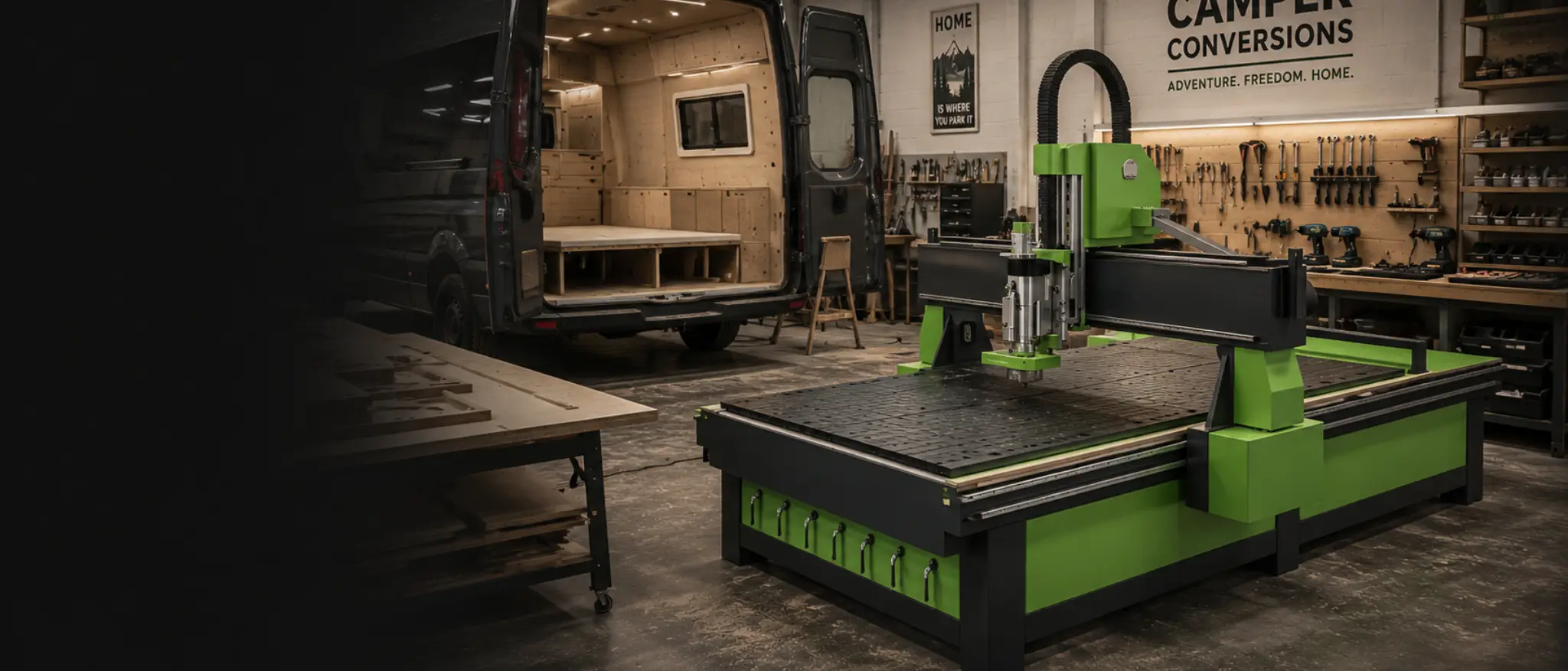
- Campervan conversion panels — nested interior fit-out parts.
- Plastic sheet work — with correct tooling and extraction.
- Jigs, templates and fixtures — repeatable aids for manual assembly.
- Prototyping — test fit before full production runs.
- Educational workshop projects — with training and supervision.
- Custom products — one-offs and small batches as skills grow.
Browse examples on the applications hub, CNC routers for sign making and campervan conversion benefits where those jobs match your plans.
What should you decide before buying your first CNC router?
- Materials — timber, board, plastics and any light non-ferrous work you genuinely plan to run.
- Bed size — match your largest everyday panel or nest.
- Manual tool change vs ATC — simpler first route vs multi-tool production.
- Tooling and workholding — cutters, vacuum strategy and spoilboard setup.
- Dust extraction — plan safe chip and dust management from install day.
- Software and control — CAM time is part of ownership; Vectric VCarve Pro is included on Spartan supply packages.
- Workshop space, power and delivery access.
- Training — who will programme and operate the machine daily.
- UK support and service backup after handover.
- Future growth — will manual change still suit quoting in 18–24 months?
Work through the full checklist in our 5-key CNC router guide and compare platforms in the CNC routers buyer's guide when you are ready for deeper comparison.
Manual tool change or ATC for a beginner?
Manual tool change keeps the first machine simpler to learn. The operator swaps cutters between operations — fine for education, prototyping, lighter daily use and jobs with one or two tools per programme. Automatic tool change pays back when nests regularly need several tools every cycle and swap downtime limits throughput.
Experience level alone does not dictate the answer — a beginner quoting multi-tool cabinetry every day may still need Falcon ATC sooner than an experienced maker running simple two-tool jobs. Falcon ATC uses a 10-tool linear tool rack (not a carousel); Apollo M offers a manual start with an upgrade path to ATC.
Spartan as a first CNC router route
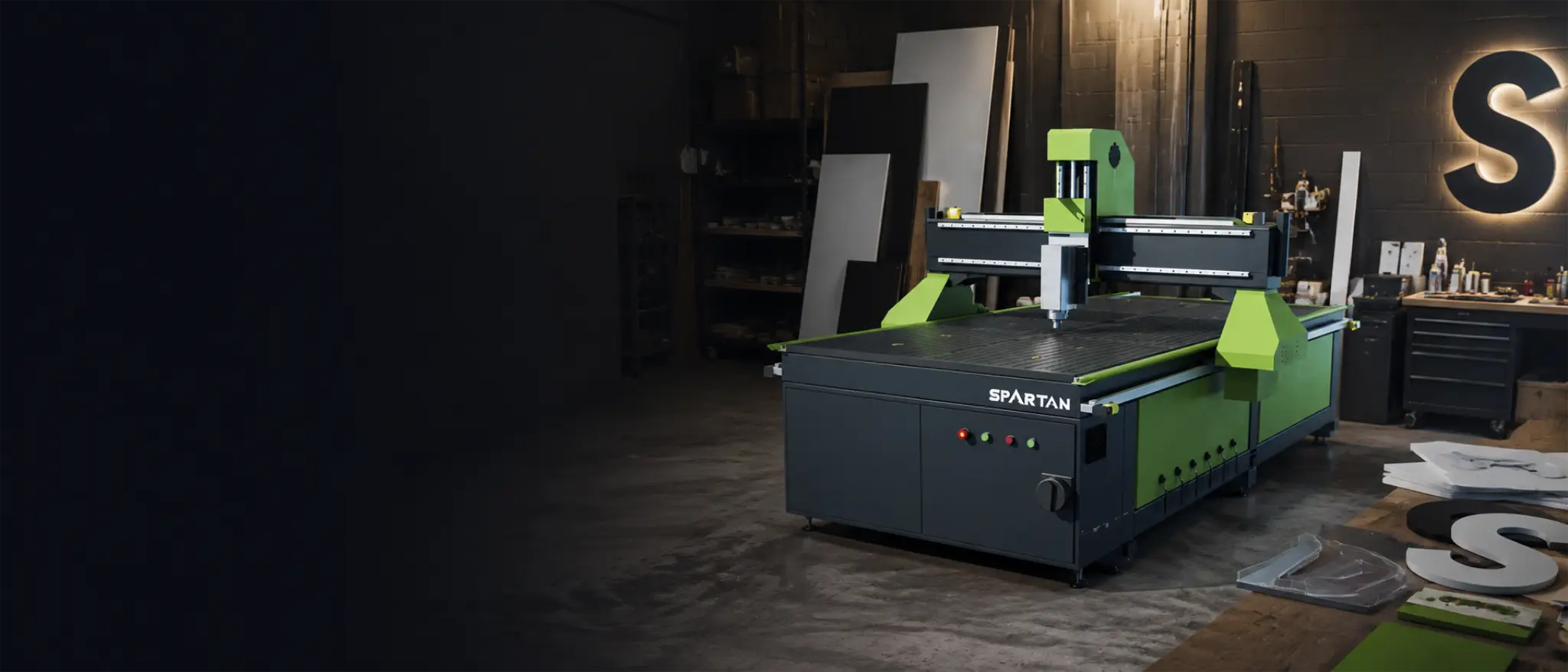
Spartan is Mantech's entry-level manual tool-change platform — a practical first route for startups, beginners, education and small workshops that need real routing capability without jumping straight to production ATC.
- Manual tool change — operator swaps tools between operations.
- Entry-level 8×4 and 10×5 formats for common UK sheet sizes.
- Vectric VCarve Pro included — design, CAM and nesting workflow.
- UK installation, operator training and nationwide support on supplied platforms.
See full specification on the Spartan CNC router product page and read Spartan for startups if first investment and floor space are your main constraints.
When to step up to Falcon ATC or Apollo
- Falcon ATC — automatic tool change with 10-tool linear rack for repeat multi-tool signage, cabinetry and nested sheet production.
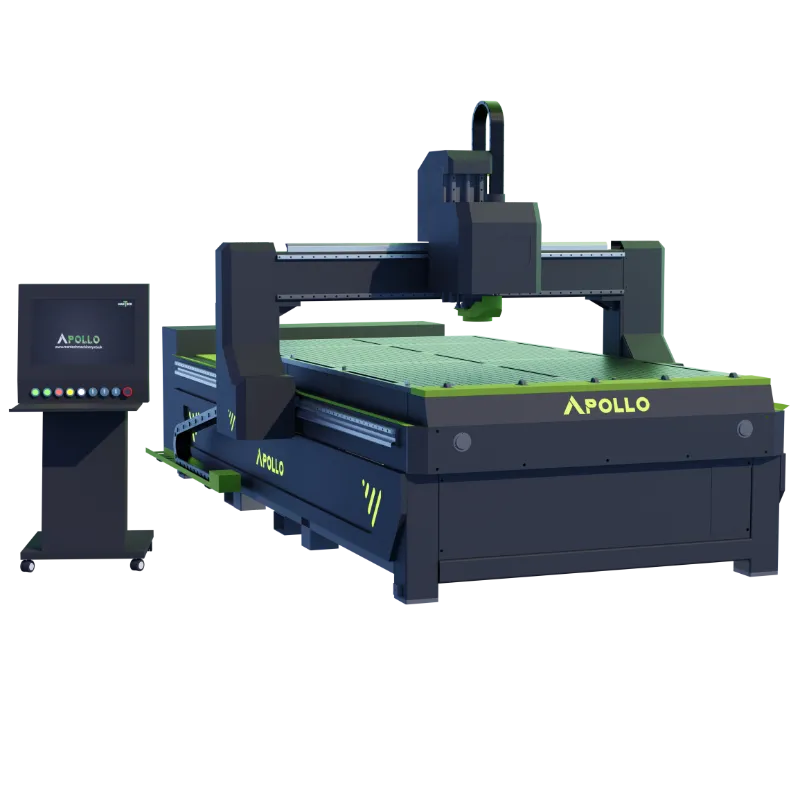
- Apollo M — manual-change 1325 platform with upgrade path to 10-tool ATC when throughput grows.
- Apollo ATC — heavier-duty 10-position automatic tool changer for continuous multi-tool production.
Explore step-up routes on the Falcon ATC, Apollo M and Apollo ATC pages — and compare every range on the CNC routers hub.
Beginner mistakes to avoid
- Buying purely on lowest headline price — ownership includes tooling, extraction, software time and support.
- Choosing a bed too small for your standard sheet — joins and rework cost margin.
- Ignoring extraction planning before install day.
- Underestimating tooling and workholding setup.
- Assuming all materials behave the same — test feeds and speeds on your stock.
- Skipping training and CAM learning time.
- Staying manual when programmes need six or more tools every nest.
- Not planning for UK support, maintenance and service backup.
Review monthly CNC maintenance checks and vacuum bed best practices before you commit floor space.
How Mantech supports first-time CNC buyers
Mantech matches Spartan, Falcon and Apollo platforms to real UK jobs — application-led advice, installation, operator training and nationwide engineer support from Halesowen. First-time buyers get a defined handover, not a crate on the floor.
Frame the commercial case on the CNC router ROI calculator, read the UK business case guide and see live workshops on case studies and installations. Call 0121 541 1444 with nest files and floor dimensions when you are ready.
Useful next reads
- CNC routers buyer's guide
Structured Spartan vs Falcon vs Apollo comparison when you are past the basics.
- What is a CNC router?
Process overview — how routing, programming and workflow fit together.
- 5 key CNC router considerations
Material, bed size, tooling, automation and support — full selection checklist.
- Understanding CNC router ROI
Payback framing when you are building the internal business case.
- Spartan CNC router
Full entry-level specification when Spartan is your shortlist.
- Education machinery hub
Schools and colleges — funding, warranty and workshop planning context.
Frequently asked questions
What is the best CNC router for a beginner?
Depends on material, sheet size and daily volume — not experience alone. Many first-time UK buyers start on Spartan for manual-change entry routing; multi-tool production may need Falcon ATC from the outset. Compare roles in the buyer's guide and demo with your own nest files.
What can I make with a beginner CNC router?
Signs, MDF and plywood parts, joinery components, campervan panels, plastic sheet work, jigs, templates, prototypes and educational projects are common starting points. Match bed size and tooling to your everyday quoting.
Should my first CNC router be manual tool change or ATC?
Manual change suits simpler jobs, education and lighter daily use. ATC suits multi-tool production where tool swaps every nest would slow the line. Falcon ATC uses a 10-tool linear rack; Apollo M offers an upgrade path when throughput grows.
What materials can a CNC router cut?
Common sheet materials include MDF, plywood, hardwood, plastics, composites and signage board. Light non-ferrous work may be possible on appropriate setups — verify with sample parts. Match expectations to platform capability.
What should I check before buying my first CNC router?
Material and sheet size, manual vs ATC, tooling and extraction, CAM workflow, workshop space, training, UK support and growth plans. Start on the CNC hub, read the 5-key guide and Spartan product page, then request a demo with your own files.