For many UK workshops, joinery firms and SMEs, a CNC router is not just a machine purchase. Used well, it can bring routing in-house, improve consistency, increase capacity and open services you currently subcontract — provided the platform matches your material, sheet sizes, tooling rhythm and growth plans. The commercial case is workload-dependent; this guide explains where value typically comes from and how to route toward the right Mantech platform.
Volume, material mix and subcontract spend decide whether in-house routing pays back — not the headline machine price. Run numbers on the CNC ROI calculator, see how similar workshops sized Spartan and Falcon on installations, and use the buyer's guide to match bed format to your nest sizes.
Why businesses invest in CNC routers
Most buyers are not chasing technology for its own sake. They want measurable improvements in how work moves through the shop.
- Reducing outsourced cutting, profiling and drilling.
- Improving turnaround on repeat customer jobs.
- Increasing dimensional repeatability across batches.
- Handling more work in-house without adding scarce manual skills.
- Improving finish consistency and reducing rework.
- Opening new services — custom panels, signage, joinery components, prototypes.
- Reducing dependency on manual layout and one-off jig building.
Where the business value comes from
Value shows up in different places depending on your quoting mix. None of these are guaranteed savings — they depend on utilisation, nesting efficiency and how much work you can realistically bring in-house.
- Labour efficiency — repeatable programmes replace repetitive manual marking and cutting on suitable jobs.
- Material efficiency — true-shape nesting can improve sheet yield when programmes are planned properly.
- Repeatable production — the same part runs the same way, shift after shift.
- Reduced rework — consistent toolpaths and hold-down reduce scrapped panels.
- Faster prototyping — test fit and customer sign-off before full production runs.
- Faster customer response — quote and deliver without waiting on subcontractors.
- New product and service opportunities — work you previously declined or outsourced.
Which types of UK businesses benefit most?
CNC routers appear across fabrication, education and light industrial environments. The strongest business case usually sits where sheet goods, repeat nests and multi-tool programmes are already part of weekly quoting.
- Sign makers — ACM, board and nested panel work.
- Joinery and cabinetry firms — carcass parts, doors and repeatable sheet components.
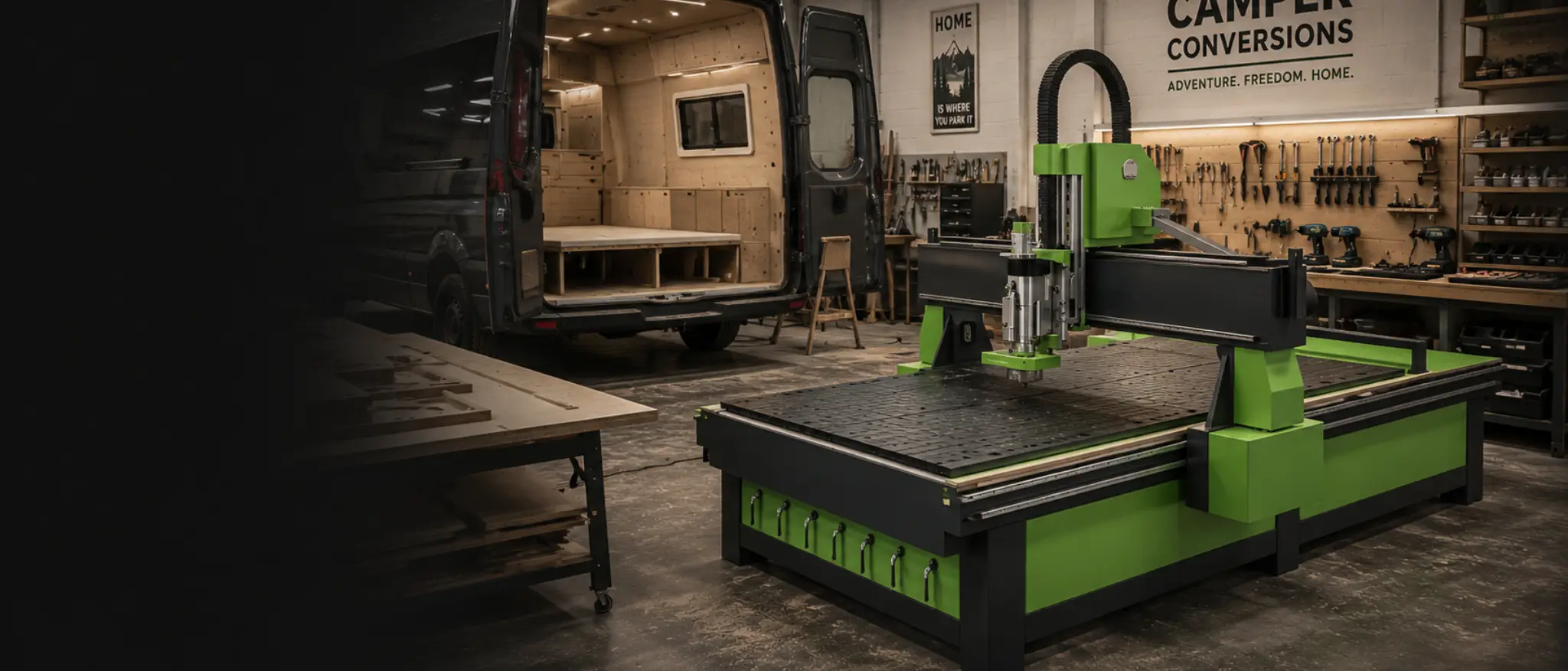
- Campervan conversion businesses — nested interior panels and custom fit-out parts.
- Plastics and composites fabricators — profiled sheet work with correct tooling and extraction.
- Education and training providers — structured CNC programmes with UK support.
- Product designers and prototyping teams — faster iteration before production commitment.
- Manufacturers bringing routing in-house — reducing subcontract spend on suitable parts.
- Custom fabrication businesses — bespoke one-offs and small batch work alongside repeat jobs.
See sector context on the applications hub, CNC routers for sign making, campervan conversion benefits and how UK SMEs use CNC routers to diversify where those models match yours.
Entry-level CNC router or production ATC?
The commercial difference is workflow, not brochure top speed. Manual tool-change suits lighter daily use, education and first investment. Automatic tool change pays back when programmes need multiple tools every nest and downtime between tool swaps becomes a production bottleneck.
- Manual / entry-level — Spartan and similar routes for workshops proving in-house routing.
- Production ATC — Falcon ATC with 10-tool linear rack for repeat multi-tool sheet work.
- Professional / heavier production — Apollo M with manual start and ATC upgrade path, or Apollo ATC range for continuous multi-tool production.
Compare selection factors in the 5-key CNC router guide and rank platforms in the CNC routers buyer's guide.
Spartan, Falcon or Apollo: matching the machine to the business case
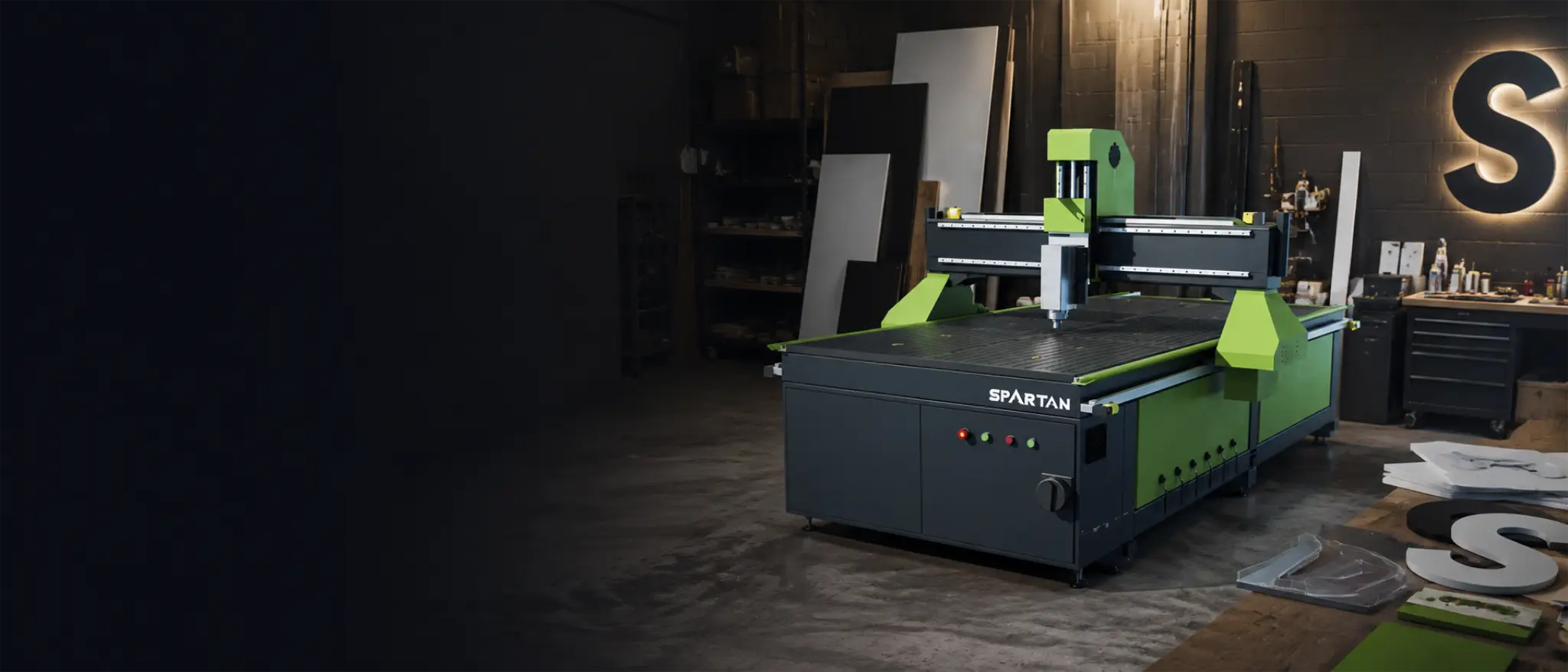
- Spartan — entry-level manual-change routing; 8×4 and 10×5 formats for startups and workshops entering CNC.
- Falcon ATC — production automatic tool change with 10-tool linear rack (not a carousel); suited to cabinetry, signage and nested sheet production.
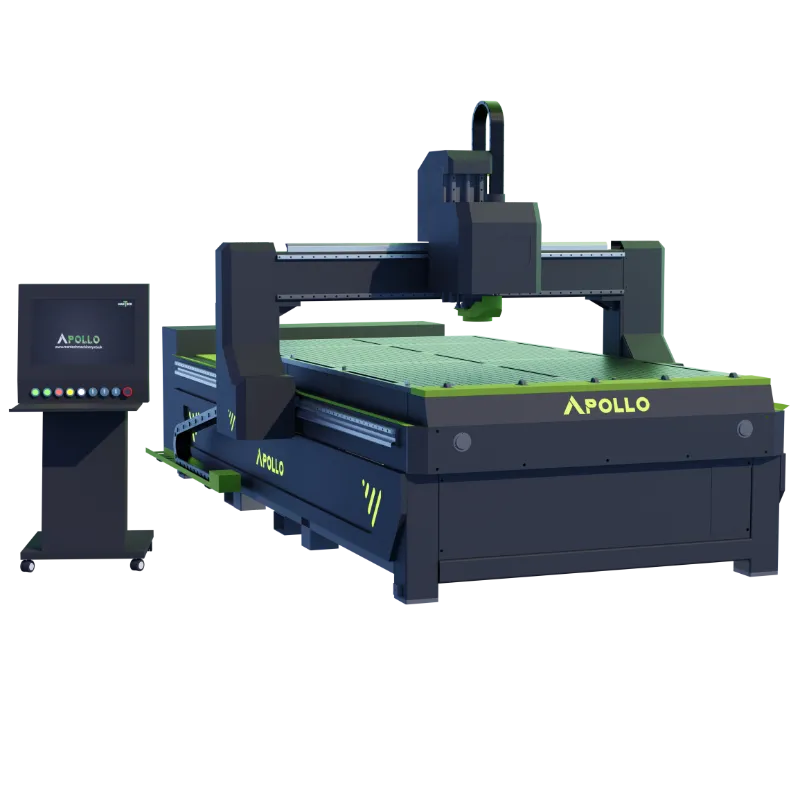
- Apollo M — manual-change 1325 platform with a defined upgrade path to 10-tool ATC when throughput grows.
- Apollo ATC — heavier-duty 10-position automatic tool changer for continuous multi-tool production.
Start on the CNC routers hub, then explore Spartan, Falcon ATC, Apollo M or Apollo ATC against your shortlist.
When a CNC router may not be the right investment yet
A credible business case includes knowing when to wait. Mantech would rather match you correctly than sell the wrong platform.
- Not enough repeat work to justify machine time or finance cost.
- Material mix better suited to another process — verify routing is the right tool.
- Insufficient floor space, power or extraction planning for safe install.
- No operator time allocated for programming, loading and daily machine care.
- Buying before understanding tooling, workholding and CAM workflow.
- Application better served by a fibre laser, CO₂ laser or other platform on some jobs.
If process fit is unclear, read CNC router vs fibre laser and speak to our UK team with sample parts before you commit.
What to include in your business case
Build the case from your actual quoting — not generic industry averages. Use your subcontract invoices, labour notes and repeat job list.
- Current outsourced routing, profiling and drilling spend you could bring in-house.
- Manual labour time on jobs a CNC could absorb.
- Repeat jobs and typical nest complexity (tool count, sheet size).
- Material waste from manual cutting vs nested programmes.
- Tooling and workholding requirements.
- Machine bed size vs largest everyday panel.
- Extraction and floor-space planning.
- Control software and CAM workflow fit.
- Training, installation and UK service support.
- Likely work in 12–24 months — buy for growth, not yesterday's quoting only.
Model scenarios on the CNC router ROI calculator and read the CNC router ROI article for payback framing — replace template numbers with your own.
How Mantech helps buyers choose the right route
Mantech matches Spartan, Falcon and Apollo platforms to real UK jobs — application-led advice, UK installation, operator training and nationwide engineer support from Halesowen. We help you size bed format, tooling and extraction before you request a demo or quote.
- UK-based applications and machine-matching advice.
- Installation and commissioning on supplied platforms.
- Operator training at handover.
- Service and telephone support for production issues.
- Product range from entry manual-change through production ATC.
New to CNC? Start with CNC routers for beginners. Review live installs on installations or call 0121 541 1444 with nest files and floor dimensions.
Useful next reads
- Understanding CNC router ROI
Payback framing for UK workshops — use your subcontract spend and shift pattern, not generic figures.
- 5 key CNC router considerations
Material, bed size, manual vs ATC and support — selection checklist alongside this business case.
- CNC routers buyer's guide
Structured comparison of Spartan, Falcon and Apollo for UK fabrication roles.
- CNC router ROI calculator
Model utilisation and in-house capacity before you fix budget and bed size.
- 5 reasons to buy a CNC router
A concise commercial summary when you are still building the internal case.
- Monthly CNC maintenance checks
Ownership cost includes upkeep — plan operator time from day one.
Frequently asked questions
Is a CNC router a good investment for a small UK business?
It can be, when you have enough repeat sheet work to keep the machine utilised and the platform matches your material and bed size. Many SMEs start on Spartan for entry routing; growing fab shops often step up to Falcon ATC. Model your own numbers on the ROI calculator before deciding.
How can a CNC router help reduce outsourcing?
Jobs you currently send out for profiling, drilling or nested cutting may run in-house once programming and hold-down are in place. The saving depends on subcontract rates, batch size and how often those jobs repeat — not every part suits in-house routing.
Should I choose a manual tool change or ATC CNC router?
Manual change suits lighter use, education and simpler programmes. ATC suits multi-tool production where tool swaps every nest would slow the line. Falcon ATC uses a 10-tool linear rack; Apollo M offers an upgrade path to ATC when throughput justifies it.
What businesses use CNC routers?
Sign makers, joinery and cabinetry firms, campervan converters, plastics fabricators, education providers, prototyping teams and manufacturers bringing sheet routing in-house. See the applications hub and installations for UK examples.
How do I build a CNC router business case?
List outsourced work, repeat jobs, manual labour time, material waste, bed size needs, tooling, extraction, training and support. Use the ROI calculator and buyer's guide, then shortlist Spartan, Falcon or Apollo on the CNC hub and demo with your own nest files.