Many new workshops, sign makers, joinery firms and small manufacturers want to bring cutting, routing, engraving or panel processing in-house — but need a sensible first machine that matches their workload, not a full production ATC platform on day one. The Spartan CNC router is Mantech's entry-level manual-change route for buyers starting out. This guide explains where Spartan fits, what to check before you buy, and when Falcon ATC or Apollo may be the better conversation.
First-time buyers often need proof that training, install and support are included — not just a lower headline ticket. See the Spartan CNC range, how it compares to Falcon and Apollo in the buyer's guide, and UK startups running their first router on case studies and installations.
Why startups consider a CNC router
- Bringing outsourced cutting, profiling and drilling in-house.
- Reducing delays waiting on subcontractors.
- Improving repeatability on repeat customer jobs.
- Creating new products, panels, signs or components.
- Speeding up prototyping before full production runs.
- Producing signs, templates, fixtures and sheet parts under your own control.
- Improving quality consistency and customer turnaround.
Where the Spartan route fits
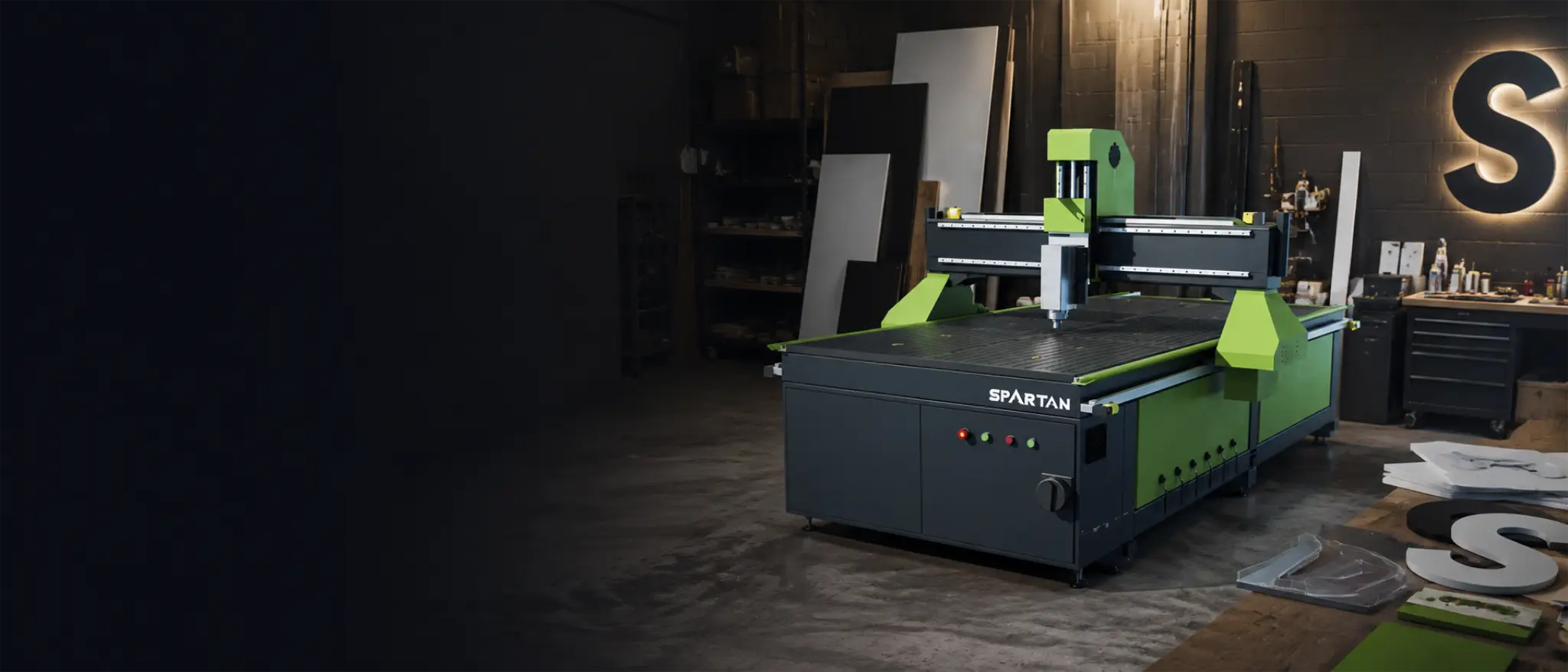
Spartan is the entry-level manual tool-change platform on the Mantech CNC range — built as a production tool for workshops entering CNC, not a hobby machine dressed up for brochure photography. It suits buyers who want practical routing capability without jumping straight to automatic tool change.
- Manual tool change — operator swaps tools between operations.
- Entry-level 8×4 and 10×5 formats; multiple table sizes including compact layouts and larger sheet formats.
- Vectric VCarve Pro included — design, CAM and nesting workflow from day one.
- UK installation, operator training and nationwide support included on supplied platforms.
- Single-phase and three-phase power options for different workshop setups.
See full specification and model options on the Spartan CNC router product page and compare the wider range on the CNC routers hub.
What can a startup use a CNC router for?
- Signage and display panels — board, ACM-style sheet and routed lettering.
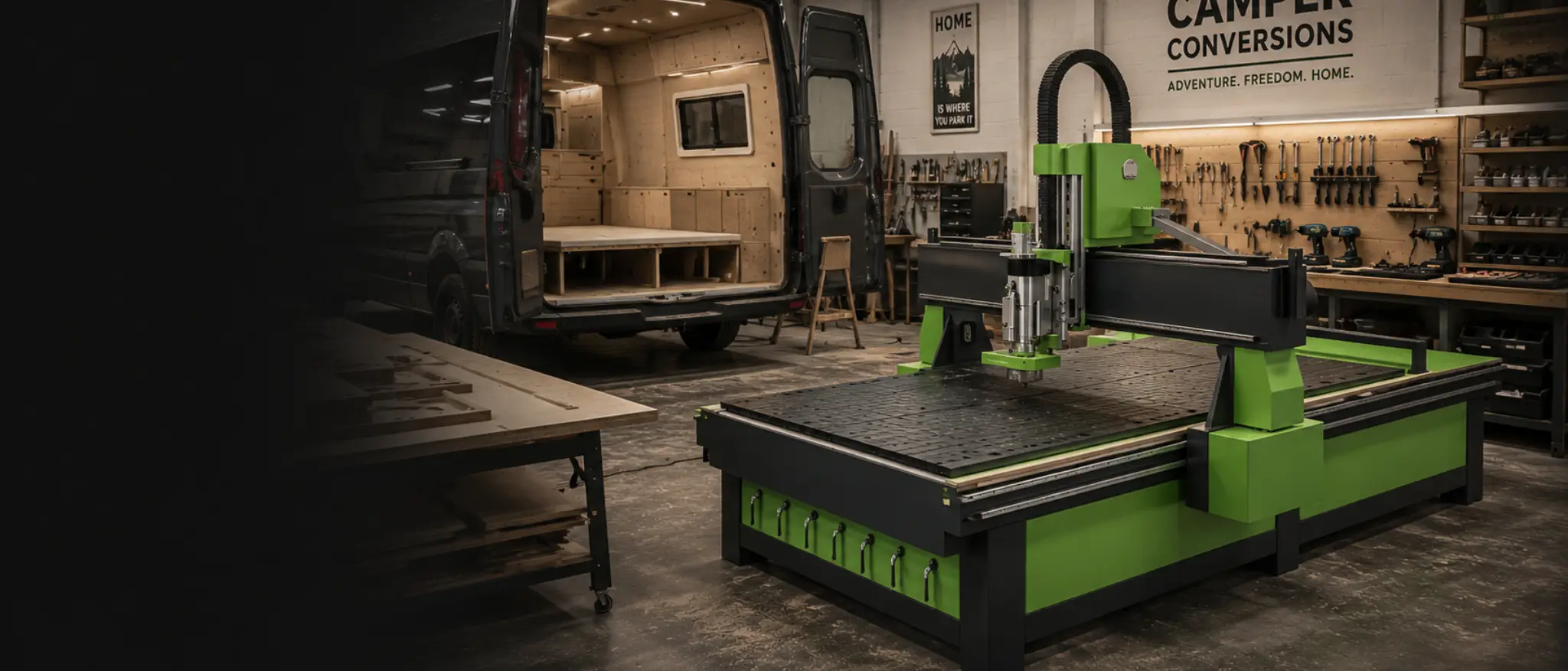
- Campervan conversion interior panels and custom fit-out parts.
- Joinery and cabinetry components — carcass parts, doors and sheet work.
- Plastic and composite sheet profiling with correct tooling and extraction.
- Jigs, templates and fixtures for repeatable manual assembly.
- Prototyping before committing to full production nests.
- Educational workshop use with structured training and UK support.
- Custom product fabrication as capabilities expand.
Browse verified use cases on CNC routers for sign making, campervan conversion benefits and the education machinery hub where those jobs match your plans.
Manual tool change: what it means for a first CNC router
Manual tool change keeps the first machine simpler to learn and operate. The operator changes cutters between operations — fine for lower-volume work, education, prototyping and jobs that need one or two tools per programme. Automatic tool change becomes worthwhile when nests regularly need several tools every cycle and tool-swap downtime starts to limit throughput.
Spartan is manual-change by design. That is a feature for first investment, not a limitation — unless your quoting already assumes multi-tool production every shift.
What to consider before buying your first CNC router
- Material types — timber, board, plastics, composites and light non-ferrous work where verified.
- Sheet size and bed format — match your largest everyday nest.
- Tooling library and workholding — vacuum strategy from day one.
- Extraction and dust management — plan install properly, not as an afterthought.
- Software and control workflow — CAM time is part of ownership.
- Workshop space, power supply and access for delivery.
- Operator training and who runs programmes day to day.
- UK support, service backup and warranty context.
- Future growth — will manual change still suit quoting in 18–24 months?
- Manual change vs ATC — honest fit for your repeat job mix.
New to CNC terminology? Read CNC routers for beginners and the 5-key selection guide before you shortlist.
When to step up from Spartan to Falcon ATC or Apollo
Spartan is not the right answer for every buyer. If your workflow already depends on multi-tool nests every day, starting on ATC may save a second machine purchase later.
- Falcon ATC — automatic tool change with 10-tool linear rack (not a carousel); suited to repeat multi-tool signage, cabinetry and nested sheet production.
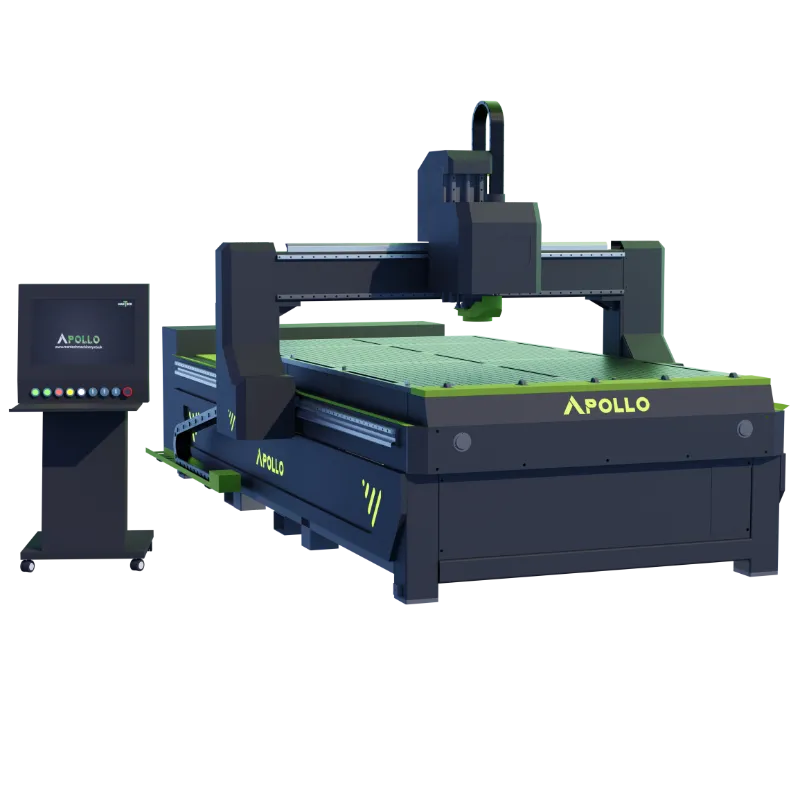
- Apollo M — manual-change 1325 platform with a defined upgrade path to 10-tool ATC when throughput grows.
- Apollo ATC — heavier-duty 10-position automatic tool changer for continuous multi-tool production.
Compare platforms in the CNC routers buyer's guide, then explore Falcon ATC, Apollo M or Apollo ATC if your workload outgrows manual-change Spartan routing.
Building a startup business case
The commercial case is workload-dependent — not a generic promise of fast payback. List outsourced work you could bring in-house, repeat products you quote every month, and how faster turnaround might win or retain customers. Better control over quality and the ability to quote new work only matter if you have enough utilisation to keep the machine earning its place.
Frame the numbers on the CNC router ROI calculator, read the CNC router ROI article and the UK business case guide — replace any template figures with your own subcontract spend and shift pattern.
Common first-machine mistakes to avoid
- Buying only on lowest headline price — ownership includes tooling, extraction, software time and support.
- Choosing a bed too small for your standard sheet or panel size.
- Ignoring extraction planning before install day.
- Not budgeting for tooling and workholding.
- Underestimating training and CAM learning time.
- Assuming every job suits manual tool change when programmes need six or more tools.
- Not planning for growth — match bed size to where quoting is heading.
- Ignoring aftersales support — first-month downtime erases savings.
Why buy your first CNC router through Mantech?
Mantech matches Spartan, Falcon and Apollo platforms to real UK jobs — application-led advice, installation, operator training and nationwide engineer support from Halesowen. First-time buyers get a defined handover, not a crate on the floor.
- UK-based machine matching and applications advice.
- Installation and commissioning on supplied platforms.
- Operator training at handover.
- Telephone and field support for production issues.
- Range options from Spartan entry through Falcon ATC and Apollo production routes.
See UK startups and growing workshops on installations and case studies, or call 0121 541 1444 with nest files and floor dimensions.
Useful next reads
- Spartan CNC router product page
Full specification, model sizes and what is included on the entry manual-change platform.
- CNC routers for beginners
Process basics if your team is new to CNC routing workflow and terminology.
- CNC routers buyer's guide
Structured comparison when you are deciding between Spartan, Falcon and Apollo.
- CNC router business case
Commercial framing for UK workshops — workload-dependent, not generic ROI promises.
- Monthly CNC maintenance checks
Plan operator time for upkeep from the first month of ownership.
- Vacuum bed best practices
Hold-down strategy matters as much as machine spec for clean first cuts.
Frequently asked questions
Is the Spartan CNC router suitable for startups?
It can be, when you need entry-level manual-change routing and your job mix suits simpler tooling workflows. Spartan covers 8×4 and 10×5 formats with Vectric VCarve Pro, UK installation and training included. If you already run multi-tool production every day, compare Falcon ATC or Apollo before you buy.
What can I make with my first CNC router?
Signage, joinery components, campervan panels, plastic sheet parts, jigs, templates, prototypes and educational project work are common first uses. Match material and bed size to your everyday quoting — see the Spartan product page and applications hub for UK examples.
Should I choose manual tool change or ATC?
Manual change suits first investment, education and lighter daily use. ATC pays back when programmes need multiple tools every nest. Spartan is manual-change; Falcon ATC uses a 10-tool linear rack; Apollo M offers an upgrade path to ATC.
What should I check before buying my first CNC router?
Material and sheet size, tooling and extraction, workshop space and power, CAM workflow, training, UK support and whether manual change will still suit your growth plans. Read the beginners guide and 5-key selection article, then demo with your own nest files.
When should I move from Spartan to Falcon or Apollo?
When multi-tool nests run every shift and manual tool swaps become a bottleneck, or when bed size and throughput outgrow entry Spartan formats. Compare step-up routes in the buyer's guide and explore Falcon ATC or Apollo product pages before you commit.