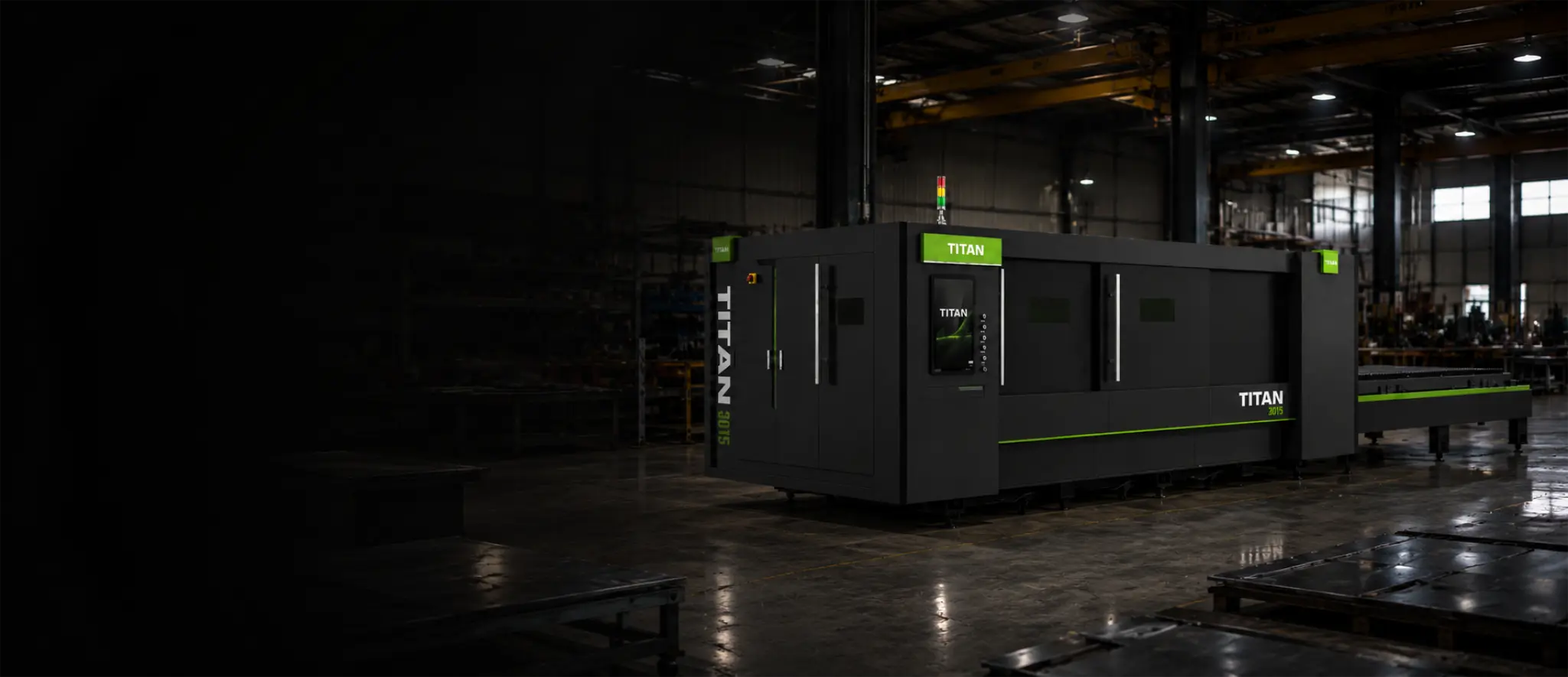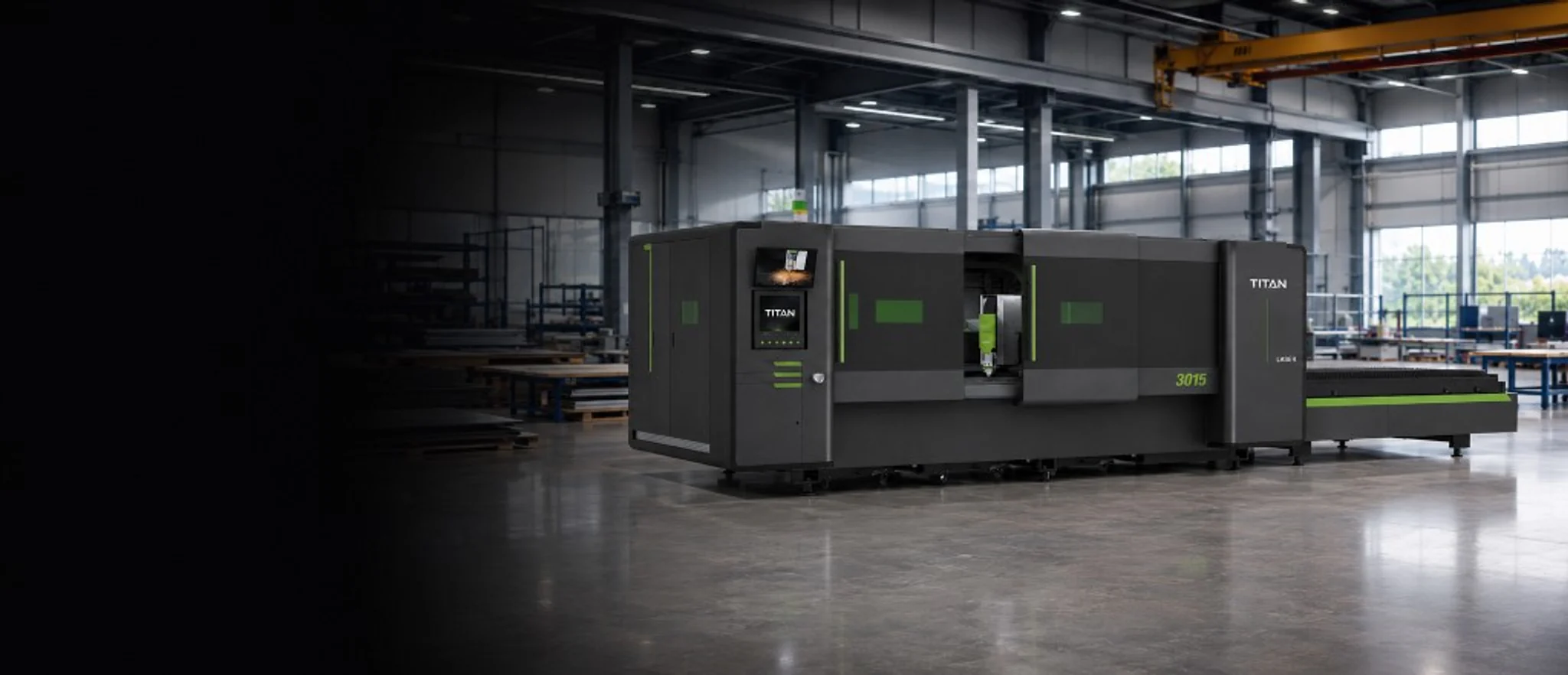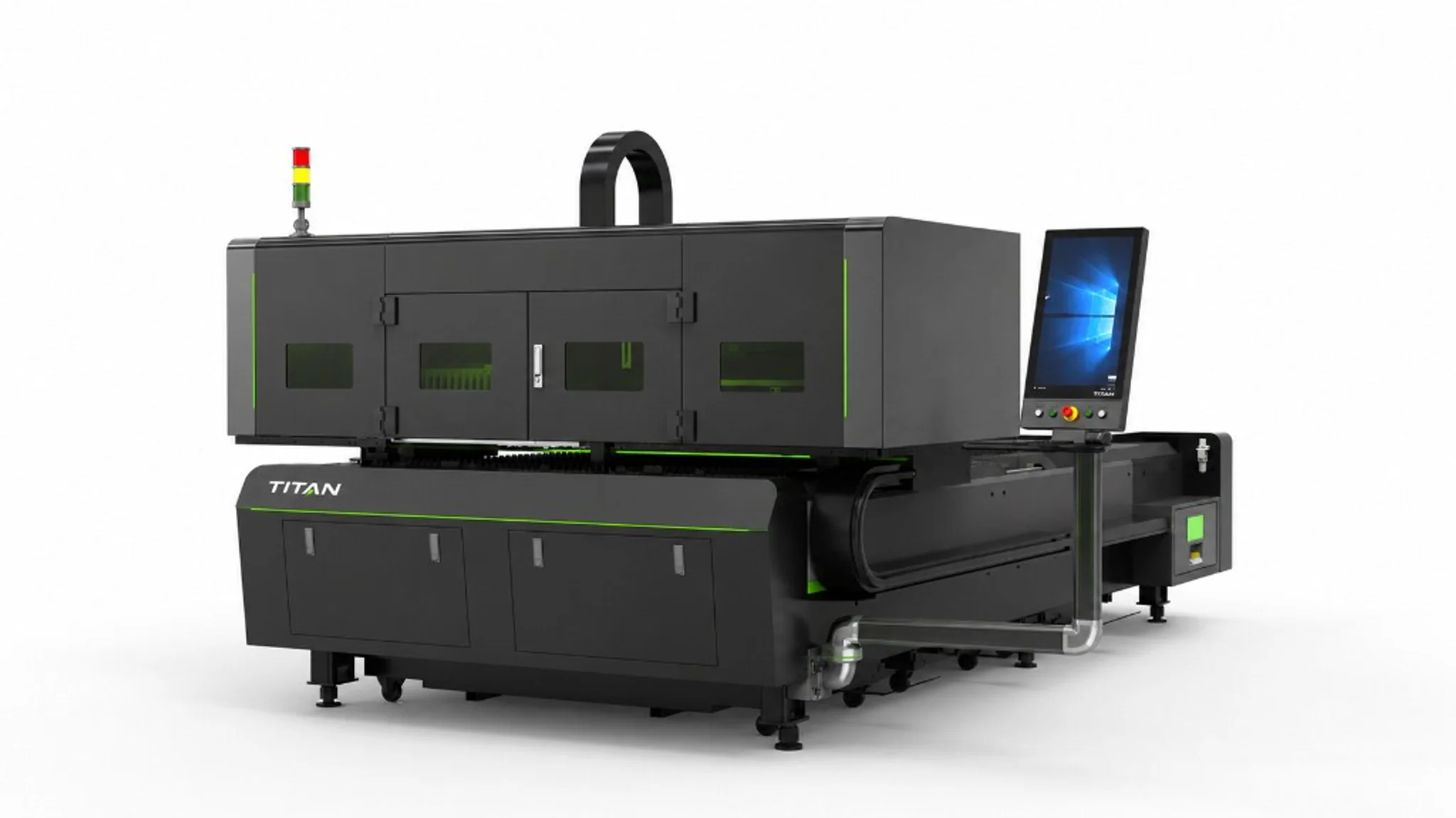
Businesses cutting steel or sheet metal for fabrication, engineering or production will usually be evaluating fibre laser technology — not a generic “laser cutter” label. The right machine depends on material type, sheet size, thickness range, power tier, production volume, extraction, safety enclosure, installation space and UK support. This guide clarifies that steel and sheet metal route, preserves practical workshop context, and points to verified Mantech pages when you are ready to shortlist platforms.
Steel and sheet metal buyers should shortlist fibre laser first — power tier and bed size follow your everyday nests, not brochure peak thickness. Compare Vector platforms on the fibre laser hub, read the power guide, and use the sheet-metal comparison if CO₂ is still in the conversation.
What type of laser is used for steel cutting?
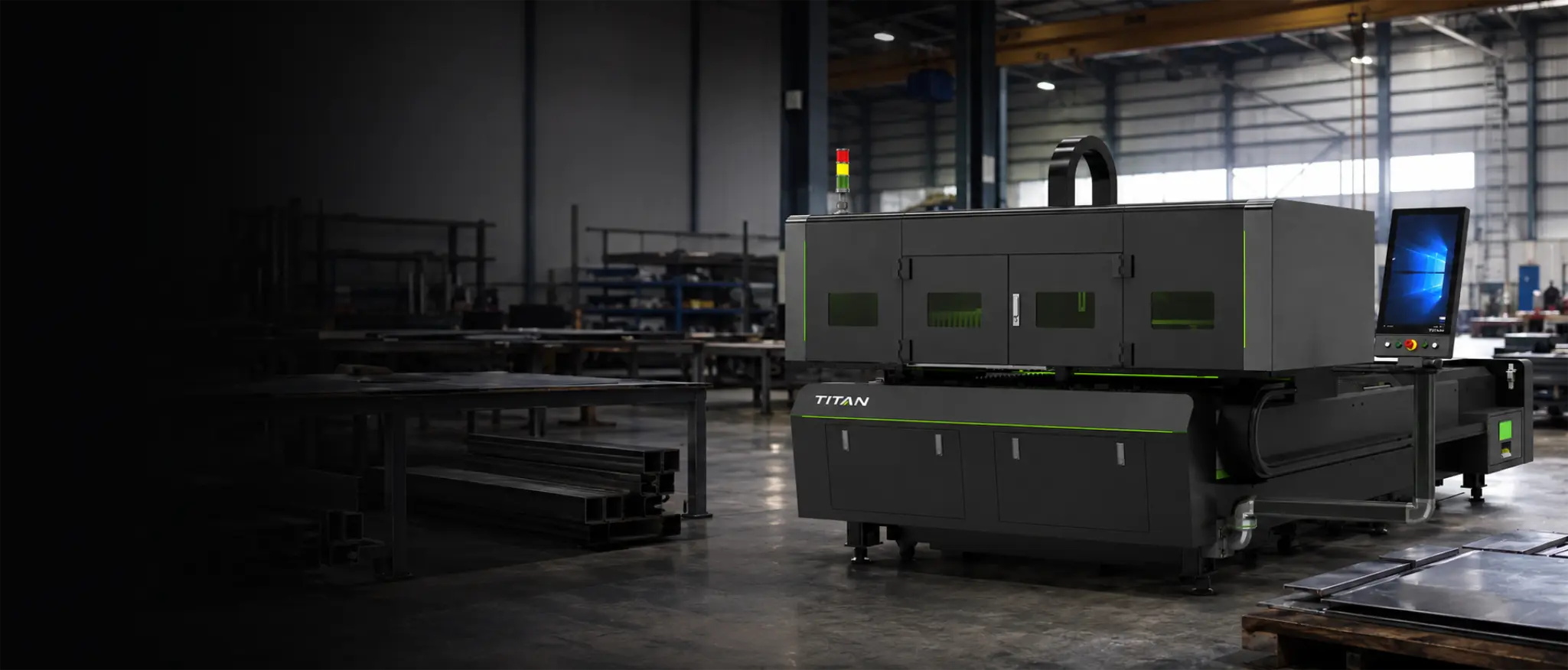
For suitable steel and sheet metal cutting in UK fabrication, fibre laser is the relevant Mantech route. A solid-state source delivers the beam through a fibre-optic cable to a cut head on the sheet; assist gas helps remove molten metal and protect the cut edge while a CNC system follows your nest or part programme.
CO₂ laser cutters remain the practical choice for non-metal materials — acrylic, wood, MDF, card, many plastics and craft or education workflows. Standard CO₂ is not the production route for sheet metal fabrication. If your quoting is metal-heavy, start on fibre; if acrylic, timber or signage non-metal dominates, explore CO₂ on the laser hub instead.
Read the general fibre vs CO₂ laser guide and the dedicated sheet-metal comparison when you still need to separate metal and non-metal decisions.
How steel laser cutting works
Laser cutting focuses intense energy onto the metal surface so material melts or vaporises along the programmed path. Assist gases — commonly nitrogen or oxygen depending on material and finish — are blown through the cut zone to help eject molten metal and keep edges clean. Oxygen can support cutting on some mild steel jobs; nitrogen is often chosen on stainless to limit oxidation on the cut face. Gas choice affects edge quality and process setup — verify against your everyday material mix with application advice, not assumptions from a single demo part.
The CNC motion system controls the cut head across the sheet so profiles repeat to programmed dimensions. That control supports intricate outlines, bracket plates, enclosure panels and batch production parts where manual profiling would be slower and less consistent. Fibre delivery avoids the mirror alignment and tube replacement cycles associated with older CO₂ metal-cutting setups on many workshop floors.
Why fibre laser cutting suits steel and sheet metal
Fibre lasers are built around metal-focused cutting. For UK workshops quoting mild steel, stainless, aluminium and related sheet stock, the practical benefits are repeatable profiles, efficient nesting on flat sheet, and a process suited to fabrication throughput — not engraving acrylic or routing timber.
- Repeatable profiles for brackets, panels, chassis parts and production batches.
- Narrow kerf can reduce scrap compared with some legacy cutting methods when nests are planned properly.
- Non-contact cutting reduces mechanical tool wear on the sheet edge path.
- Enclosed fibre platforms support responsible metal-cutting safety when extraction and procedures match the install.
Avoid treating fibre as a universal laser for every material. It does not cut wood, MDF, acrylic or typical CO₂ craft stocks — those jobs need a separate CO₂ platform or another process.
Materials and applications to consider
- Mild steel — core volume material for general fabrication, frames and structural sheet parts.
- Stainless steel — food-service, architectural, corrosion-sensitive and engineering work.
- Aluminium — lightweight assemblies, transport-related parts and metal signage components where machine spec supports the application.
- Selected reflective metals such as brass and copper — achievable on suitable power, cut head and process review; not automatic on every platform.
Typical UK applications include sheet metal fabrication, engineering components, enclosures and cabinets, metal signage profiles, prototyping, subcontract panel cutting, and precision-led sectors such as aerospace and electronics where tight tolerances and complex outlines matter. Material suitability always depends on machine rating, assist gas, thickness and your verified process — do not assume every metal on every gauge from headline brochure copy alone.
Browse sector context on applications and see live UK installs on installations before you lock bed size and kW.
Choosing the right fibre laser power
Power tier (kW) should match your everyday material, thickness range, production volume, desired cycle time, assist gas plan and room for future growth — not a one-off peak thickness from a trade-show sample. Entry tiers suit light-gauge sheet and first metal laser investment; mid tiers cover general fabrication mixes; higher tiers support larger everyday gauges and longer production shifts on suitable platforms.
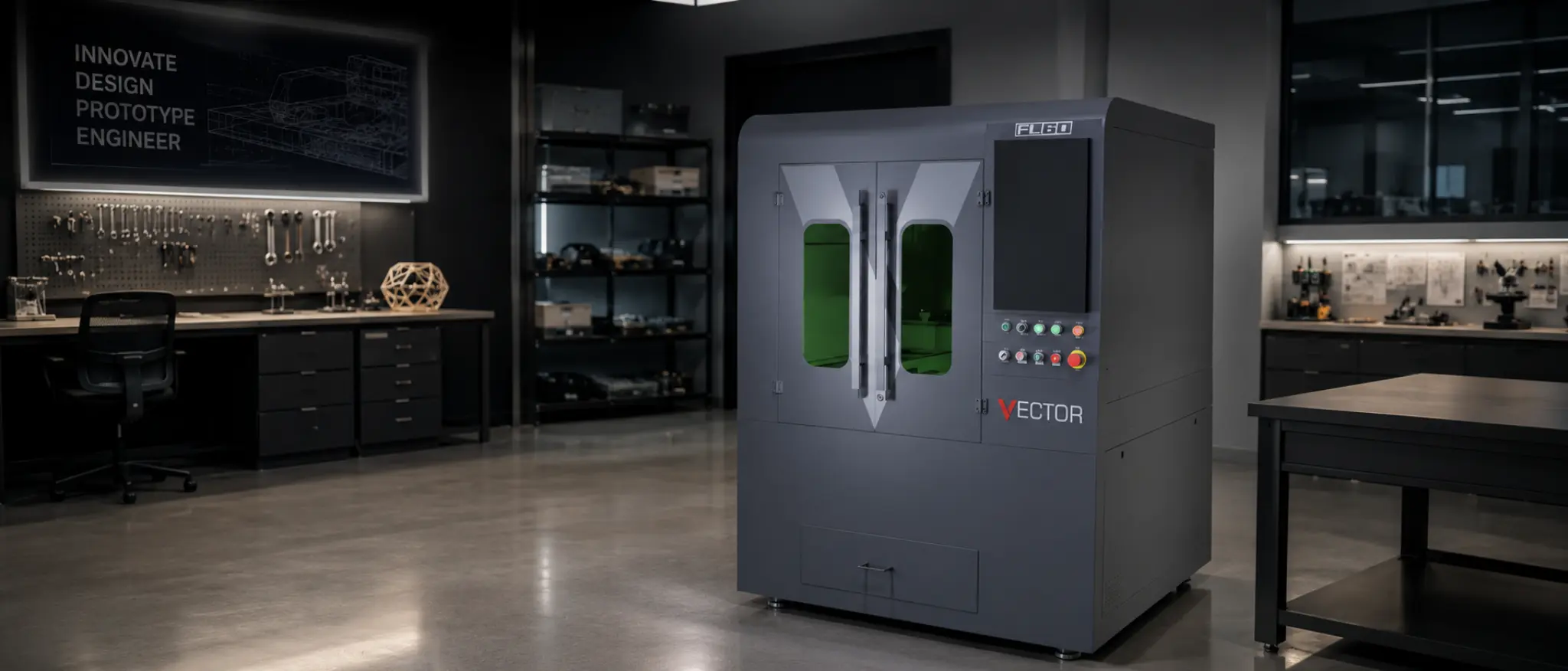
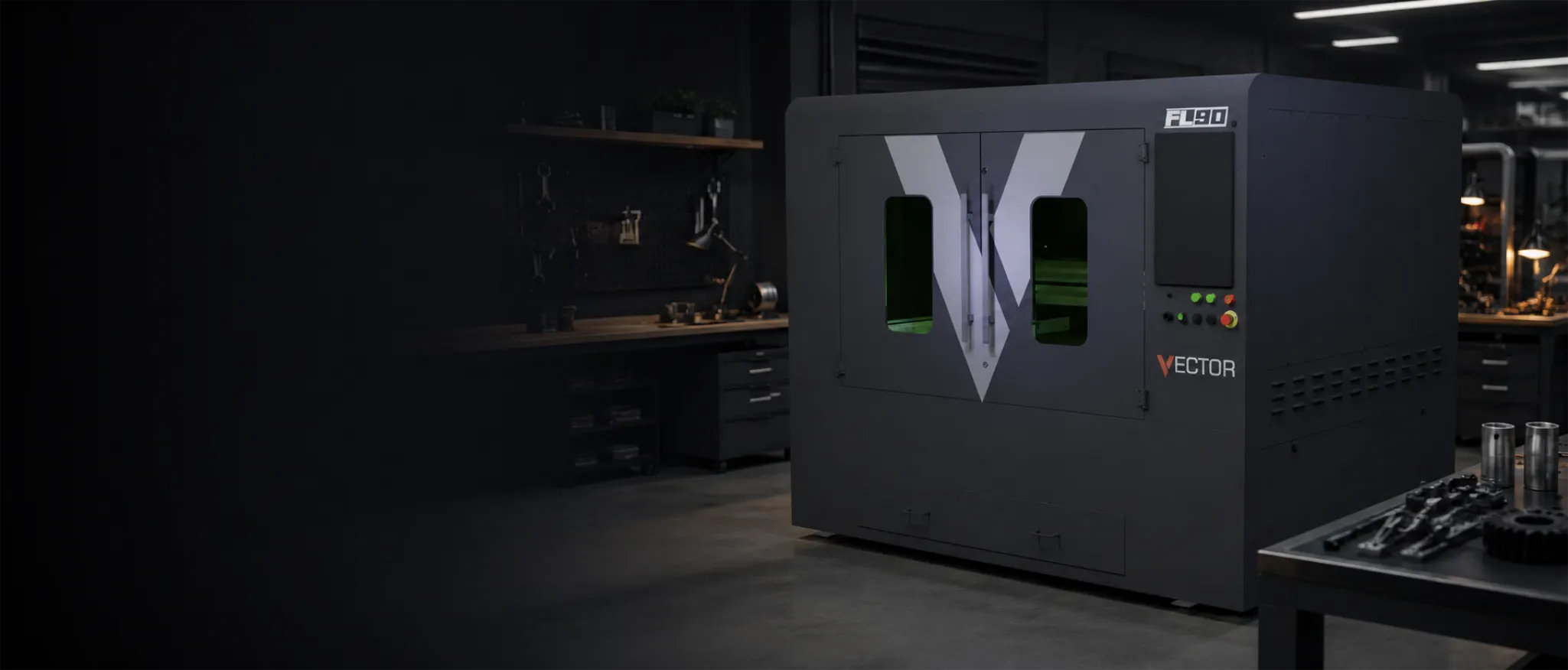
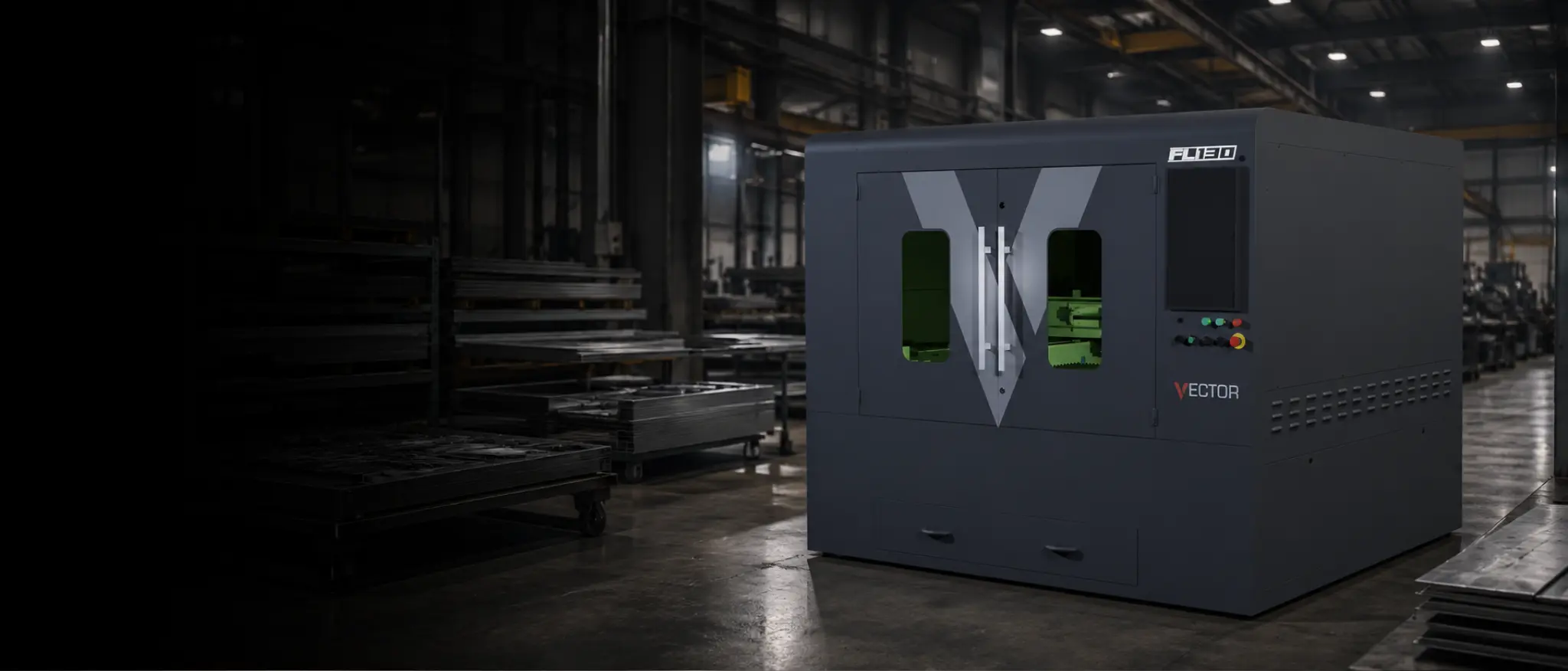
Read the fibre laser power guide for UK-focused planning across 3 kW through 20 kW routes, and compare Vector FL60, FL90 and FL130 on the fibre laser hub.
Bed size, workflow and production volume
Bed size sets the largest sheet you can nest without repositioning. Compact beds suit smaller footprints and education-led metal training. Mid-size beds fit many UK fab shops cutting standard panel sizes. Full-format beds reduce joins when your quoting relies on large nests rather than spliced sections. Loading rhythm, material flow, available floor space and batch volume should be decided alongside kW — not treated as separate checklist ticks.
Compare Vector platforms on the fibre laser hub and shortlist Vector FL90 when mid-format steel and stainless throughput is your daily workload.
Key features to look for in a steel laser cutting machine
- Enclosed cabinet with interlocks and rated viewing panels for metal-cutting safety.
- Cut head and source spec matched to your reflective-metal exposure, if any.
- Assist gas supply and regulation suited to mild steel, stainless and aluminium mixes.
- Extraction and filtration sized for your duty cycle — not underspecified for long shifts.
- Control and nesting software your team can run after structured handover training.
- UK installation, commissioning, service access and spare-parts backup from Mantech engineers.
Safety, extraction and installation planning
Steel laser cutting vaporises metal and creates fine particulate that must be captured — not released into the workshop. Enclosure design, interlocks, operator training, extraction routing and fire-risk discipline around dust management belong in the buying decision before the machine arrives, not after first production runs.
Read fibre laser safety: what to look out for, size extraction on the Kemper fibre laser extraction hub, and plan install space with Mantech application advice when you request a quote.
Maintenance and care
Routine maintenance protects cut quality and uptime. Assist gas filters should be inspected and replaced when clogged so gas delivery stays clean. Moving rails, bearings and gears need lubrication per the manufacturer schedule. Electrical components, chiller performance and optics cleanliness should be part of a planned rhythm — reactive breakdown calls cost more than structured weekly and monthly checks.
Use the 10 key maintenance checks for your fibre laser as a practical UK checklist once the cell is running.
Cost, ROI and business case
Buyers should weigh more than the machine ticket. Installation, extraction, assist gas, consumables, training, floor space, maintenance and support all affect total ownership. Fibre platforms can improve material utilisation and reduce some legacy cutting waste when nests are planned well — but payback depends on your subcontract spend, utilisation, quoting mix and operating discipline, not a generic industry average.
Read the fibre laser cost guide for UK context and model scenarios on the fibre laser ROI calculator before you treat brochure headlines as a business case.
Fibre laser or CO₂ laser for your business?
If steel and sheet metal dominate your quoting, fibre laser is the route to explore first. If acrylic, wood, MDF, card or craft-led non-metal work dominates, CO₂ laser is usually the better fit — often alongside routing or other processes, not instead of honest material planning.
Compare routes in the general fibre vs CO₂ guide and the sheet-metal-specific comparison when metal is the decision driver.
How Mantech helps businesses choose a steel and sheet metal laser route
Mantech is UK-based in Halesowen with application-led advice across the Vector fibre laser range, installation and operator training, nationwide engineer support and service backup. We help match material mix, sheet size, power tier, extraction and safety planning to verified platforms — not generic “laser cutter” labels that blur metal and non-metal workflows.
Start on the fibre laser cutters hub, call 0121 541 1444, or use contact when you have sample nests, floor dimensions and an honest material split ready for review.
Useful next reads
- Fibre laser cutters hub
Compare the full Vector range, control options and trust details for steel and sheet metal buyers.
- Vector FL90 fibre laser
Mid-format platform many UK fab shops shortlist for mild steel and stainless throughput.
- Fibre laser power guide
Match kW tier to material, thickness range and production once fibre is your route.
- Fibre laser cost guide
UK ownership context beyond headline machine price — install, gas, extraction and support.
- Fibre laser ROI calculator
Model payback scenarios from your shift pattern and subcontract spend — not invented averages.
- Fibre vs CO₂ for sheet metal
Metal-only comparison when fabrication throughput is the decision driver.
- Fibre laser safety guide
Enclosure, extraction and training questions to scope before install.
- Fibre laser maintenance checklist
Weekly and monthly checks that protect cut quality after handover.
Frequently asked questions
What type of laser cutter is best for steel?
For suitable steel and sheet metal fabrication, fibre laser is the relevant route. CO₂ laser is generally better suited to acrylic, wood, MDF, card and non-metal craft or education workflows — not production sheet metal cutting.
Is fibre laser better than CO₂ for steel cutting?
For everyday mild steel, stainless and aluminium sheet in fabrication, fibre is the stronger production platform. CO₂ remains the practical choice for non-metal materials. “Better” means matched to material — read the sheet-metal comparison for UK buyer detail.
What fibre laser power do I need for steel?
Power depends on material type, everyday thickness range, production volume, assist gas and future growth — not a single brochure thickness. Use the fibre laser power guide and compare Vector platforms on the hub with sample nests from your quoting.
What should I consider before buying a steel laser cutting machine?
Material mix, sheet size, kW tier, extraction, safety enclosure, installation space, training, maintenance rhythm and UK support. Model ownership on the cost guide and ROI calculator; verify safety and Kemper extraction before you commit floor space.
Can the same laser cutter cut steel, acrylic and wood?
Not on one standard platform. Fibre laser cuts suitable metals; CO₂ laser handles acrylic, timber, MDF and many non-metal stocks. Mixed businesses often need separate platforms or a clear primary route — not vague “laser cutter” wording that hides the material split.