A CNC router can be a major step for a UK workshop, school or manufacturing business — helping bring work in-house, improve repeatability and open new services when the platform matches your material, sheet size and daily workflow. The value depends on how you quote and produce, not on brochure speed alone. These five reasons explain why businesses invest, and how to route toward the right Mantech platform.
The real reasons to invest usually sit in material flexibility, subcontract savings and repeatable throughput — not brochure headline speed. Compare Spartan, Falcon and Apollo on the CNC hub, model payback on the CNC ROI calculator, and read the buyer's guide before you shortlist bed size.
The short answer: a CNC router is about control, consistency and capability
A CNC router is not just a cutting tool. Used well, it changes how you quote, nest, repeat and control jobs — from signage panels and joinery components to campervan interiors, plastics, templates and custom fabrication. The machine must fit your materials, bed format, tooling rhythm and support expectations; the reasons below only pay back when that fit is right.
1. Bring more work in-house
- Reduce reliance on subcontractors for profiling, cutting and drilling.
- Improve turnaround when customer changes land mid-job.
- Keep quality control inside your workshop.
- Respond faster to repeat orders and short-run requests.
- Produce prototypes, panels, signs, templates and parts internally.
In-house routing makes most sense when you already subcontract similar work regularly — not when volume is occasional. Match bed size to your standard sheet before you commit floor space.
2. Improve repeatability and consistency
- Programmed toolpaths repeat the same geometry shift after shift.
- Nested panels and components stay dimensionally consistent across batches.
- Fewer manual layout variations on repeat customer jobs.
- Better batch consistency for signs, cabinets, joinery parts, campervan panels, plastics and fixtures.
3. Make better use of materials and production time
Planned cutting workflows, true-shape nesting and repeatable setup can improve how sheet moves through the shop — when programmes are prepared properly and operators are trained. Tooling, vacuum hold-down, spoilboard condition and CAM time all matter as much as the machine badge. This is not automatic waste reduction; it depends on utilisation and process discipline.
4. Open new products, services and applications
- Signage and display — flat letters, shaped panels and routed board work.
- Joinery and cabinetry — nested sheet components from MDF, plywood and board.
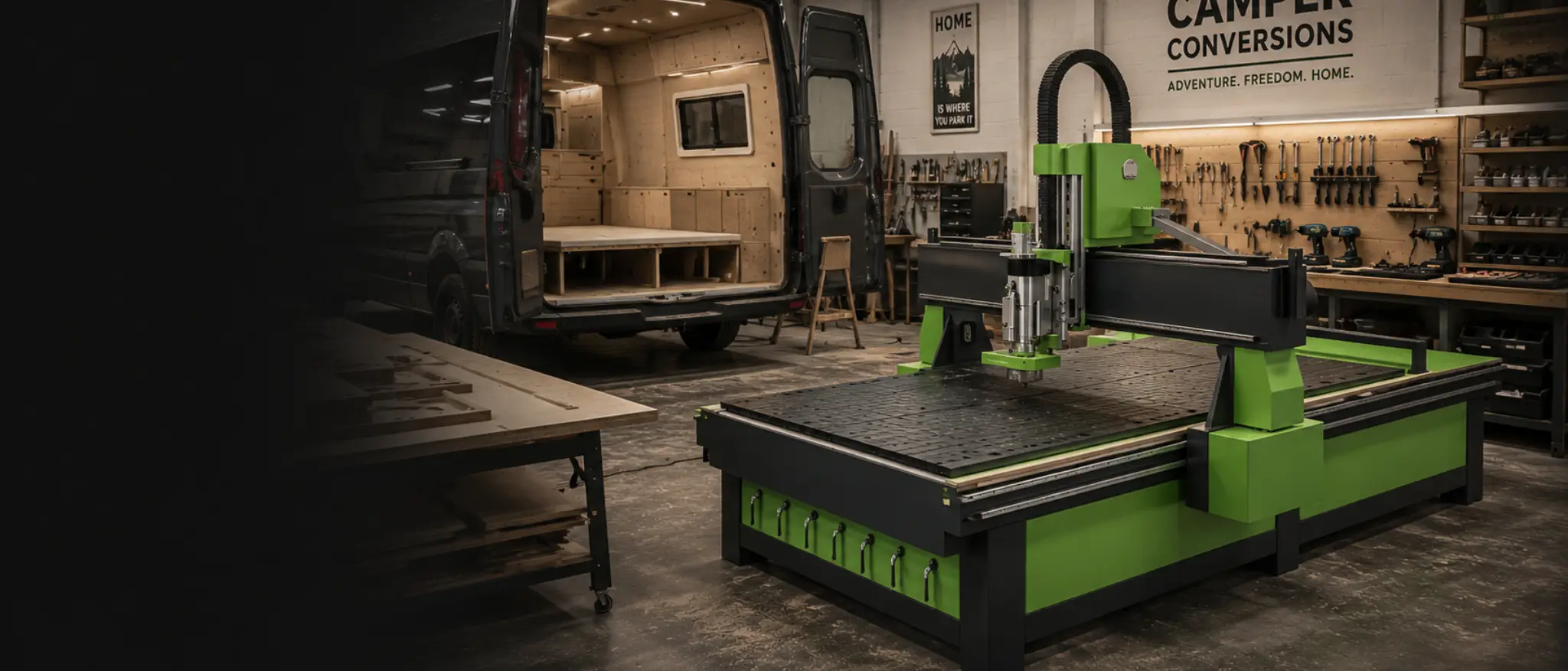
- Campervan conversions — interior panels and fit-out parts.
- Plastics fabrication — where spindle, tooling and extraction suit the stock.
- Education and training — controlled digital-to-physical projects with proper handover.
- Prototyping — test fit before full production runs.
- Custom product fabrication — jigs, templates and fixtures under your own control.
Browse sector examples on the applications hub, CNC routers for sign making and campervan conversion benefits where those jobs match your plans.
5. Build a more scalable workshop workflow
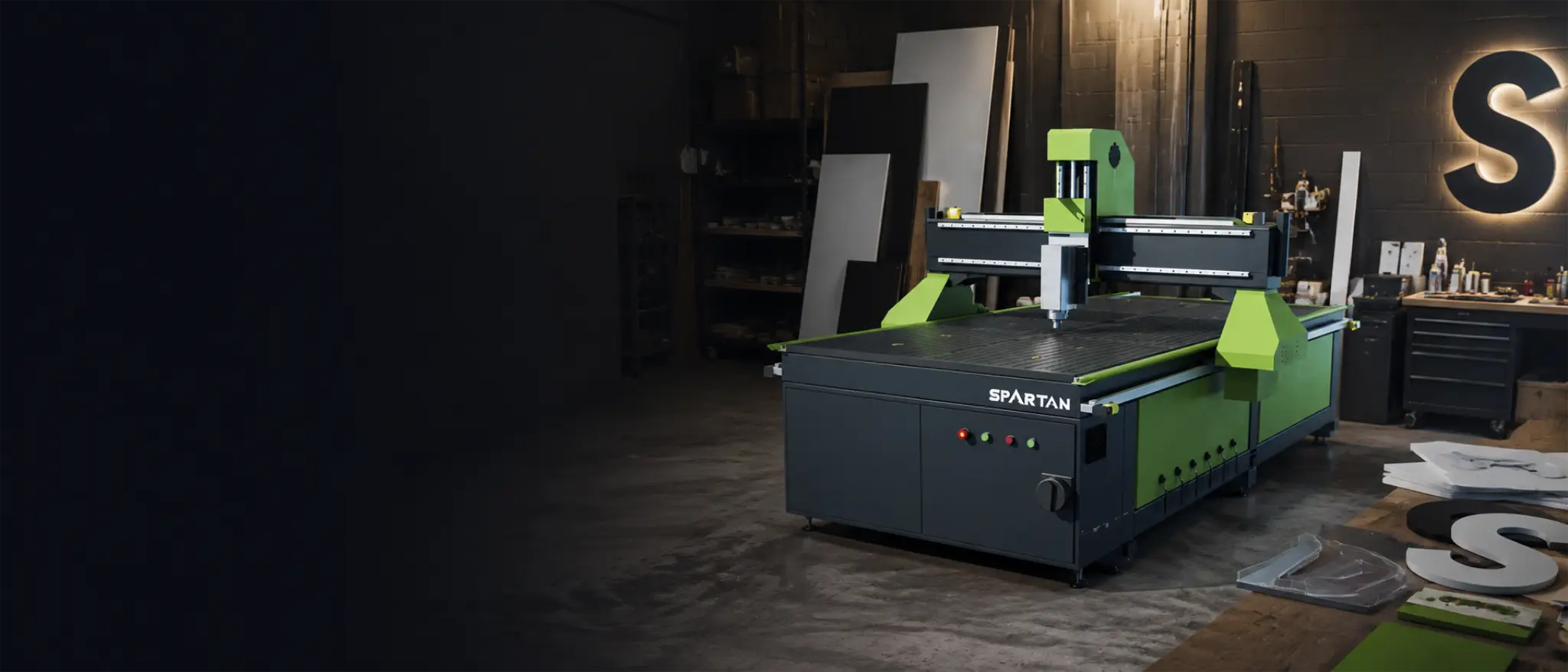
Manual tool-change platforms suit simpler jobs, education and lighter daily use — Spartan is Mantech's entry route for many first-time buyers. Falcon ATC with its 10-tool linear rack suits repeat multi-tool nesting where swap downtime would limit throughput. Apollo M offers a manual start with an upgrade path to ATC; Apollo ATC serves heavier continuous production. The correct machine depends on current workload and realistic growth — not experience alone.
Compare every live range on the CNC router hub and read the structured CNC buyers guide before you shortlist bed size.
Which CNC router route should you explore?
| Route | Best suited to | Next step |
|---|---|---|
| Spartan | Startups, beginners, education and small workshops needing manual-change entry routing | Spartan CNC router product page |
| Falcon ATC | Repeat multi-tool signage, cabinetry and nested sheet production | Falcon ATC — 10-tool linear rack |
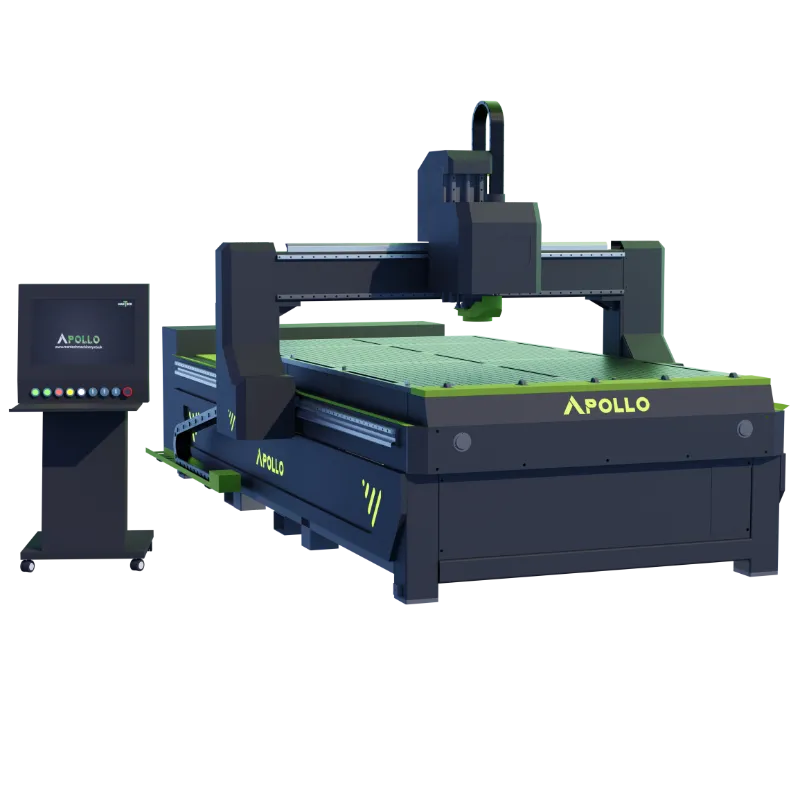
| Apollo M | Manual-change 1325 platform with upgrade path to ATC when throughput grows | Apollo M product page |
| Apollo ATC | Heavier continuous multi-tool production routing | Apollo ATC range page |
Explore Spartan, Falcon ATC, Apollo M and Apollo ATC on the verified product pages.
Read Spartan for startups and CNC routers for beginners when first investment and floor space are your main constraints.
When a CNC router may not be the right investment yet
- Insufficient repeat work to justify floor space, training and tooling setup.
- Wrong material mix — production sheet metal may suit fibre laser instead of routing.
- No extraction plan, power or delivery access for a full-size platform.
- No operator time for CAM, setup and daily machine care.
- Unclear tooling, workholding or nesting workflow.
- Jobs dominated by laser cutting on acrylic or timber — CO2 laser may fit better.
If process fit is unclear, read CNC router vs fibre laser before you commit.
What to check before buying
- Materials and everyday sheet thickness.
- Bed size and standard panel format.
- Tooling, cutters and workholding strategy.
- Dust extraction and workshop layout.
- Manual tool change vs automatic tool change for your nest files.
- Software and CAM workflow — who programmes daily.
- Operator training and handover scope.
- UK installation, support and service access.
- Future growth — will manual change still suit quoting in 18–24 months?
Work through the full checklist in our 5-key CNC router guide, frame the commercial case in the UK business case guide and model workload-dependent payback on the CNC router ROI calculator — without treating headline price as the only decision factor.
How Mantech supports CNC router buyers
Mantech matches Spartan, Falcon and Apollo platforms to real UK jobs — application-led advice, installation, operator training and nationwide engineer support from Halesowen. Buyers get a defined handover and ongoing service backup, not a crate on the floor without commissioning.
Review monthly CNC maintenance checks, see live workshops on installations and call 0121 541 1444 with nest files when you are ready to demo.
Useful next reads
- CNC routers buyer's guide
Structured Spartan vs Falcon vs Apollo comparison when you are past the reasons and into spec.
- Understanding CNC router ROI
Payback framing when you are building the internal business case.
- 5 key CNC router considerations
Material, bed size, tooling, automation and support — full selection checklist.
- Spartan CNC router
Entry-level manual-change route when Spartan is your shortlist.
- Education machinery hub
Schools and colleges — funding, warranty and workshop planning context.
- Applications hub
Sector examples before you match platform to everyday quoting.
Frequently asked questions
Why should I buy a CNC router?
When your workload suits in-house routing — repeat panels, signage, joinery parts, templates or custom fabrication — a CNC router can improve control, consistency and capacity. Value depends on material, bed size, tooling and utilisation, not the machine badge alone.
Is a CNC router worth it for a small UK business?
Often yes when you regularly subcontract similar work or need repeatable batch output — but only if you have operator time, extraction, space and support planned. Compare Spartan entry routes on the CNC hub and buyers guide before you fix budget.
What can a CNC router help me make?
Signage panels, joinery components, campervan interiors, plastics parts, templates, fixtures, prototypes and custom sheet work on suitable non-metal materials. Match bed size and tooling to your everyday quoting.
Should I choose a manual tool change or ATC CNC router?
Manual change suits simpler jobs, education and lighter daily use. ATC pays back when programmes need multiple tools every nest. Falcon ATC uses a 10-tool linear rack; Apollo M offers an upgrade path when throughput grows.
What should I check before buying a CNC router?
Material and sheet size, manual vs ATC, tooling and extraction, CAM workflow, training, UK support and growth plans. Start on the CNC hub, read the 5-key guide and ROI calculator, then request a demo with your own nest files.