CNC routers and fibre laser cutters are both powerful workshop machines — but they are not direct replacements for each other. The right choice depends first on your material, then on finish, accuracy, thickness, production workflow and support requirements. This guide helps UK buyers route toward CNC routing, fibre laser cutting or CO2 laser cutting without choosing by machine hype alone.
Sheet aluminium and mild steel usually favour fibre — engraving, acrylic and timber stay on CO₂ or CNC routing depending on detail and volume. Our fibre vs CO₂ guide goes deeper on finish and running cost, the applications hub maps both technologies to everyday UK job types, and installations show workshops running each platform in production.
The short answer: start with the material
- Wood, MDF, plywood, plastics, composites, panels and shaped sheet work often point toward CNC routing.
- Suitable sheet metals — mild steel, stainless, aluminium and related fabrication — usually point toward fibre laser cutting.
- Acrylic, timber, card and many non-metal laser workflows point toward CO2 laser cutting, not fibre laser.
- Some workshops run more than one platform when quoting spans metals and non-metals — the decision is application-led, not universal.
What a CNC router is best suited for
- Profiling panels and sheet goods with a rotating spindle and tooling.
- Cutting MDF, plywood and timber-based materials where routing is the practical process.
- Plastics and composites where spindle, tooling and extraction suit the stock.
- Signage and display work — flat letters, ACM-style panels and shaped board.
- Cabinetry and joinery components from nested sheet.
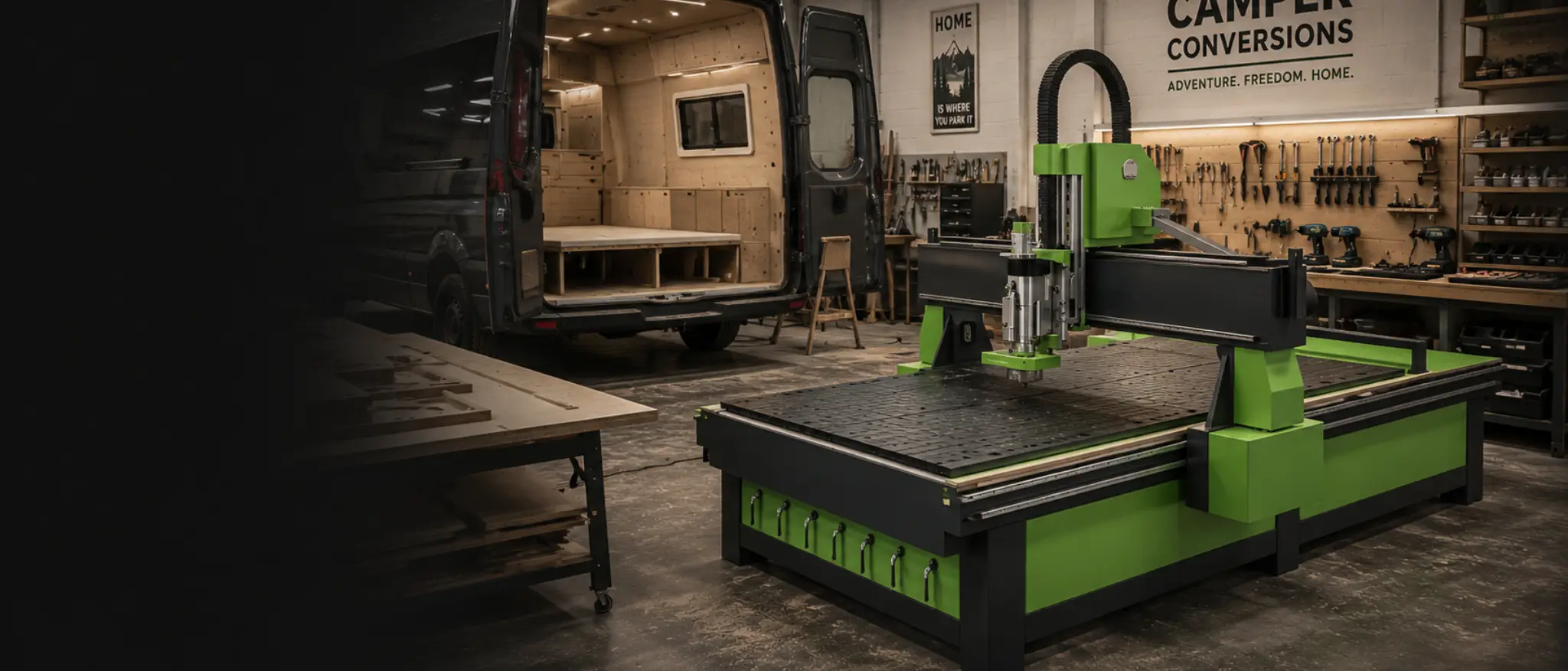
- Campervan conversion panels and interior fit-out parts.
- Jigs, templates and fixtures for repeat assembly.
- Prototyping and custom fabrication on non-metal sheet.
Tooling, spindle power, bed size, vacuum hold-down, dust extraction and material choice all affect results. CNC routing is a machining process — cutters wear, feeds matter and multi-tool production may need automatic tool change.
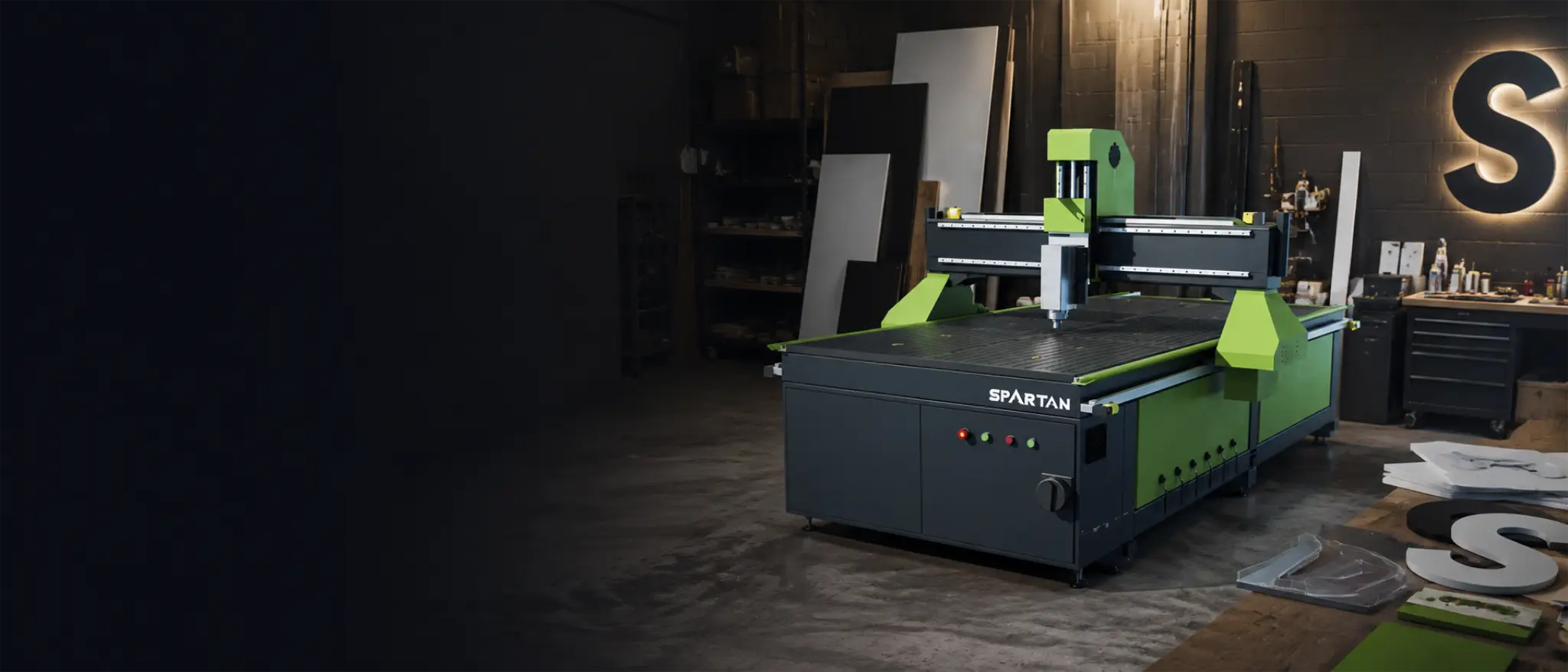
Compare platforms on the CNC router hub, read the CNC buyers guide and see Spartan, Falcon ATC and Apollo M product pages for verified Mantech routing routes.
What a fibre laser cutter is best suited for
- Cutting suitable metals on flat sheet — fabrication and engineering workflows.
- Mild steel, stainless steel and aluminium sheet within each platform's rated capability.
- Selected reflective metals on appropriate power and cut-head specification.
- Enclosures, brackets, metal signage, fabrication parts and production components.
- Metal-focused profiling where laser cutting replaces slower mechanical routes on sheet.
Fibre lasers are metal-focused. They are not the route for wood, MDF, acrylic or plastics. Power, bed size, assist gas, extraction, safety and application all matter — match kW and format to your everyday quoting, not a single demo part.
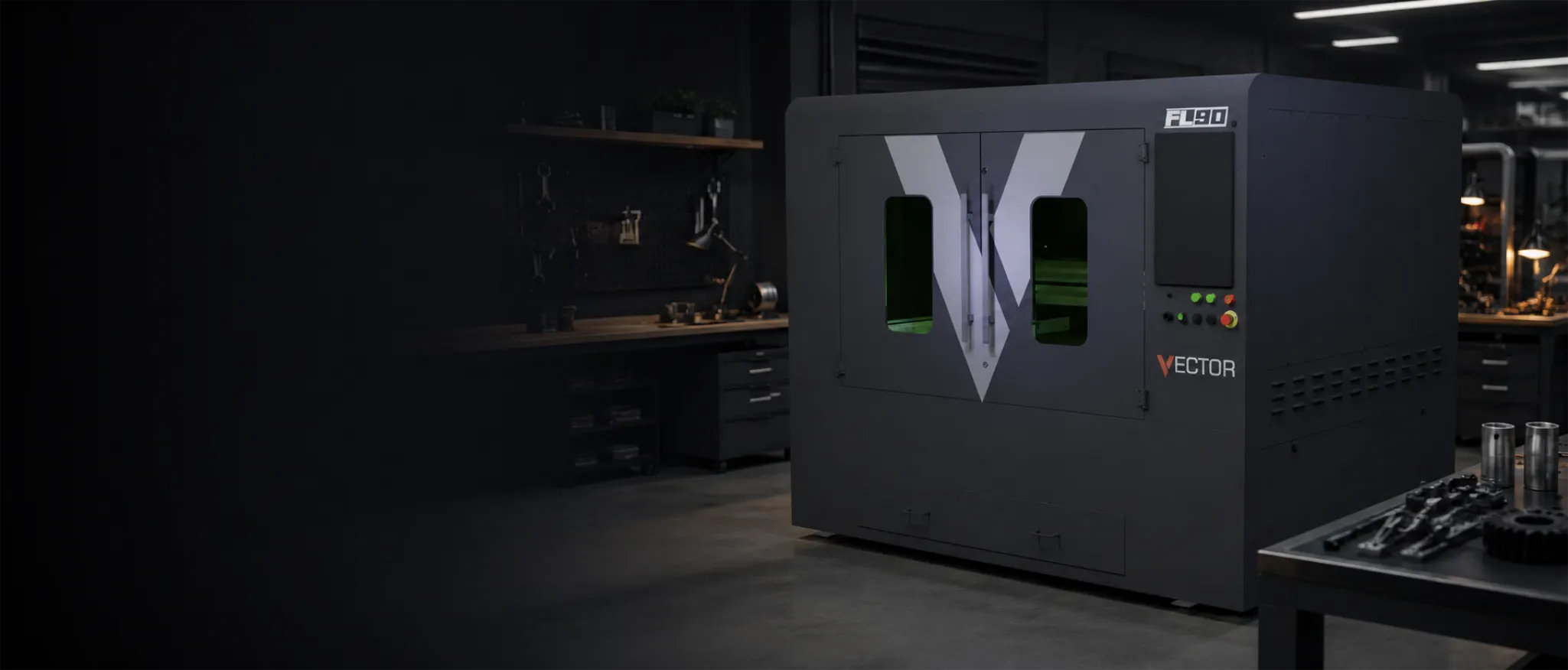
Start on the fibre laser hub, read the fibre laser power guide and compare mid-format platforms on the Vector FL90 product page.
CNC router vs fibre laser: comparison table
| Buyer question | CNC router route | Fibre laser route | What it means for the buyer |
|---|---|---|---|
| Main material | Timber, board, plastics, composites and shaped non-metal sheet | Mild steel, stainless, aluminium and metal fabrication sheet | Start here — wrong platform choice wastes budget and floor space |
| Typical applications | Signage panels, joinery parts, campervan interiors, templates, prototyping | Metal enclosures, brackets, fabrication nests, engineering components | Match the machine to the jobs you quote every week |
| Cutting method | Spindle routing with tooling | Focused laser beam with assist gas | Different consumables, setup and workshop requirements |
| Edge and finish | Tool marks and profile geometry from cutters | Laser cut edges on metal — parameter and gas dependent | Finish expectations should follow the process, not fight it |
| Tooling or consumables | Cutters, spoilboard, vacuum and tool-change strategy | Nozzles, protective optics, assist gas and planned service | Budget for ongoing consumables on both routes |
| Workshop setup | Dust extraction and hold-down for chip-producing routing | Fume extraction, gas supply and laser safety procedures | Plan extraction and safety before install day |
| Automation options | Manual tool change through to 10-tool linear rack ATC on Falcon | CNC nesting and production laser platforms by bed size and kW | Automation follows workload — not experience alone |
| Best buyer profile | Panel processors, sign shops, joinery, campervan and plastics workshops | Fabricators, engineers and metal-focused production quoting | Some buyers need both; many should start with the dominant material |
Which machine is right by application?
| Application | Better starting point | Notes |
|---|---|---|
| Sign making | CNC router or CO2 laser | Routed ACM and timber panels on CNC; acrylic letters and engraving often on CO2 — see sign-making guidance |
| Joinery and cabinetry | CNC router | Nested sheet components, profiling and drilling from board stock |
| Campervan conversions | CNC router | Interior panels and fit-out parts from sheet — routing is the practical process |
| Plastics fabrication | CNC router or CO2 laser | Depends on material, thickness and edge requirement — verify process fit |
| Engineering and metal fabrication | Fibre laser | Sheet metal cutting for brackets, enclosures and production nests |
| Education and training | CNC router, CO2 laser or compact fibre | Department material mix and safety scope decide platform — compare education hub guidance |
| Prototyping and product development | Depends on material | Non-metal prototypes often route; metal prototypes often fibre — sample parts clarify fit |
| Custom product fabrication | Material-led | Mixed quoting may need more than one platform over time |
Browse examples on the applications hub, CNC routers for sign making and campervan conversion benefits where those jobs match your plans.
When a CNC router is the better fit
Choose CNC routing when your everyday work is shaped or panel-based non-metal sheet — joinery components, signage board, campervan interiors, plastics and templates. Manual tool change suits lighter mixed work; Falcon ATC with its 10-tool linear rack suits repeat multi-tool nesting; Apollo M offers a manual start with an upgrade path to ATC when throughput grows.
Read CNC routers for beginners and 5 key CNC router considerations when routing is your shortlist.
When a fibre laser is the better fit
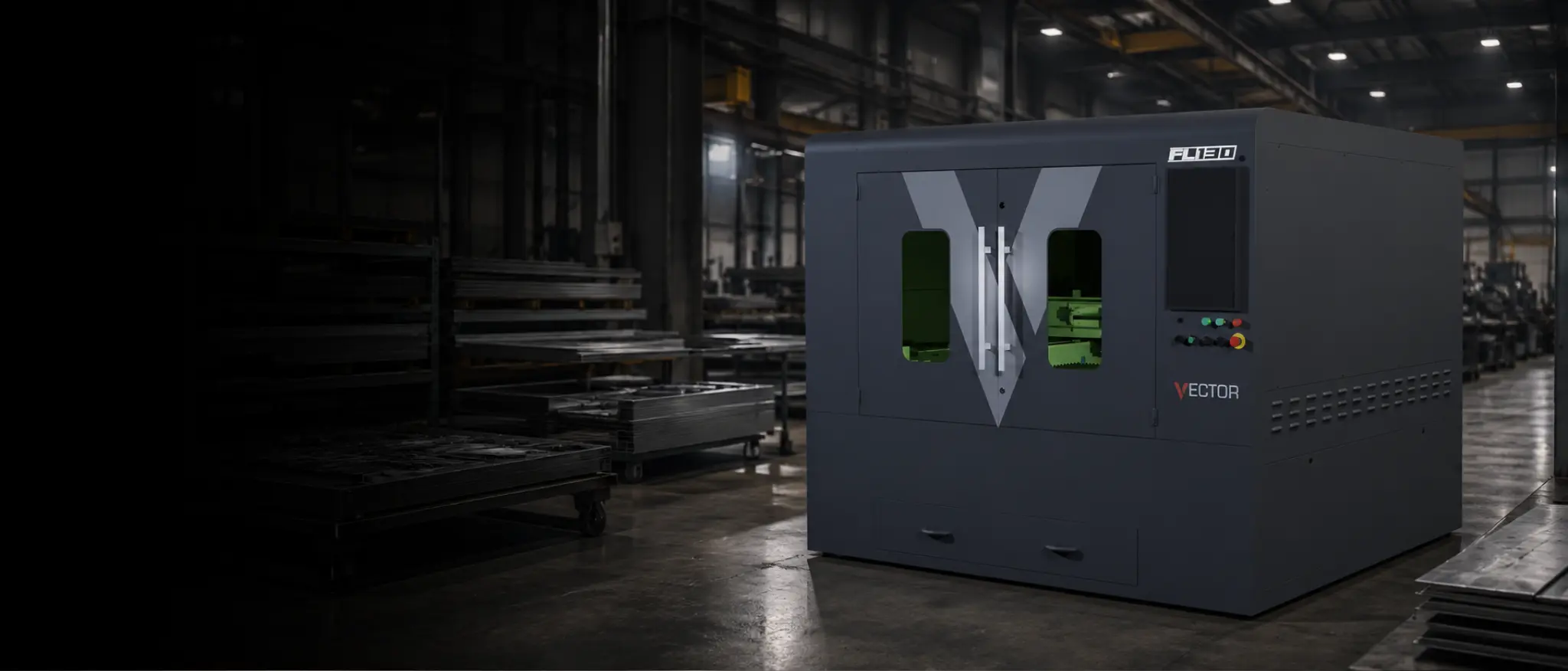
Choose fibre laser when metal sheet dominates your quoting — fabrication parts, brackets, enclosures and production nests on mild steel, stainless or aluminium. Compare Vector FL60 through FL250/300 on the fibre hub and match kW to everyday thickness and shift length on the power guide — not brochure peak demos alone.
Read the fibre laser cutting guide and see live installs on installations before you fix bed size and power.
When CO2 laser cutting may be the better answer
If your work is non-metal laser cutting — acrylic, wood, MDF, card, selected plastics, craft, education and signage samples — CO2 laser is normally the practical route, not fibre laser. Fibre excels on metals; CO2 excels on many non-metals that routers also handle, with different edge character and workflow.
Compare on the CO2 laser hub, read fibre vs CO2 for sheet metal and the general fibre vs CO2 guide when laser platform choice is still open.
Buying mistakes to avoid
- Choosing by machine name instead of everyday material and workflow.
- Assuming all lasers cut the same materials — fibre is metal-focused; CO2 covers many non-metals.
- Buying fibre laser for wood, acrylic or plastics — wrong platform for those jobs.
- Buying a CNC router for production sheet metal cutting — routing is not a metal fabrication replacement.
- Ignoring extraction, gas supply or laser safety on fibre installs.
- Ignoring tooling, cutters and dust extraction on CNC routing.
- Choosing a bed too small for your standard sheet or nest.
- Skipping training, handover and UK support planning.
- Comparing headline price without comparing workflow fit and ownership costs.
How Mantech helps match the machine to the job
Mantech supplies Spartan, Falcon and Apollo CNC routers, Vector and Titan fibre lasers, and Lasertech CO2 platforms — with application-led advice, UK installation, operator training and nationwide engineer support from Halesowen. Bring sample parts, nest files and material lists to a demo rather than choosing from a brochure alone.
Call 0121 541 1444 or explore the CNC router hub and fibre laser hub when you are ready to compare routes.
Useful next reads
- CNC routers buyer's guide
Structured Spartan vs Falcon vs Apollo comparison when routing is your shortlist.
- Fibre laser power guide
Match kW and bed size to everyday metal thickness and production hours.
- Fibre vs CO2 for sheet metal
Laser platform choice when metal and non-metal quoting overlap.
- Desktop CO2 for education and craft
Non-metal laser workflows for schools, makers and compact workshops.
- Fibre laser maintenance checklist
Routine ownership checks once fibre laser is your chosen route.
- Education machinery hub
Department planning when schools compare routing, CO2 and fibre options.
Frequently asked questions
Is a CNC router better than a fibre laser?
Neither is universally better — material and application decide. CNC routing suits non-metal sheet profiling; fibre laser suits metal sheet cutting. Some workshops run both when quoting spans materials.
Should I use a CNC router or fibre laser for metal?
Production sheet metal cutting normally belongs on fibre laser. CNC routers machine non-metal sheet with spindle tooling — they are not a substitute for metal fabrication laser cutting.
Can a fibre laser cut wood or acrylic?
No — fibre lasers are metal-focused. Wood, acrylic, MDF and similar non-metal laser work normally routes to CO2 laser or, for shaped panel work, CNC routing.
What machine is best for MDF, plywood or plastics?
CNC routing is the common starting point for MDF, plywood and many plastics. CO2 laser may suit some non-metal laser jobs depending on material and finish. Fibre laser is not the route for those stocks.
What should I check before choosing between CNC routing and laser cutting?
Everyday material and thickness, sheet size, edge finish, daily volume, extraction and safety, training and UK support. Start on the CNC hub or fibre hub with your nest files and compare guides before you fix budget.